


🌿 Natur & Wildnis👨👩👧👦 Familien
Camping Guide | Saarland
Discover the green Saarland
Deutschland, 🇩🇪 Deutschland
Camping Guide | Saarland
The crisp air smells of forest and fresh earth, while the rolling hills of Saarland shimmer in the sunlight. Camping in Saarland means immersing yourself in a region that offers surprising contrasts: dense forests, enchanted river valleys, and witnesses to a moving industrial history. Here, where Germany borders France, nature experiences combine with cultural discoveries. Saarland is more compact than expected and ideal for a varied camping holiday. Those seeking peace and quiet while wanting to stay active will find their happiness here.
💡Saarland is more than just 'grills and coal' – it is a region reinventing itself.
The Region in Detail
Your comprehensive travel guide for camping Saarland.
Location & Arrival in Saarland
Saarland, nestled in southwestern Germany, borders France and Luxembourg. In terms of area, it is the smallest German federal state (excluding the city-states) and is characterized by its central location in Europe. The region is shaped by rolling hills, dense forests, and the river that gives it its name, the Saar.
Arriving by car is straightforward. From northern and eastern Germany, Saarland is best reached via the A1. Those arriving from the south use the A6. From the west, for example from France or Luxembourg, various country roads and motorways lead directly into Saarland. Tolls are currently (2024) not charged on German motorways for cars and motorhomes under 3.5 tons. For heavier vehicles, the truck toll must be observed.
For travelers from Munich, the route via the A8 and A6 is recommended, with a driving time of about 6 hours. From Frankfurt, Saarland can be reached in around 2.5 hours via the A61 and A6. Those starting from Hamburg should plan for about 7.5 hours via the A7 and A5. Coming from Vienna, the journey via the A8 and A6 takes about 9 hours. From Zurich, you can reach Saarland in approx. 5 hours via the A5 and A6.
As an alternative to arriving by car, the train is a good option. Saarbrücken Main Station is well connected to the German ICE network. There are direct connections from Frankfurt, Mannheim, and Paris, among others. From Saarbrücken, you can easily reach the smaller towns in Saarland by regional trains and buses. Saarbrücken Airport (SCN) offers domestic and European connections, although not at a high frequency. From there, you can reach the surrounding cities by bus or taxi.
Within Saarland, it is best to travel with your own vehicle or a rental car to be able to flexibly explore the various campsites and sights. The public transport network exists but is less comprehensive than in metropolitan areas. Bicycles are a good option for shorter distances and exploration tours along the Saar.
The Sub-regions at a Glance
Saarland can be roughly divided into four sub-regions, each with its own charm and characteristics: the Saargau, the Saarland Hill Country, the Saar Coal Forest, and the Warndt.
The Saargau in the west of Saarland is known for its rolling hills, orchards, and picturesque villages. Here you will find numerous hiking trails and cycling routes that lead through the varied landscape. Sights worth seeing include Mettlach with the famous Saarschleife (Saar Loop), Perl with its vineyards, and Merzig, home to the Werner Freund Wolf Park. The Saargau is ideal for nature lovers and families seeking peace and relaxation.
The Saarland Hill Country extends across the east and north of the state. This region is characterized by dense forests, deep valleys, and historic castles. Hikers and mountain bikers will find plenty to enjoy here. Ottweiler, the oldest town in Saarland, impresses with its historic old town. St. Wendel, with its medieval town center and well-known Christmas market, is also worth a visit. The Saarland Hill Country is particularly attractive for active vacationers and history buffs.
The Saar Coal Forest in the north of Saarland bears witness to the region's industrial past. Numerous relics of coal mining can be found here, which today serve as museums and monuments. The UNESCO World Heritage Site Völklingen Ironworks is an impressive example of Saarland's industrial culture. The German Mining Museum in Bochum (just outside Saarland) is also worth a trip to better understand the history of mining in the region. The Saar Coal Forest is ideal for anyone interested in industrial history and technology.
The Warndt, located in the south of Saarland, is a cross-border forest area that extends into France. Here you can go on extensive hikes and bike tours and enjoy the untouched nature. Riegelsberg, with its Reden experience site—a former mine site—offers a varied range of leisure activities. The Warndt is particularly suitable for nature lovers and those seeking recreation. On most campsites, dogs are allowed, which also makes the region attractive for a camping holiday with a dog.
Camping in Saarland: What to Expect?
The camping landscape in Saarland is diverse and varied. There is a wide selection of campsites, from large resort sites with extensive facilities to small, nature-oriented sites that promise peace and relaxation. In total, there are about 50 campsites in Saarland, distributed across the entire region.
Many campsites in Saarland are family-friendly and offer rental accommodations such as mobile homes or holiday apartments in addition to pitches for tents, caravans, and motorhomes. On the larger sites, there are often swimming pools, playgrounds, restaurants, and animation programs. Those who prefer something quieter will also find smaller sites that focus on the essentials and offer a relaxed atmosphere.
Agriturismo or farm camping is less common in Saarland than in other regions of Germany, but there are some businesses that offer pitches on their grounds. This type of camping allows you to experience country life up close and obtain regional products directly from the producer.
The prices for a pitch in Saarland vary depending on the season, location, and equipment of the site. In the high season (July/August), you should expect prices between 25 and 40 euros per night for a pitch for two people. In the low season (May/June and September/October), prices are often slightly lower, around 20 to 30 euros per night.
The size of the pitches also varies but is usually between 80 and 120 square meters. Many sites offer both sunny and shady pitches, so every camper can find the right spot for their needs. Most campsites have a good sanitary standard with clean toilets and showers. Electricity connections are also usually available, with the current strength usually being 6 to 16 amperes.
Wi-Fi is available on many campsites in Saarland, but the quality can vary. Generally, Wi-Fi is better developed on larger sites than on smaller ones. It is advisable to check in advance whether the campsite offers Wi-Fi and what costs are involved.
In the high season, it is advisable to reserve a pitch in advance, especially if you have a specific pitch request or are traveling with a larger group. In the low season, the sites are often less busy, so you can still find a pitch at short notice.
Practical Information for Campers
For a relaxed camping holiday in Saarland, it is helpful to know some practical information. Tolls are not charged on German motorways for vehicles under 3.5 tons. For heavier vehicles, the truck toll applies, which is distance-dependent and recorded electronically. Payment is made via toll boxes or online.
Gas stations in Saarland are generally easy to reach and have similar opening hours to other parts of Germany. The price of diesel in Saarland is usually slightly below the national average. Supermarkets such as Lidl, Aldi, Rewe, and Edeka are available in the larger towns and offer a wide range of food and camping supplies. Opening hours are usually Monday to Saturday from 7 am to 10 pm; most supermarkets are closed on Sundays.
The gas supply in Saarland is uncomplicated. German gas cylinders can be exchanged without problems. Adapters are usually not required as the connections are standardized. Disposal stations for motorhomes and caravans are available at many campsites and at selected service areas. The costs for disposal are usually included in the pitch price or amount to a few euros.
Mobile network coverage in Saarland is good, for both German and foreign providers. Roaming charges do not apply within the EU. The tap water in Saarland is of drinking water quality and can be drunk without hesitation.
Medical care in Saarland is guaranteed nationwide. There are hospitals and pharmacies in the larger towns. In an emergency, dial 112. It is recommended to take out travel health insurance to be covered in case of illness.
Wild camping is not allowed in Saarland, as in most parts of Germany. Heavy fines may apply. There are no environmental zones in Saarland. On the campsites, the usual rules apply, such as observing nighttime quiet hours and the proper disposal of waste.
For dog owners, it is important to know that there is a leash requirement in Germany, which is handled differently from municipality to municipality. Therefore, inform yourself locally about the applicable regulations.
Insider Knowledge & Secret Tips
Saarland has a lot to offer off the beaten tourist path. A visit in the low season (May/June or September/October) is particularly worthwhile, as the campsites are less crowded and prices are often lower. In addition, the weather in these months is pleasantly mild and ideal for hiking and cycling tours.
A less well-known place is the Bostalsee, the largest lake in Saarland. Here you can not only swim and practice water sports but also explore the surrounding nature. A secret tip is the premium hiking trail "Bällerwääsch," which leads around the lake and offers magnificent views. The starting point is in Nohfelden.
Those looking for regional products should visit one of the weekly markets in Saarland. In Saarbrücken, a large weekly market takes place every Saturday at the St. Johanner Markt, where you can buy fresh fruit, vegetables, meat, cheese, and other specialties from the region. Direct marketers and farm shops also offer their products, such as the "Ziegenhof Peter" in Tholey.
A special highlight is the "Saarspektakel," a large water sports festival that takes place every year in August in Saarbrücken. Here you can experience exciting competitions, participate in various activities, and enjoy the atmosphere.
Culinary-wise, Saarland has a lot to offer. You should definitely try "Dibbelabbes," a potato dish with bacon and leeks, traditionally eaten from the "Dibbe" (a pot). "Gefillde," filled dumplings, are also a specialty of the region. A glass of "Schwenker," a Saarland beer, goes well with it.
A restaurant popular with locals is "Zum Stiefel" in Saarbrücken, where you can enjoy traditional Saarland cuisine in a cozy atmosphere. For a day trip, a visit to Tholey Abbey, the oldest abbey in Germany, is recommended. The driving time from Saarbrücken is about 30 minutes. A trip to neighboring Luxembourg is also worthwhile, for example to Luxembourg City, which is a UNESCO World Heritage Site with its historic old town.
Experiences & Activities: Saarland
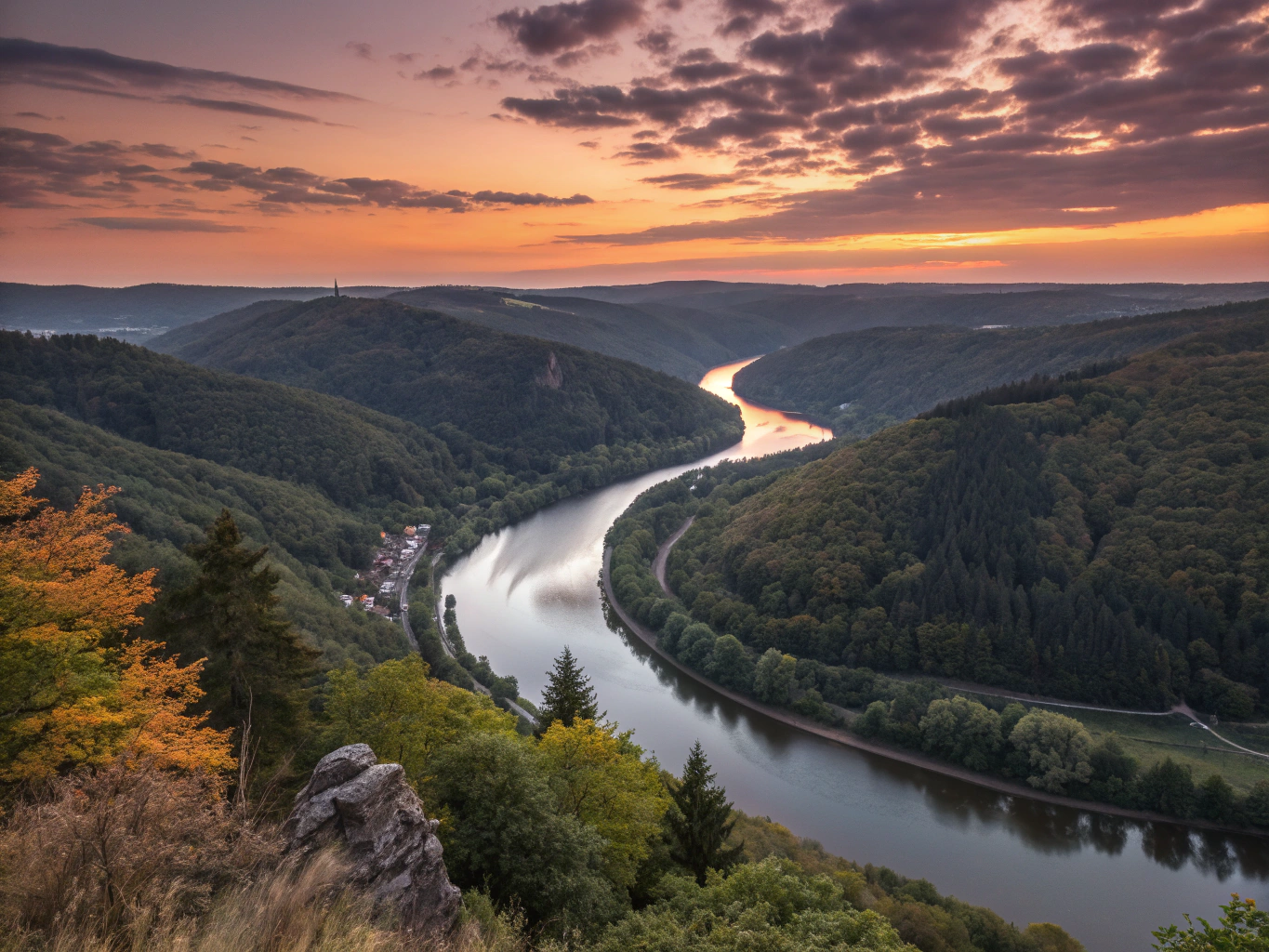
Saarschleife Viewpoint
⏱️ 1-2 hoursEasy
Enjoy the panoramic view from the Cloef of the famous Saarschleife near Mettlach. A must for every visitor!
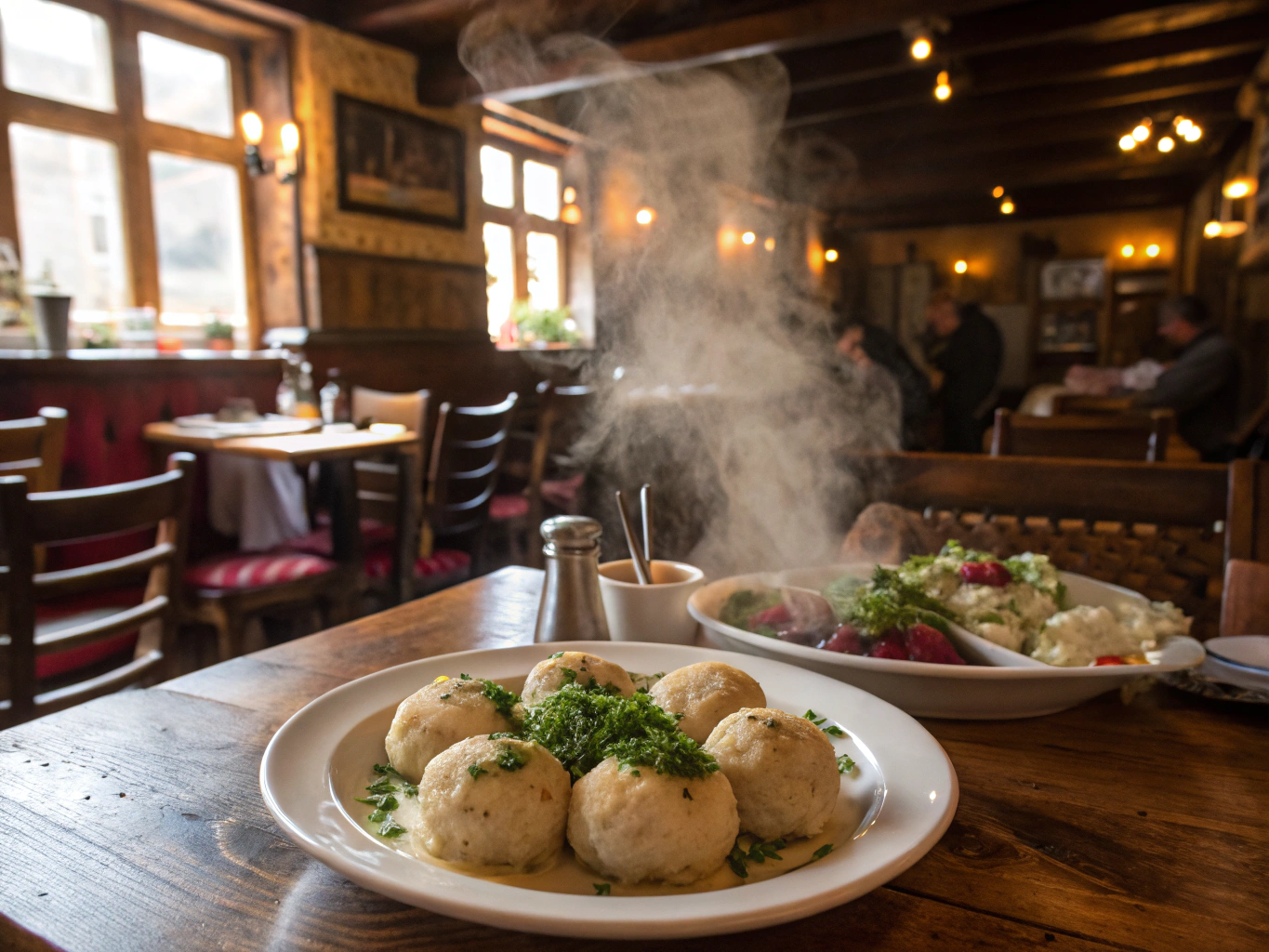
Dibbelabbes Delight
⏱️ 1-2 hoursEasy
Try Dibbelabbes, the traditional potato dish of Saarland, in a rustic restaurant in Saarbrücken.
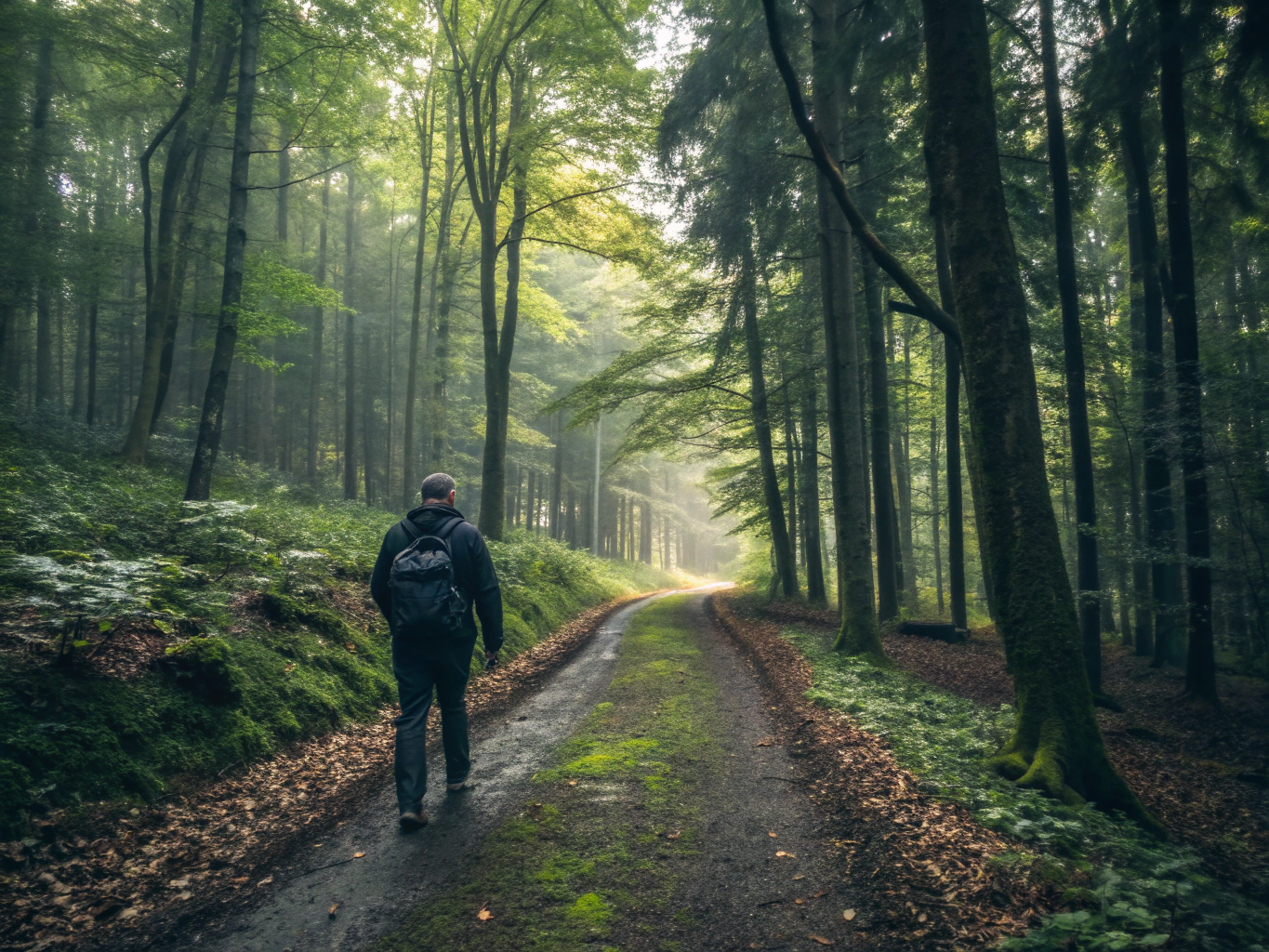
Hiking in the Warndt
⏱️ 3-4 hoursModerate
Explore the untouched nature of the Warndt on one of the numerous hiking trails. Ideal for nature lovers and active vacationers.
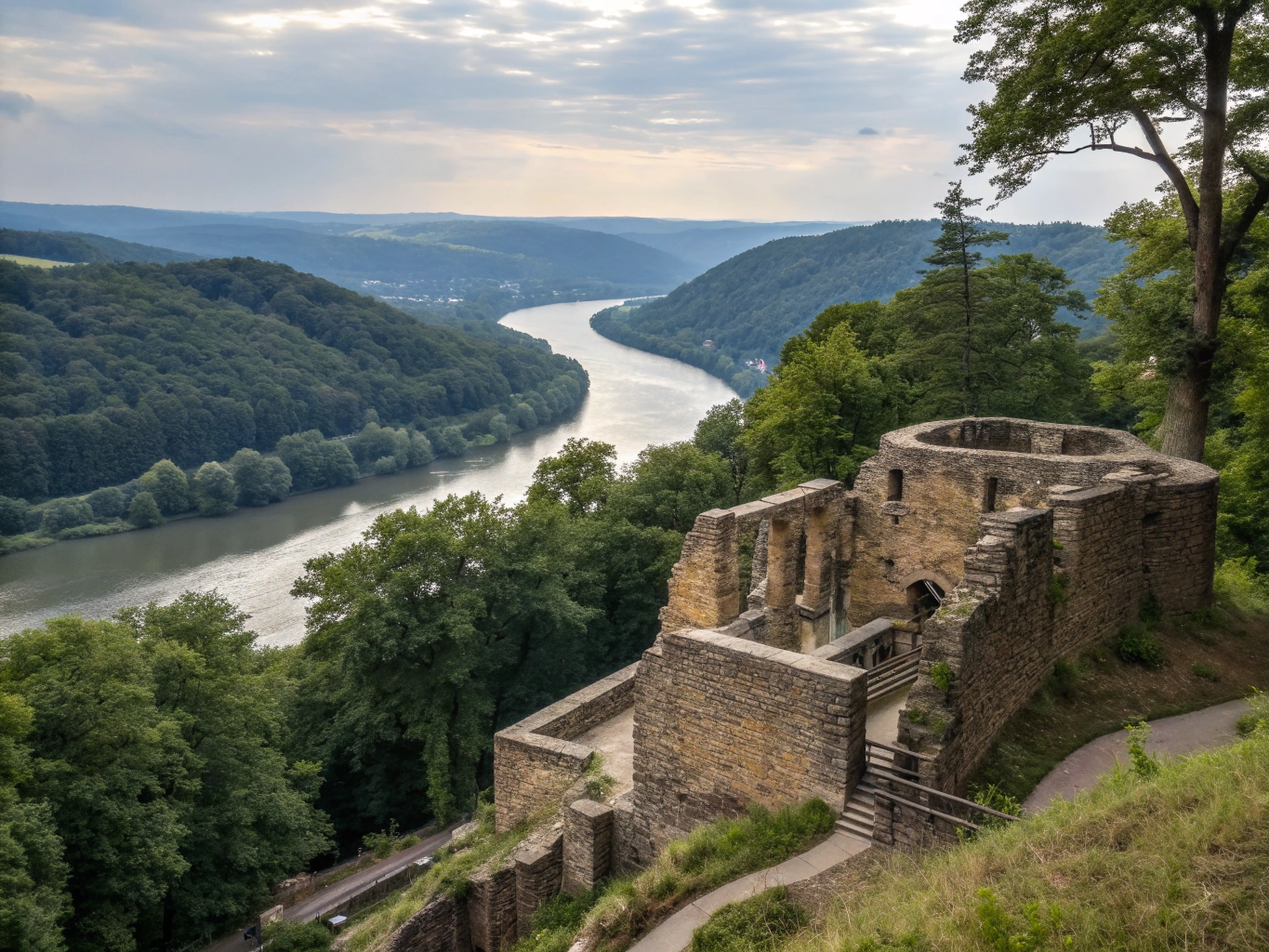
Insider Tip: Montclair Castle
⏱️ 2-3 hoursModerate
Discover the ruins of Montclair Castle, hidden in the forests above the Saarschleife. A quiet place with an impressive history.
Facts & Figures
Camping Region Saarland
- 🌍 Country
- 🇩🇪 Deutschland
- 📍 Region
- Saarland
- 🏛️ Province
- Saarland
- ☀️ Climate
- Temperate-maritime, influenced by the Atlantic.
- 📅 Best Season
- May/June for hiking, July/August for swimming lakes
- 🌡️ Summer Avg
- 25°C
- 🌸 Spring Avg
- 15°C
- 🏕️ Campsites
- ~50
- ✈️ Airport
- Saarbrücken Airport (SCN)
- 🚌 Public Transport
- Well-developed bus network, regional trains connect the larger towns.
- 🌧️ Rainy Days
- 12
- 🚗 From Munich
- 6 hrs / 550 km via A6
- 🚗 From Hamburg
- 7.5 hrs / 680 km via A7 and A5
- 💰 Price Level
- €€ / Moderate
- 🐕 Dogs
- Top / Many hiking trails and campsites are dog-friendly.
- 🎯 Suitable For
- Nature loversCulture enthusiastsHikers
🚦 Occupancy by Month
Jan
Feb
Mar
Apr
May
Jun
Jul
Aug
Sep
Oct
Nov
Dec
Quiet Moderate Busy Crowded
 Rent Camper Saarland
 Campsites Saarland