


🌿 Natur & Wildnis👨👩👧👦 Familien
Camping Guide | Thüringer Wald
Discover the green camping dream
Deutschland, 🇩🇪 Deutschland
Camping Guide | Thüringer Wald
The crisp air smells of spruce and damp earth, while the sun blinks through the dense canopy. In the Thuringian Forest, a camping region awaits you with rolling hills, dense forests, and picturesque valleys. Unlike alpine regions, you will find relaxed hiking trails, historic castles, and charming towns that invite you to linger. Camping in the Thuringian Forest means relaxation in the midst of untouched nature, away from mass tourism.
💡Don't expect alpine peaks, but rather rolling hills and honest hospitality.
The Region in Detail
Your comprehensive travel guide for camping Thüringer Wald.
Location & Arrival at the Thuringian Forest
The Thuringian Forest is located in the heart of Germany, specifically in the Free State of Thuringia. It forms a low mountain range region approximately 150 kilometers long and up to 35 kilometers wide. The region is well-connected to the German motorway network.
Arrival by car is best via the A4 (Frankfurt – Dresden) or the A9 (Berlin – Munich). From the A4, the Gotha, Erfurt, or Jena exits are ideal for reaching the Thuringian Forest. Coming from the A9, the Schleiz or Triptis exits are recommended. Please note that there is no general toll fee on German motorways for cars.
For travelers from Munich, the journey takes about 4 hours via the A9. Those starting from Frankfurt will need approximately 2.5 hours via the A5 and A4. Coming from Hamburg, plan for about 5.5 hours via the A7 and A4. From Vienna, the Thuringian Forest can be reached in about 7 hours via the A9. Travelers from Zurich should expect a driving time of about 6.5 hours via the A81 and A4.
As an alternative to arriving by car, the train is a good option. The nearest airport is Erfurt-Weimar Airport (ERF). From there, there are train connections to various locations in the Thuringian Forest. Within the Thuringian Forest, buses and regional trains operate, although they do not serve all locations directly. For flexible exploration of the region, your own vehicle or a rental car is recommended. Many campsites are also easily accessible by bicycle, as there are numerous cycle paths.
Overview of the Sub-regions
The Thuringian Forest can be roughly divided into three sub-regions: the Northwest, Central, and Southeast Thuringian Forest. Each of these regions has its own character and offers different focuses for your camping holiday.
The Northwest Thuringian Forest is characterized by its rolling hills and wide meadows. Here you will find numerous small villages and towns with historic half-timbered houses. The most famous places include Eisenach with the Wartburg Castle and Bad Langensalza with its numerous gardens and parks. This region is ideal for families and those seeking peace and quiet who want to enjoy nature and take relaxed hikes.
The Central Thuringian Forest is the highest and most forested region. The highest mountain in the Thuringian Forest, the Großer Beerberg (983 m), is also located here. Key locations include Oberhof, a well-known winter sports center, and Ilmenau, the university town with the Goethe House. This region is perfect for active vacationers who enjoy hiking, mountain biking, or skiing in winter.
The Southeast Thuringian Forest is shaped by deep valleys and steep slopes. Here you will find numerous castles and palaces that bear witness to the region's eventful history. The most famous places include Saalfeld with the Fairy Grottoes and Rudolstadt with Heidecksburg Castle. This region is ideal for those interested in culture and history who enjoy visiting castles and museums.
Regardless of the chosen sub-region, the entire Thuringian Forest offers a variety of campsites, from simple nature sites to comfortable resort campsites with extensive facilities.
Camping in the Thuringian Forest: What to Expect?
The camping landscape in the Thuringian Forest is diverse and offers something for every taste. There are an estimated 50 campsites in the region, many of which are family-run and exude a personal charm.
You will find both large resort sites with pools, entertainment, and restaurants, as well as smaller, nature-oriented campsites that are ideal for those seeking tranquility. Agritourism or farm camping is less common in the Thuringian Forest than in other regions of Germany, but there are a few providers offering this type of camping. Pitches for motorhomes are available at most campsites, and there are often separate motorhome stopovers.
Prices for a pitch vary depending on the season and the facilities of the campsite. In the high season (July/August), you should expect prices between 20 and 35 euros per night for a pitch for two people. In the low season (May/June and September/October), prices are often significantly cheaper, ranging between 15 and 25 euros per night.
The size of the pitches also varies but is usually between 80 and 120 square meters. Many pitches are surrounded by trees and offer shade, but there are also sunny pitches. The sanitary facilities are generally clean and well-maintained, although the standard can vary depending on the campsite. Wi-Fi is available at many campsites, but the quality can vary. Electricity connections are available at most pitches, with the current usually being 6 or 16 amps.
It is recommended to reserve pitches early, especially during the high season. While last-minute opportunities do arise, the selection is often limited.
Practical Information for Campers
For a relaxed camping holiday in the Thuringian Forest, it is helpful to know some practical information.
Toll fees do not apply to cars on German motorways. A toll is mandatory for trucks over 7.5 tons.
Gas stations are sufficiently available in the Thuringian Forest. Diesel prices in Germany are generally slightly higher than in some other European countries. Opening hours for gas stations vary, but many are open around the clock.
Supermarkets such as Lidl, Rewe, and Edeka can be found in the larger towns of the Thuringian Forest. Opening hours are usually Monday to Saturday from 7 or 8 AM to 8 or 10 PM. Supermarkets are generally closed on Sundays, with the exception of a few in tourist locations.
German gas bottles can be easily exchanged in Germany. Adapters are not required.
Disposal stations for camping toilets and grey water are available at many campsites and some motorhome stopovers. Disposal fees are usually included in the pitch price.
Mobile network coverage is generally good in the Thuringian Forest, although there may be limitations in some remote areas. Roaming charges do not apply within the EU.
Medical care is guaranteed in the Thuringian Forest. Hospitals and pharmacies are available in the larger towns.
Wild camping is strictly prohibited in Germany and is punished with high fines. There are no environmental zones in the Thuringian Forest.
Tap water in Germany is generally of drinking water quality. However, if in doubt, check with the campsite operator or the local municipality.
Insider Knowledge & Secret Tips
Anyone who really wants to get to know the Thuringian Forest should rely on the secret tips of the locals.
The low season (May/June and September/October) offers many advantages: fewer tourists, lower prices, and particularly beautiful nature. In spring, the meadows bloom in all colors; in autumn, the forests transform into a colorful sea of foliage.
A lesser-known spot is the Schwarzatal, an idyllic valley with numerous hiking trails and small villages. It is located about 30 km south of Rudolstadt and can be reached via the B281.
Every Saturday, a weekly market takes place in Saalfeld, offering regional products. Wineries and farm shops are rather rare in the Thuringian Forest, but some farmers offer direct sales of eggs, potatoes, and vegetables.
In summer, the Rudolstadt Festival takes place in Rudolstadt, one of the largest festivals for folk, roots, and world music in Europe. In winter, there are numerous winter sports events in Oberhof.
Be sure to try Thuringian dumplings (Klöße), a local specialty made from raw and cooked potatoes. This is usually served with roast meat and red cabbage. Locals enjoy visiting the "Zur Schmücke" restaurant in Schmiedefeld am Rennsteig or the "Gaststätte Waldschlösschen" in Stützerbach.
A worthwhile day trip is a visit to the Wartburg Castle in Eisenach (approx. 1 hour driving time). The castle is a UNESCO World Heritage site and offers an impressive insight into German history.
Experiences & Activities: Thüringer Wald
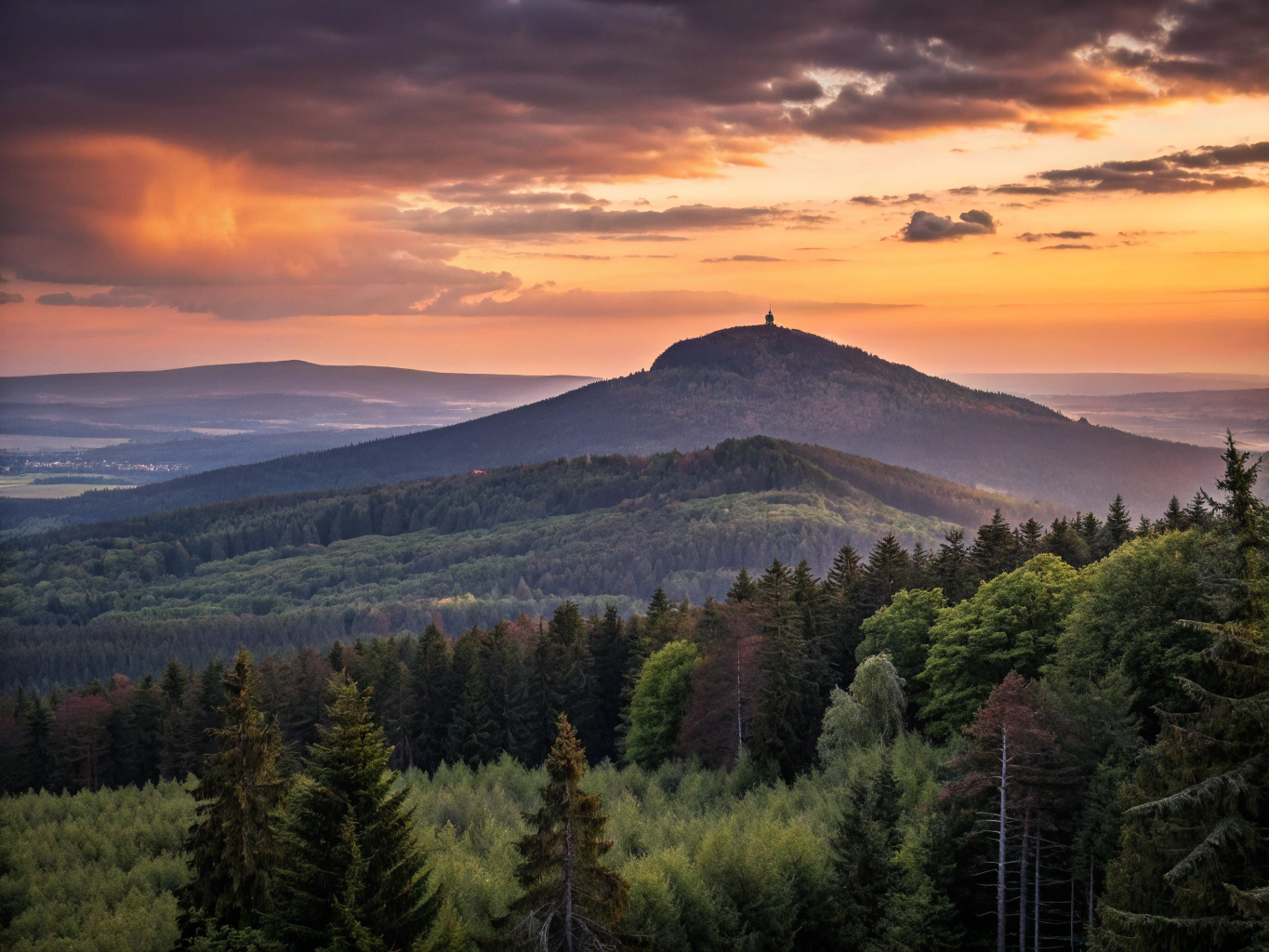
View from the Großer Beerberg
⏱️ 2 hoursModerate
The highest mountain in the Thuringian Forest offers a fantastic panoramic view over the entire region. On a clear day, you can see as far as the Harz and the Rhön. The ascent is moderate and takes about 2 hours.
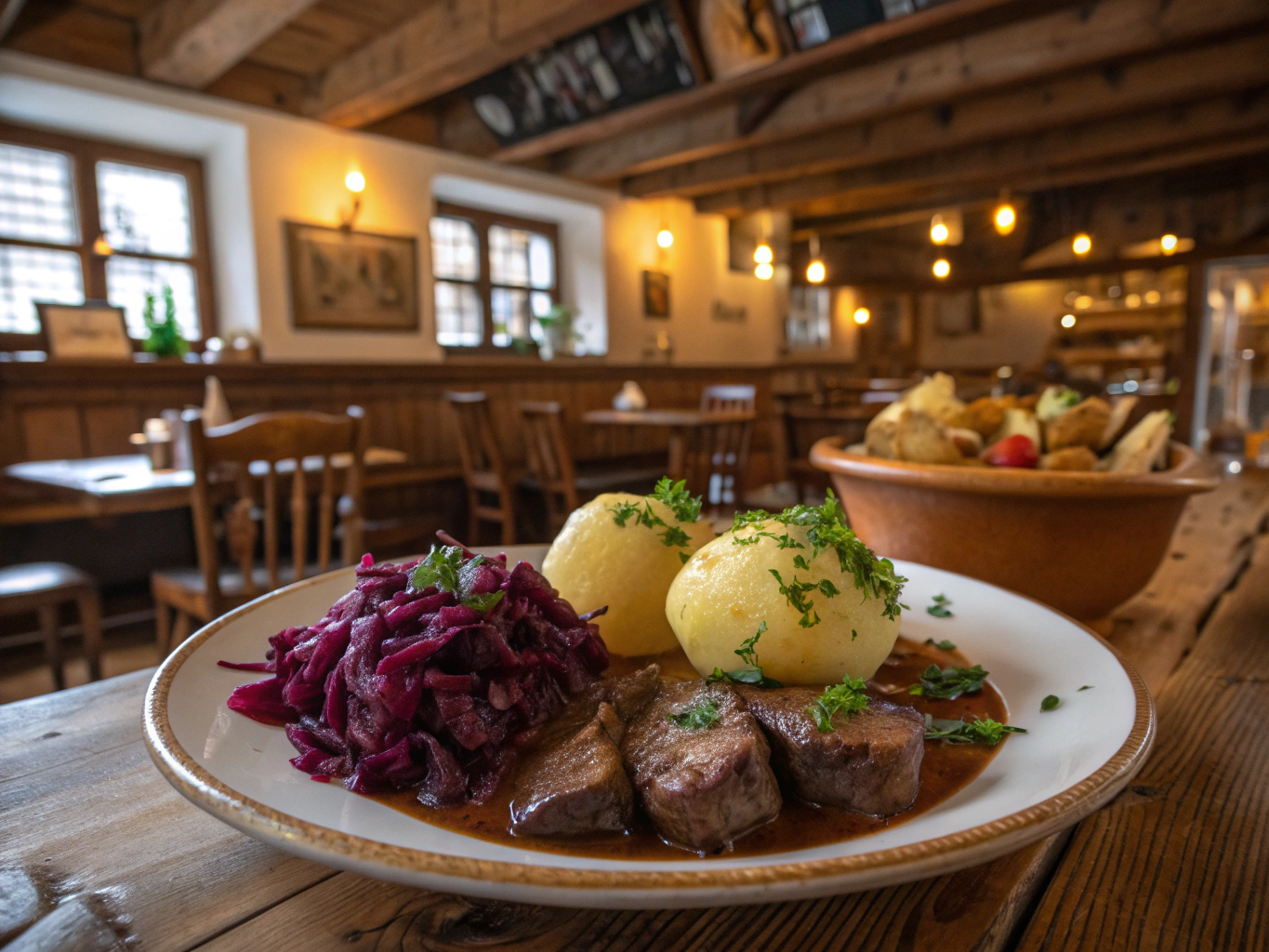
Thuringian Dumplings
⏱️ 1 hourEasy
A culinary must in the Thuringian Forest are the famous Thuringian dumplings. They are best enjoyed in a traditional inn along with roast meat and red cabbage. An unforgettable taste experience!
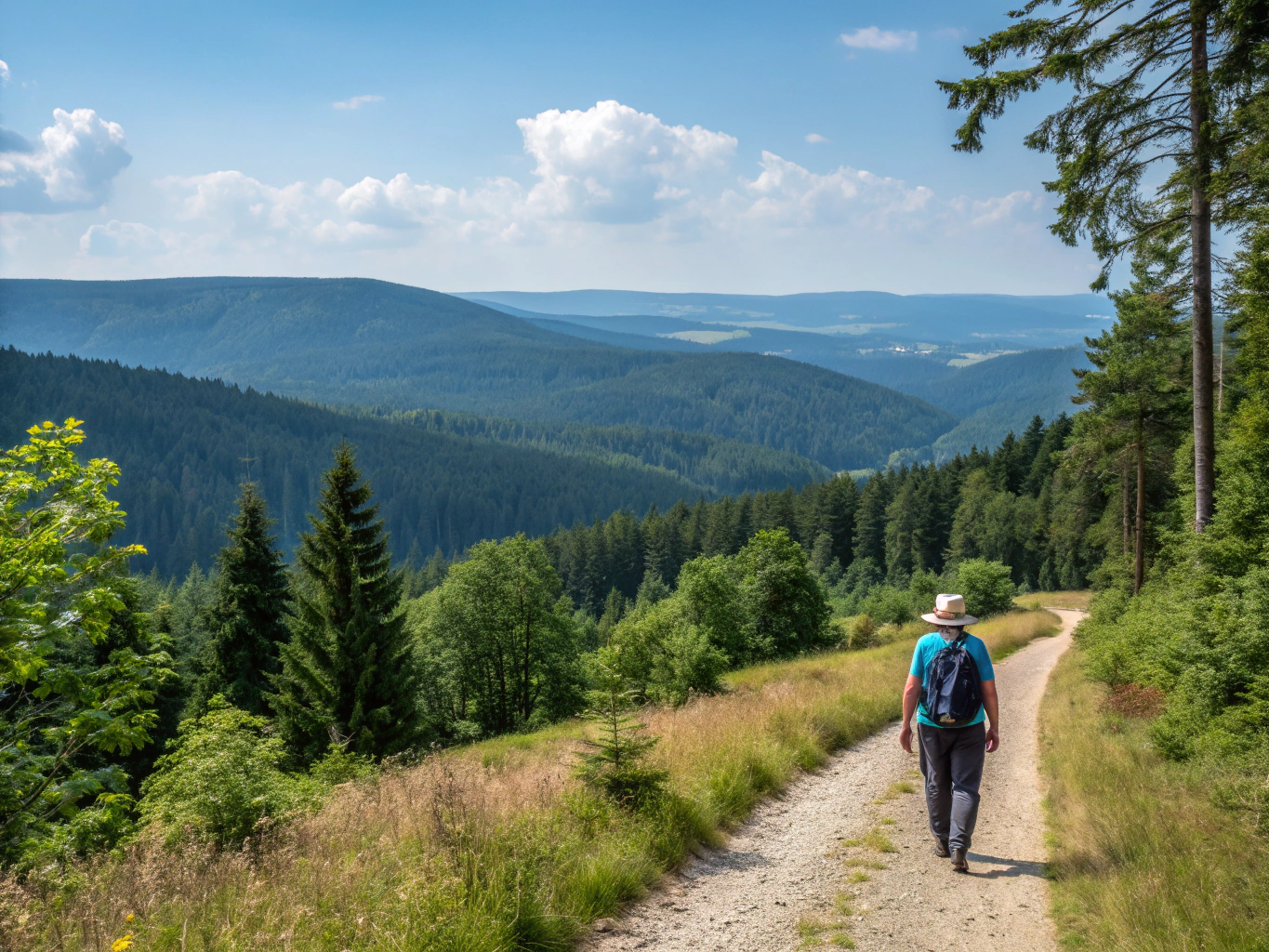
Hiking on the Rennsteig
⏱️ variableModerate
The Rennsteig is Germany's most famous hiking trail and runs along the ridge of the Thuringian Forest. The hike offers diverse landscapes and breathtaking views. The entire route is 170 km long, but you can also hike individual stages.
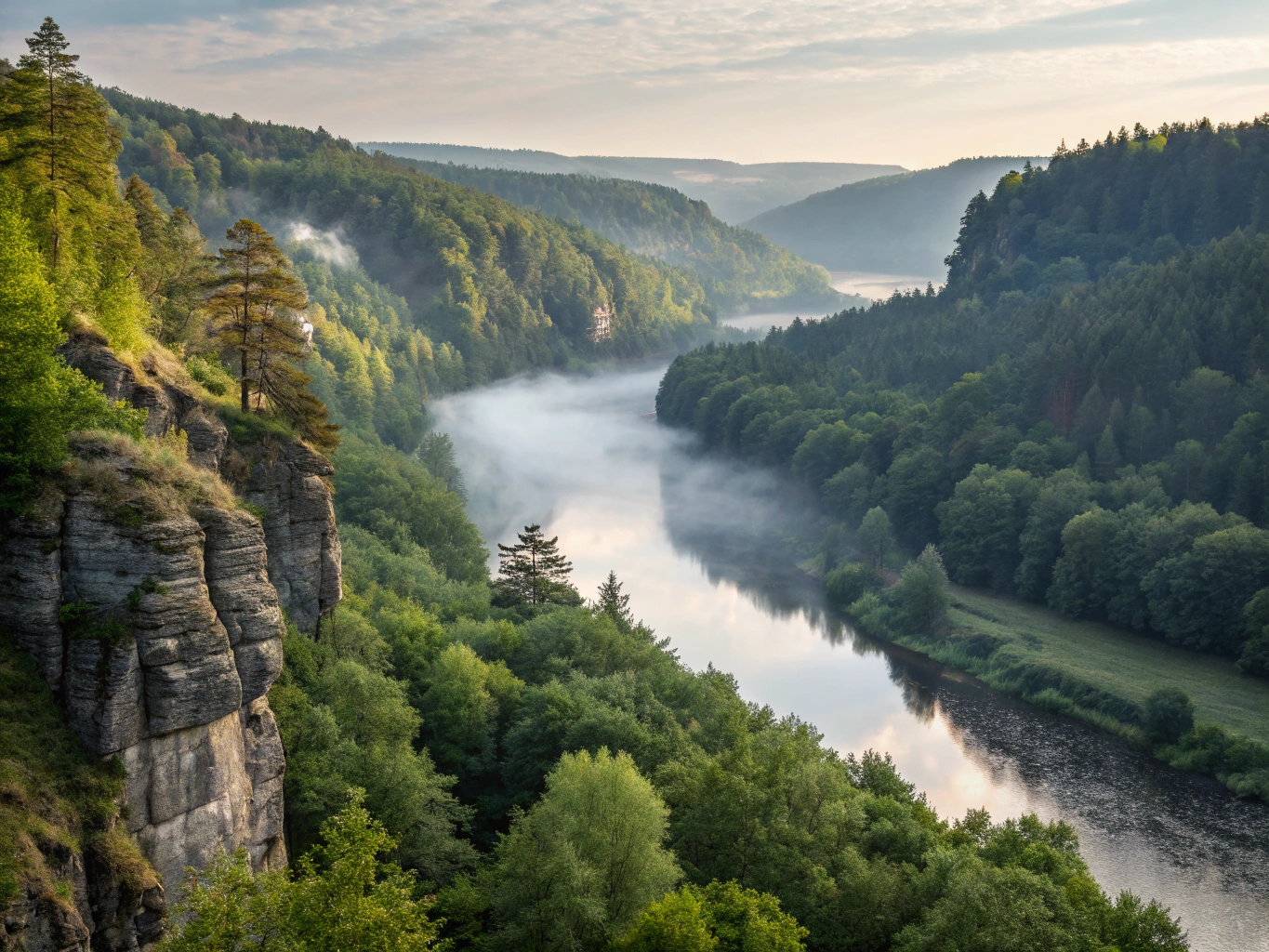
Schwarzatal Valley
⏱️ variableEasy
The Schwarzatal is an idyllic valley with numerous hiking trails and small villages. Here you can enjoy nature away from the tourist paths and unwind. A hike along the Schwarza River is particularly recommended.
Facts & Figures
Camping Region Thüringer Wald
- 🌍 Country
- 🇩🇪 Deutschland
- 📍 Region
- Thuringia
- 🏛️ Province
- not specified, as the Thuringian Forest is a region and not a district
- ☀️ Climate
- Temperate, with cool winters and warm summers.
- 📅 Best Season
- May/June for hiking, July/Aug for swimming lakes
- 🌡️ Summer Avg
- 22 °C
- 🌸 Spring Avg
- 12 °C
- 🏕️ Campsites
- ~50
- ✈️ Airport
- Erfurt-Weimar Airport (ERF)
- 🚌 Public Transport
- Buses and regional trains connect the larger towns.
- 🌧️ Rainy Days
- average 12 days per month
- 🚗 From Munich
- approx. 4 hrs / 400 km via A9
- 🚗 From Hamburg
- approx. 5.5 hrs / 550 km via A7 and A4
- 💰 Price Level
- €€ / Moderate, but seasonal
- 🐕 Dogs
- Top / Many hiking trails and campsites are dog-friendly.
- 🎯 Suitable For
- Nature loversHikersFamilies
🚦 Occupancy by Month
Jan
Feb
Mar
Apr
May
Jun
Jul
Aug
Sep
Oct
Nov
Dec
Quiet Moderate Busy Crowded
 Rent Camper Thüringer Wald
 Campsites Thüringer Wald