


🌿 Natur & Wildnis👨👩👧👦 Familien
Camping Guide | Kärntner Seenplatte
Alpine water, Mediterranean logistics.
Österreich, 🇦🇹 Oesterreich
Camping Guide | Kärntner Seenplatte
The first impression is olfactory: a blend of sun-heated pine wood, sunscreen, and the distinctive humidity hovering over the vast expanses of water. The light refracts differently in the calcareous waters of the Carinthian Lake District than in the Northern Alps—it appears turquoise, almost maritime. When you head to Camping Kärntner Seenplatte, you’re entering a geographical basin south of the main Alpine ridge, which enjoys a favorable climate but poses logistical challenges. The topography forces infrastructure into narrow corridors between the shoreline and steep mountain slopes. For you, this means limited space, terraced pitches, and heavy traffic on federal highways B83 and B98. Unlike Scandinavia, here you’re not buying isolation, but access to a highly developed, almost urban infrastructure amidst an alpine arena. The ground is usually compacted clay or gravel, reinforced for heavy vehicles, as the shore zones are naturally soft. Be prepared for precise maneuvering.
💡Wild camping here is penalized with fines of up to €220 per night, but investing in official campsites guarantees hotel-level infrastructure.
The Region in Detail
Your comprehensive travel guide for camping Kärntner Seenplatte.
Camping Kärntner Seenplatte: The Overview
The region isn’t defined by a single point, but by the triangle between Spittal an der Drau, Villach, and Klagenfurt. Geographically, we’re located south of the High Tauern and the Gurktal Alps, sheltered from the cold northern winds, which often extends the Campingurlaub Kärntner Seenplatte season well into late October. For 90% of travelers, arrival from the north is via the A10 Tauern Autobahn. Here, the first hurdle—financial and time-related—needs to be factored in: in addition to the vignette, separate tolls apply for the Tauerntunnel and the Katschbergtunnel (around €13.50 per trip for cars/motorhomes up to 3.5 tons; above that, via GO-Box, it’s significantly more expensive).
The camping landscape here belongs to Europe’s premium segment. We’re talking about 5-star facilities that resemble resorts more than traditional campgrounds. Pitch density right on the water is high, but parceling is strict. A prime spot on the Wörthersee, Ossiacher See, or Millstätter See realistically costs between €60 and €90 per night in peak season (July/August) for two people, including electricity and local tax. In return, you often get private beaches, modern sanitary buildings with underfloor heating, and pitches with water and wastewater connections.
Logistically, note that the valleys are wide, but the coastal roads are often bottlenecks. Distances are manageable: from Millstätter See in the northwest to Klopeiner See in the southeast, it’s about 80 kilometers, mostly well connected via the A2 Southern Motorway. Gas stations are available every 10–15 kilometers, with prices off the motorway in towns like Villach or Feldkirchen often 10–15 cents cheaper. Anyone planning Camping in Kärntner Seenplatte, Austria needs to understand that spontaneity is hardly possible during peak season. Sites are often booked months in advance. The climate is the decisive factor: thanks to the influence of the Adriatic, warm air flows northward, leading to high daytime temperatures but also to sudden, intense afternoon thunderstorms that discharge along the Karawanks.
Technology & Route: Passes, Brakes, and Thermals
As your technical route advisor, I need to make a clear distinction: the journey itself and movement within the region. Many navigation systems suggest routes over passes to save tolls or shorten distances. Caution: if you’re coming from Styria or Salzburg via the Turracher Höhe (1,795 m), you’ll face gradients of up to 23%. For heavy motorhomes over 3.5 tons or trailers, this places extreme strain on the clutch and braking system. The brake discs can overheat on the long descent toward Ebene Reichenau. My recommendation: use the A10 Tauern Autobahn, even though it’s toll-based. It’s flat, wide, and kinder to your vehicle.
Within the region, there’s a clear division. The large lakes (Wörthersee, Ossiacher See) are fully accessible by road, often accompanied by the railway line. Noise protection becomes an issue when choosing a pitch. The smaller, higher-altitude lakes like Weissensee (930 m above sea level) present a different physical reality. Nights here are noticeably cooler (often below 12°C even in summer), making a functioning auxiliary heater or good insulation essential. Access to Weissensee via the B87 Greifenburger Straße is well-developed but winding.
A critical point for Camping Kärntner Seenplatte is the ground conditions after thunderstorms. The clayey subsoil in the shore zones quickly softens. Heavy rigs (linters, expedition vehicles) should ensure they’re parked on gravelled pitches or keep traction aids (sand plates/grip mats) handy in case they end up on grass. Another detail is the power supply: many campsites offer CEE connections, but often only with 6 or 10 amp fuses. If you run the air conditioner, coffee machine, and hairdryer simultaneously, you’ll frequently have to reset the breaker. Check this in advance.
For trips to neighboring countries (Slovenia/Italy): avoid the Wurzenpass entirely with trailers and heavy rigs (18% gradient, tight curves). Take the Karawanken Tunnel, even though it’s toll-based, or go via Tarvisio (Italy) on the A2. Your vehicle will thank you.
Logistics Tip: The Dead End on the East Shore of Weissensee
Weissensee is well-known, but most people drive blindly to the west shore. Here’s my strategic advice for those seeking peace who are confident behind the wheel: head for the east shore. There’s no direct road connecting the west and east shores along the lake. You’ll have to circle widely around the lake.
Access isn’t via the Drava Valley, but through Paternion/Feistritz and then via Stockenboi. State Road L33 is 25 kilometers long, partly narrow and winding, but fully paved. Why go to such lengths? The road ends on the east shore. There’s no through traffic. You’ll find yourself at one of the most pristine endpoints in the Alps. The water here is often clearer, as there’s less motorboat activity (only electric boats). Important: stock up on everything you’ll need for the next few days in Paternion’s supermarket. On the east shore, basic supplies and dining options are minimal—no large supermarket. So make sure your fridge is full before leaving the valley. This is one of the few places in Carinthia where you can still feel true seclusion even in high season, without sacrificing a pitch with sanitary facilities.
Experiences & Activities: Kärntner Seenplatte
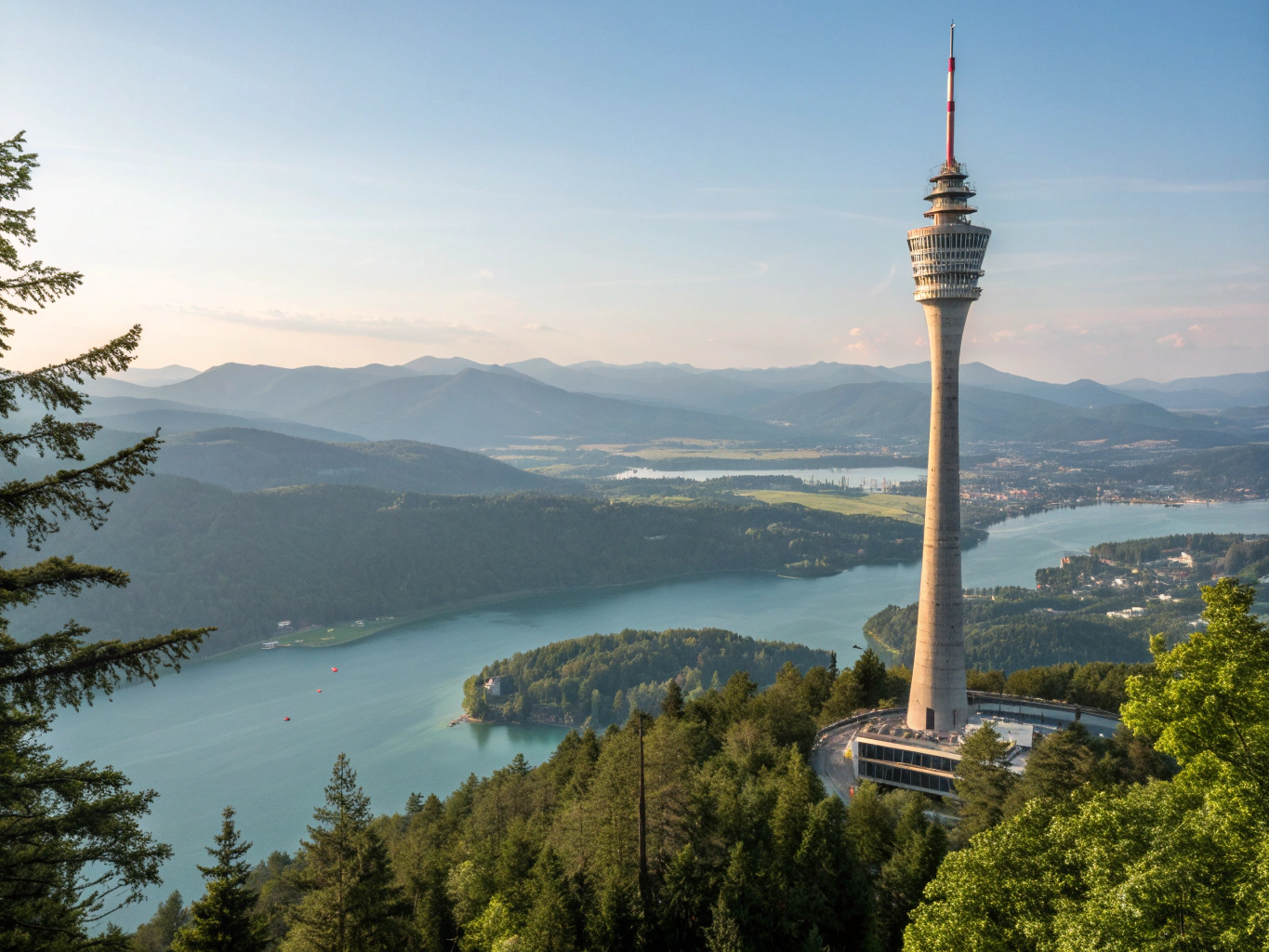
Panoramic View from Pyramidenkogel
⏱️ 2–3 hoursEasy
Enjoy a breathtaking 360-degree view over the Carinthian Lake District from the world’s tallest wooden structure. For adrenaline junkies, there’s a slide inside the tower. An unforgettable experience for the whole family.
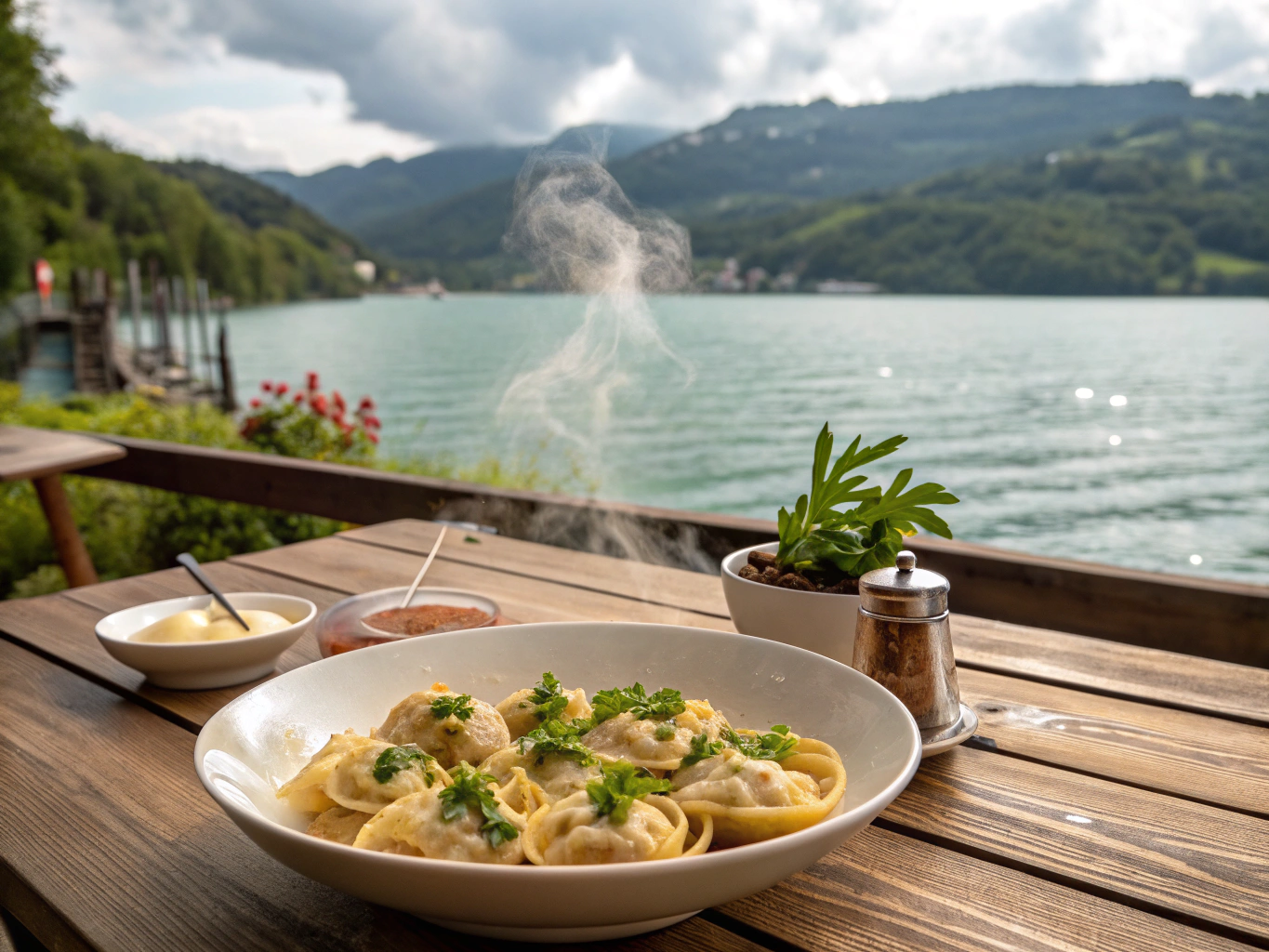
Culinary Delights on Wörthersee
⏱️ 2–3 hoursEasy
Pamper your palate with regional specialties at one of the many restaurants on Wörthersee. Try Kärntner Kasnudeln, Reindling, or fresh-caught fish from the lake. A culinary experience you won’t want to miss.
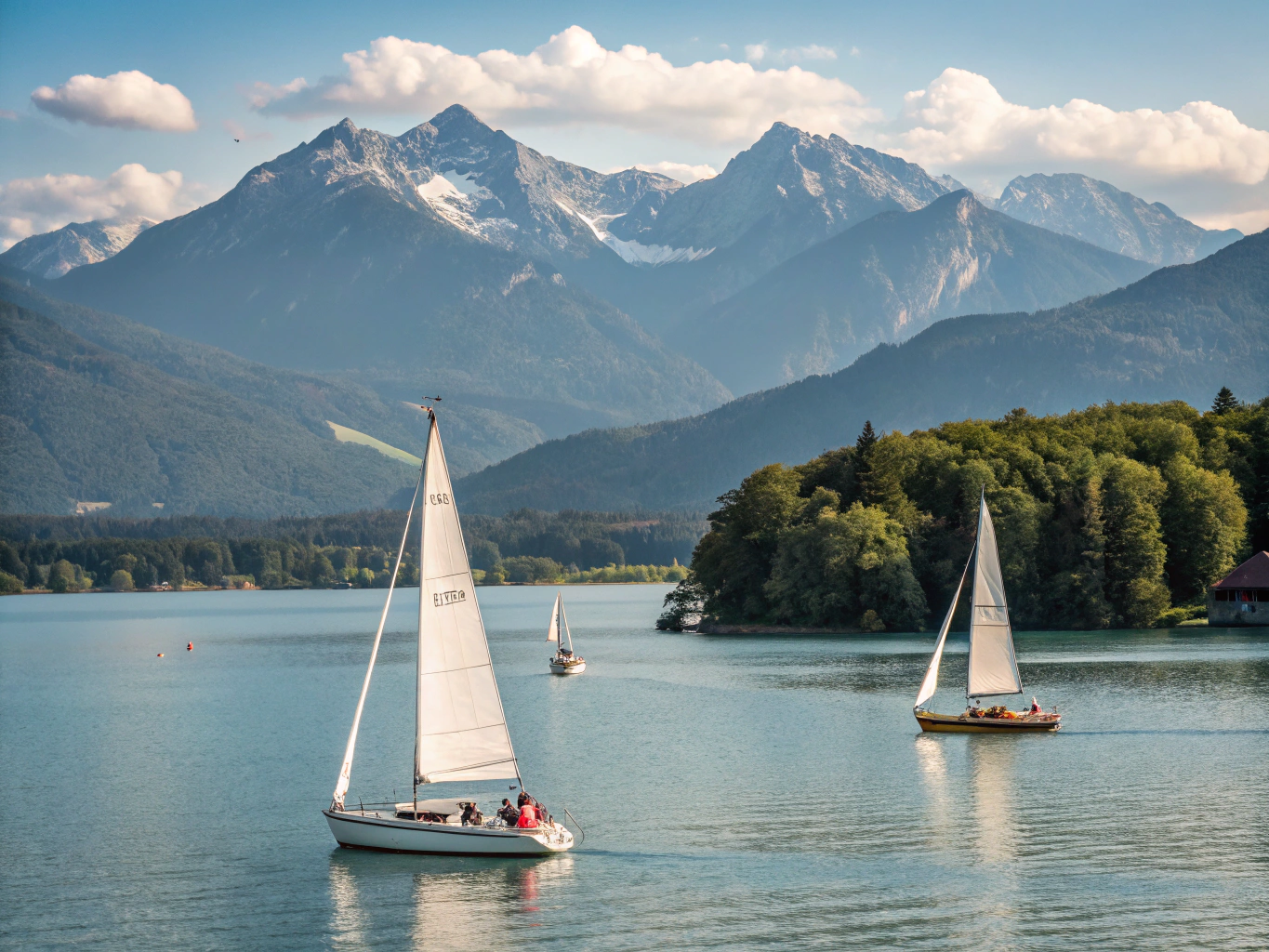
Water Sports on Faaker See
⏱️ 3–4 hoursModerate
Experience the freedom of the water while sailing, surfing, stand-up paddling, or kayaking on the turquoise-blue Faaker See. The imposing mountain backdrop creates a unique atmosphere. A paradise for water sports enthusiasts.
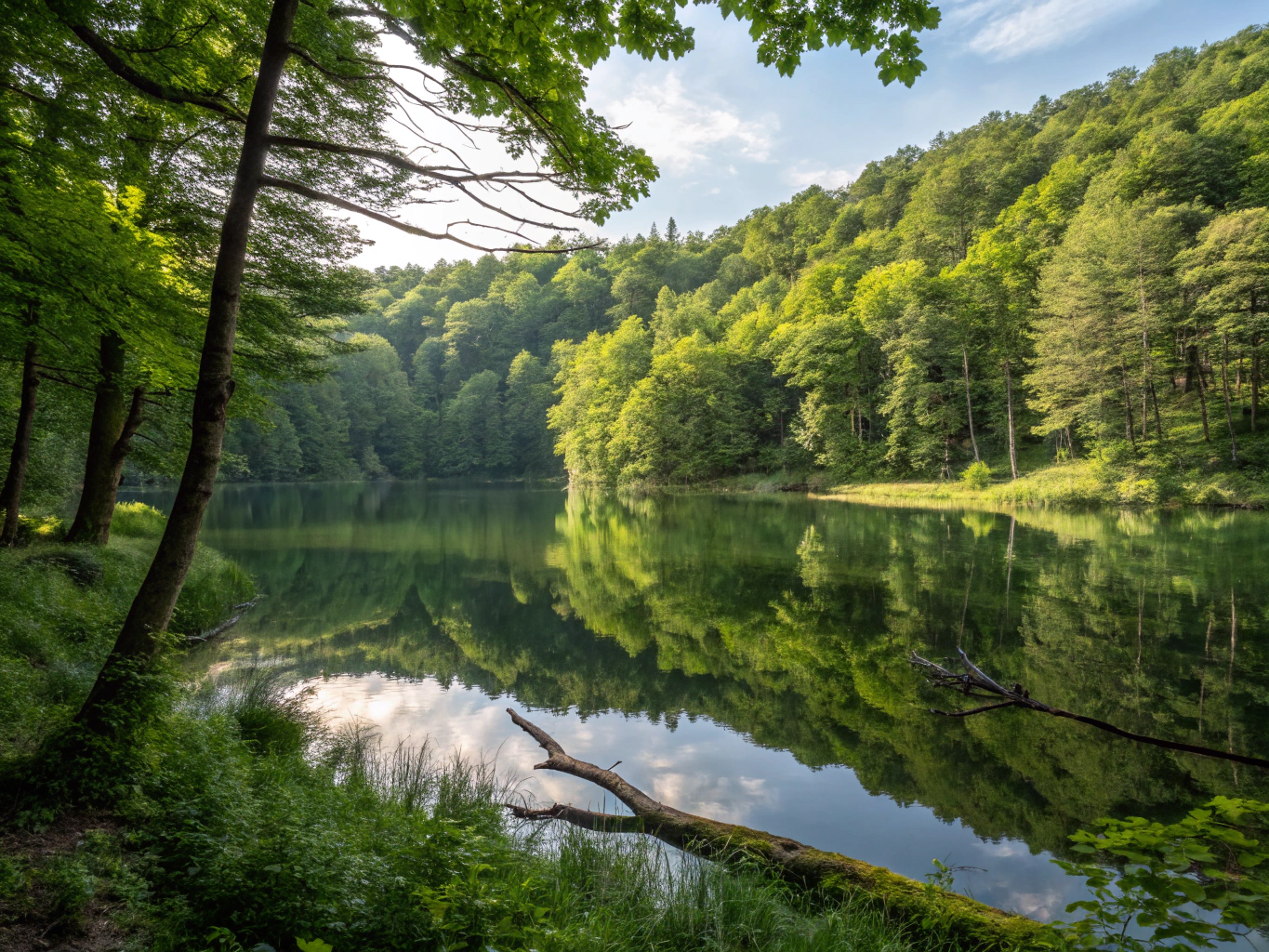
Insider Tip: Hike to Forstsee
⏱️ 4–5 hoursModerate
Discover the idyllic Forstsee, a small lake west of Wörthersee, on a hike through dense forest. Enjoy the tranquility and unspoiled nature. A place off the beaten tourist track.
Facts & Figures
Camping Region Kärntner Seenplatte
- 🌍 Country
- 🇦🇹 Oesterreich
- 📍 Region
- Kärnten
- 🏛️ Province
- Klagenfurt-Land, Feldkirchen
- ☀️ Climate
- Alpine-Mediterranean, mild summers, snowy winters
- 📅 Best Season
- May/June for peace and quiet, July/August for swimming fun
- 🌡️ Summer Avg
- 25 °C
- 🌸 Spring Avg
- 15 °C
- 🏕️ Campsites
- ~55
- ✈️ Airport
- Klagenfurt Airport (KLU), 15 km
- 🚌 Public Transport
- Buses connect most locations; regional trains run along the main lines
- 🌧️ Rainy Days
- 12 days per month in summer
- 🚗 From Munich
- 5 hrs / 450 km via A8 and A10
- 🚗 From Hamburg
- 11 hrs / 1,100 km via A7 and A9
- 💰 Price Level
- €€ / Mid-range level
- 🐕 Dogs
- Top / Many campsites offer special deals for dogs.
- 🎯 Suitable For
- FamiliesWater sports enthusiastsNature lovers
🚦 Occupancy by Month
Jan
Feb
Mar
Apr
May
Jun
Jul
Aug
Sep
Oct
Nov
Dec
Quiet Moderate Busy Crowded
 Rent Camper Kärntner Seenplatte
 Campsites Kärntner Seenplatte