


🌿 Natur & Wildnis👨👩👧👦 Familien
Camping Guide | Tasmania
Your Camping Holiday Between Cradle Mountain & Freycinet
Australien, 🇦🇺 Australia
Camping Guide | Tasmania
Imagine breathing in the officially cleanest air in the world while the jagged, mist-shrouded peaks of Cradle Mountain tower into the sky before you. Just a few hours' drive later, you feel the fine, squeaky quartz sand of Wineglass Bay beneath your feet and look out over turquoise water that rivals the Caribbean. Tasmania is a place of extreme contrasts: here, alpine wilderness meets gentle coastlines, mossy forests meet red granite rocks. A camping trip between these two national parks is not just a holiday, but an expedition into a world where wombats cross your path and nature is still in charge. Welcome to the wild heart of Australia.
💡The Campcruisers tip: Never underestimate the Tasmanian weather! 'Four seasons in one day' is not a cliché here, but everyday life. Even in midsummer, it can snow at Cradle Mountain, while it's 30 degrees on the east coast. Pack layers for every situation and never (really never!) drive after dusk – the wildlife density on the roads is dangerously high.
The Region in Detail
Your comprehensive travel guide for camping Tasmania.
Location & Arrival: Reaching the End of the World
Tasmania, affectionately known as 'Tassie', is Australia's southernmost state and an island located about 240 kilometers south of the Australian mainland, separated by the often rough Bass Strait. The route we are looking at here connects two of the island's most iconic points: Cradle Mountain-Lake St Clair National Park in the northwestern highlands and Freycinet National Park on the central east coast. Between them lie about 200 to 250 kilometers of road, depending on whether you choose the route via Launceston.
Arrival by Plane:
For most campers from Europe, the adventure begins with a long-haul flight to Melbourne or Sydney (at least 22-24 hours pure flight time). From there, you continue via domestic flight. The strategically best airport for this route is Launceston (LST). It is centrally located: from here it is about a 2-hour drive west to Cradle Mountain and about 2.5 hours southeast to Freycinet NP. Alternatively, Hobart (HBA) in the south is possible, which however means longer travel times (approx. 4.5 hours to Cradle Mountain).
Arrival by Ferry (Spirit of Tasmania):
If you are already on the Australian mainland and have your own vehicle or a rented camper, take the 'Spirit of Tasmania'. The ferry operates between Geelong (near Melbourne) and Devonport. Devonport is ideally located, only about 75 minutes' drive from Cradle Mountain. Note: The crossing takes approx. 9-11 hours (day or night sailing) and must be booked months in advance during peak season (December-February), as spaces for motorhomes are extremely popular and limited.
Driving Times & Roads:
Never underestimate driving times in Tasmania. What looks like a short distance on the map often turns out to be a winding, narrow country road where you can rarely drive faster than 60-80 km/h. There are no motorways in the European sense in this region. Plan a full travel day for the stretch from Cradle Mountain to Freycinet if you want to arrive relaxed and perhaps make a stop in Sheffield or Launceston. The roads are generally paved and in good condition, but often narrow and without shoulders.
Sub-regions at a Glance: Fire and Ice
This route is a study in contrasts. We move from an alpine, almost mystical mountain world to a Mediterranean-style coastal landscape. The region can be roughly divided into three zones, each with a completely different character and different climatic conditions.
1. The Highlands: Cradle Mountain-Lake St Clair National Park
This is the wild heart of Tasmania. The landscape is characterized by dolerite peaks that jut into the sky like teeth, deep glacial lakes (like the famous Dove Lake), and ancient rainforests covered in moss and lichen. It is harsh here. Even in summer, temperatures can drop to freezing at night. This is the territory for serious hikers, nature lovers, and photographers who appreciate the moody beauty of the weather. It is also the best place to see wombats in the wild, especially at dusk around Ronny Creek.
2. The Midlands & Tamar Valley
Between the two national parks lies the agricultural heart of the island. Around Launceston and the Tamar Valley, you will find a completely different world: rolling hills, vineyards (some of the best Pinot Noirs in the world come from here), and historic English-style villages like Ross or Campbell Town. This region often serves as a 'supply station' and cultural stopover. The climate here is more temperate and drier than in the western highlands.
3. The East Coast: Freycinet Peninsula
As soon as you reach the east coast, the light changes. It becomes brighter, warmer, and the colors more intense. Freycinet National Park is famous for its pink granite rocks (The Hazards) and the perfectly curved Wineglass Bay. The climate here is significantly milder and sunnier than at Cradle Mountain. The vegetation is dry eucalyptus forest. This region attracts beach lovers, kayakers, and leisure campers. Places like Coles Bay offer tourist infrastructure, while the beaches are often deserted once you leave the main paths. The contrast between the turquoise water and the orange rocks is the visual highlight of any Tasmania trip.
Camping in the Region: What to Expect?
Camping in Tasmania is a religion, but the conditions between Cradle Mountain and Freycinet couldn't be more different. Generally: the infrastructure is good, but capacity is the bottleneck in high season.
National Park Camping (Parks & Wildlife Service)
In the national parks themselves, there are often only very basic sites or none at all for large motorhomes.
Cradle Mountain:* Camping is not allowed directly in the park at Dove Lake. The main site is 'Discovery Parks Cradle Mountain' right at the park boundary. It is commercial, offers power, hot showers, and a rustic camp kitchen. It is expensive and must be booked weeks, or in summer months, in advance. Wild camping is strictly forbidden throughout the Cradle region and is monitored.
Freycinet:* Here you will find the famous 'Richardsons Beach' campground right behind the dune. The location is world-class, but the sites are allocated by lottery (!) in summer (Christmas/Easter) because they are so sought after. Outside of these times, you have to book extremely early (6-9 months). There are 'Powered Sites' and basic tent sites here.
Commercial Holiday Parks
Outside the parks, e.g., in Launceston, Sheffield, or Coles Bay (Iluka Holiday Centre), you will find classic Australian caravan parks. These often offer full facilities: 'Ensuite Sites' (your own bathroom pod at the site), playgrounds, BBQ areas, and coin laundries. In high season, these sites cost between 40 and 70 AUD per night for two people.
Free Camping & Low Cost
Tasmania has an excellent network of 'RV Friendly Towns'. Places like Campbell Town or Railton often offer free or very cheap (donation box) parking spaces for self-contained vehicles. Apps like 'WikiCamps Australia' are indispensable for this. However, note: on the east coast (Freycinet), 'Free Camping' has become very rare as rangers take strict action against illegal camping to protect nature. The 'Friendly Beaches' (Isaac’s Point) in Freycinet NP are a free camping tip (pit toilet only, no water), but here too: a National Park Pass is required.
The National Park Pass
To even be allowed in the parks (and at the campgrounds there), you need a valid 'Parks Pass'. For tourists, the 'Holiday Pass' is usually worth it (valid for up to 2 months for one vehicle including passengers, approx. 80-90 AUD). Buy it online or on the ferry to avoid fines.
Practical Information for Campers
A road trip in Tasmania requires a bit more planning than on the mainland. Here are the hard facts to save you from nasty surprises.
Biosecurity (Quarantine):
Tasmania has extremely strict biosecurity laws to keep its agriculture and flora free from pests (like the fruit fly). You may NOT bring fresh fruit, vegetables, plants, seeds, or fish products (salmon etc.) into Tasmania – neither in your suitcase on the plane nor in the camper on the ferry. There are sniffer dogs and checks upon arrival. Buy your supplies locally!
Shopping & Supplies:
Supermarkets (Woolworths, Coles) are available in Launceston and Devonport. In smaller towns like Coles Bay or near Cradle Mountain, there are only small 'IGA' stores or general stores, which are significantly more expensive and have a limited range. Stock up on basic groceries in the large cities. Alcohol is not sold in supermarkets in Australia, but only in separate 'Bottle Shops' (often next door).
Fuel:
Gas stations are more sparse in rural areas and often close as early as 5 or 6 PM. On the route to Cradle Mountain, there are long stretches without a gas station. The rule is: if the tank is half empty, refuel at the next opportunity. Petrol and diesel are more expensive than on the mainland.
Mobile & Internet:
Outside the cities, reception is patchy. 'Telstra' offers by far the best coverage in rural areas and national parks. Optus and Vodafone often have no reception in the wilderness around Cradle Mountain. Download offline maps (Google Maps or Maps.me).
Waste Disposal (Dump Points):
Disposal of grey water and chemical toilets is well regulated. Most towns have public 'Dump Points', often at showgrounds or public toilets. Use apps to find them. Never empty waste water into nature – the ecosystems are extremely fragile.
Wildlife & Driving:
Tasmania is the 'Roadkill Capital' of the world. Wallabies, pademelons, wombats, and devils are active at dusk and night. Avoid driving between sunset and sunrise completely. A collision with a 30kg wombat will destroy your rental camper (high insurance excess!) and kill the animal.
Insider Knowledge & Secret Tips
Away from the beaten paths of Dove Lake and Wineglass Bay Lookout, there are experiences that remain hidden to most tourists.
The Best Wombat Spot:
Everyone wants to see wombats. Forget the zoo. At Cradle Mountain, drive to the 'Ronny Creek' parking lot in the evening (just before dusk). There are boardwalks over the grassland. The wombats come out here to graze and almost completely ignore humans. Please keep your distance and never feed them (risk of disease from mange!).
Roadside Culinary Delights:
On the way from Launceston to the east coast (via St Marys Pass), you must try 'Scallop Pies'. This is a Tasmanian institution: scallops in curry sauce, wrapped in puff pastry. 'Bakery 31' in Ross is famous for them (and for their vanilla slices). Another tip: 'Freycinet Marine Farm' offers the freshest oysters and mussels straight from the water – perfect for a picnic at the camper.
The Alternative to Wineglass Bay:
The climb to the Wineglass Bay Lookout is like an ant trail. If you are looking for peace, drive to the 'Friendly Beaches' north of Coles Bay. Kilometers of white sand, hardly any people, and free camping (basic!). Or hike to 'Hazards Beach' – often completely empty and just as beautiful, only reached via a flatter path (via the Isthmus Track).
Secret Tip 'Little Blue Lake':
In the northeast, slightly off the direct route (near Derby), lies the Little Blue Lake. An old tin mine lake with a surreal, bright turquoise color due to the minerals. Not suitable for swimming (high acidity), but an incredible photo stop that hardly anyone knows.
Bicheno at Night:
Instead of an expensive penguin tour, you can often see little penguins waddling ashore at dusk on the rocks at 'Redbill Beach' in Bicheno (north of Freycinet). Be quiet, do not use flash (only red light flashlights to protect the animals' eyes), and enjoy the spectacle for free.
Restaurant Tip:
If you don't want to cook in the camper for once: 'The Devil’s Corner Cellar Door' on the east coast. It is not just a winery, but also offers excellent wood-fired pizza and seafood with a breathtaking view over the lagoon to the Hazards mountain range. Address: Sherbourne Rd, Apslawn TAS 7190.
Experiences & Activities: Tasmania
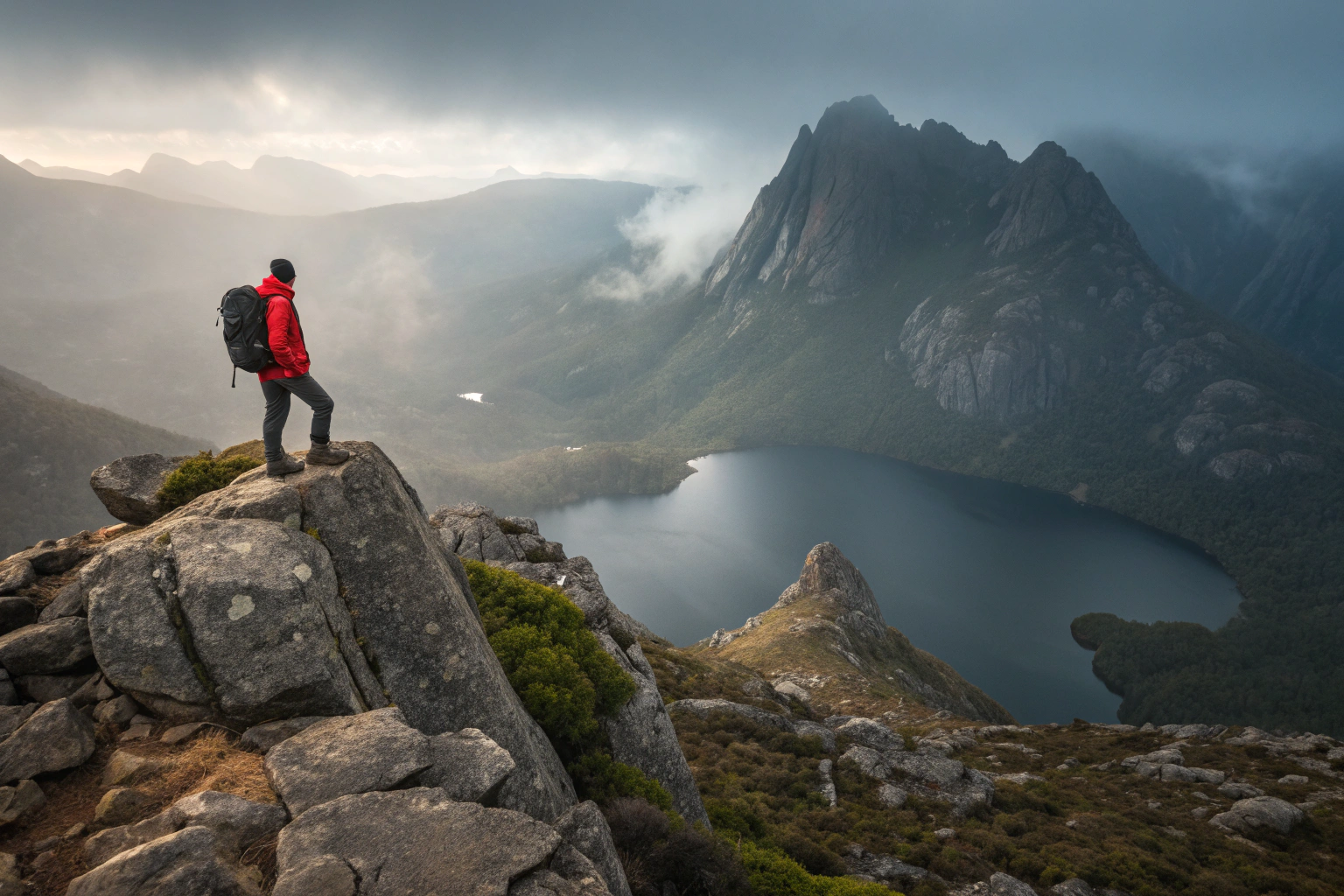
Cradle Mountain Summit
⏱️ 6-8 hrsChallenging
Challenging scramble over dolerite rocks to the summit with a 360-degree panorama over the highlands.
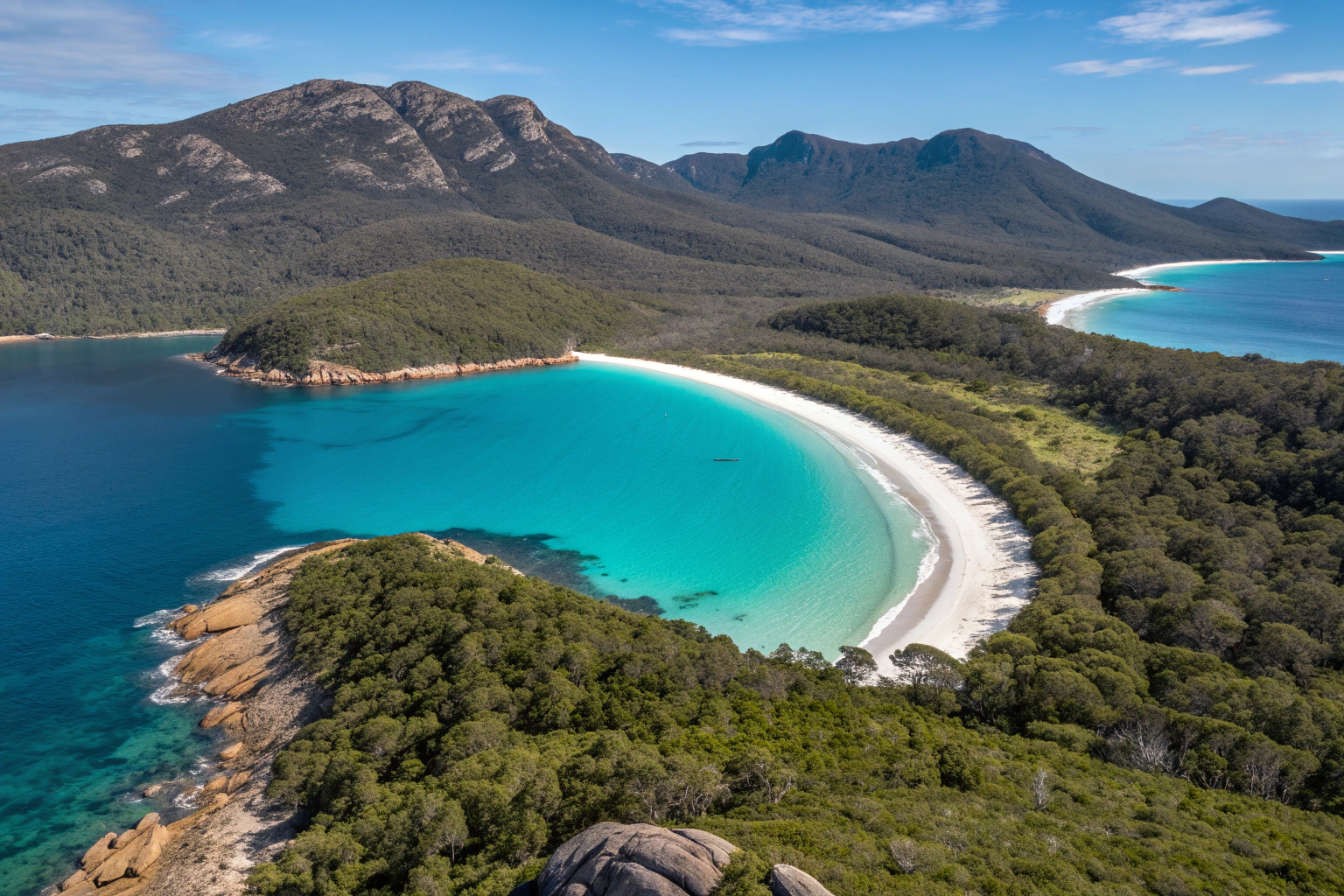
Wineglass Bay Beach Walk
⏱️ 2.5-3 hrsModerate
From the lookout down to the beach. Feel the famous white quartz sand and swim in the turquoise water.
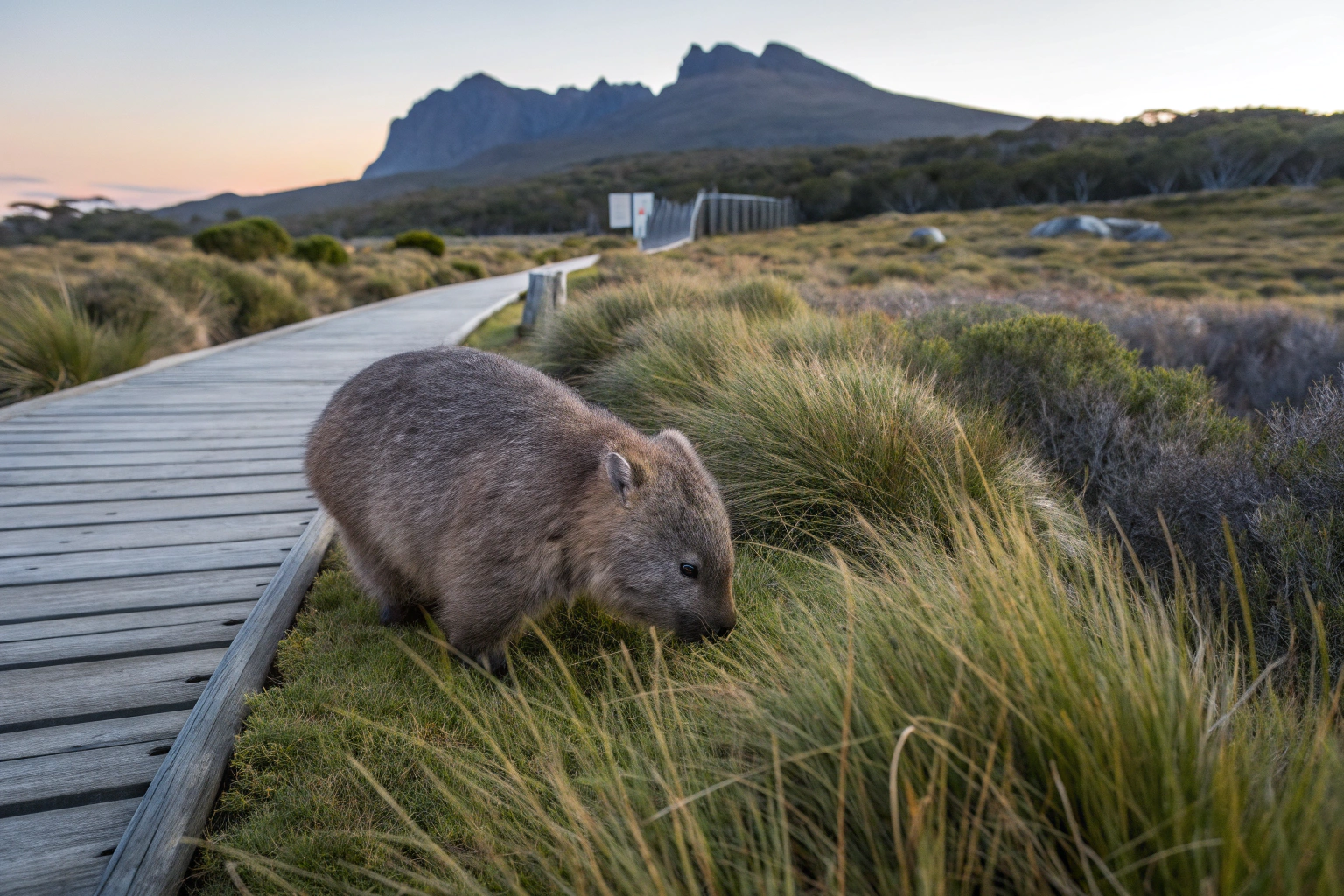
Wombat Spotting Ronny Creek
⏱️ 1 hrEasy
A walk on boardwalks through the grasslands to observe wild wombats in their natural environment.
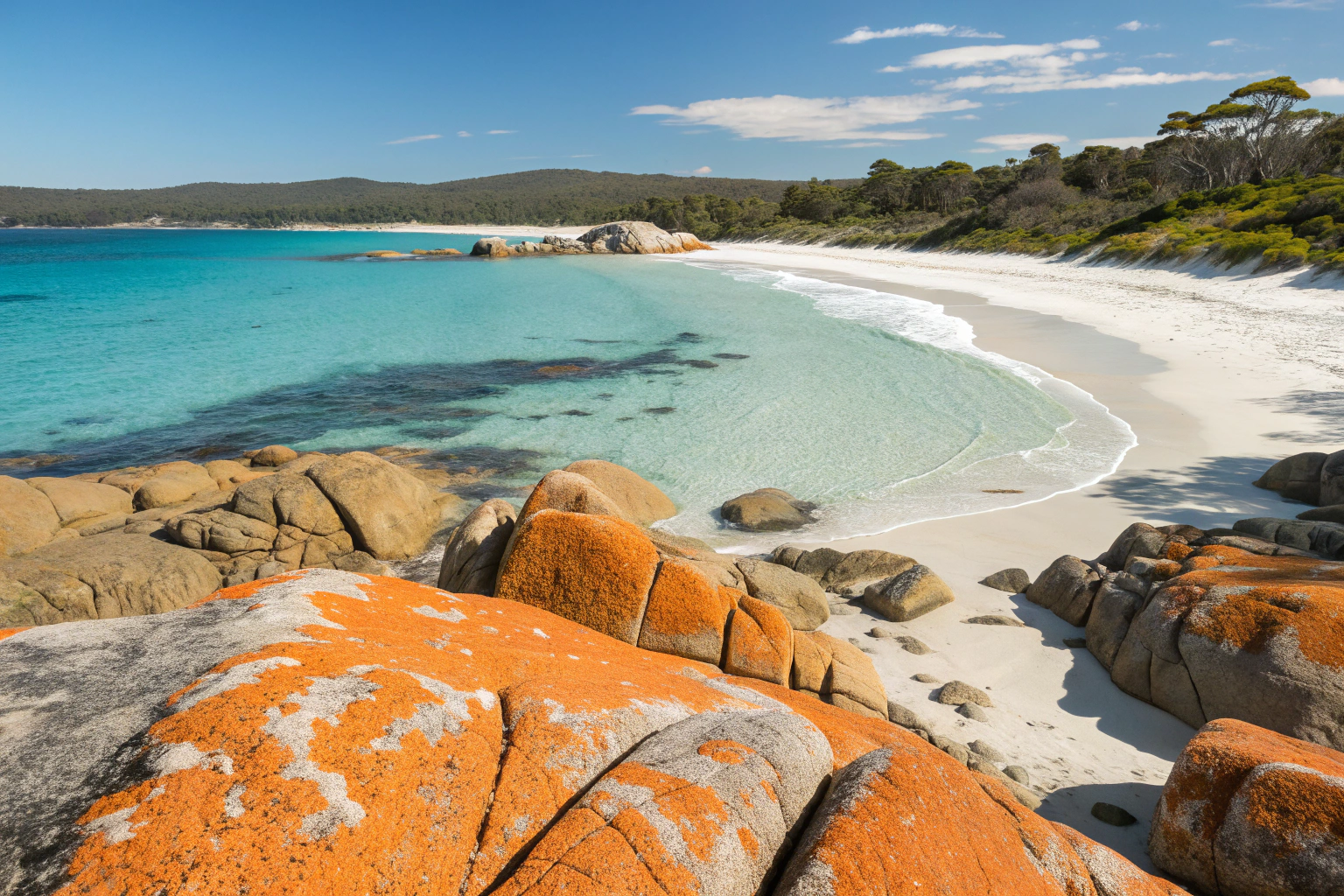
Bay of Fires (Optional)
⏱️ VariableEasy
Slightly north of Freycinet: The famous orange lichen-covered rocks in contrast to the blue ocean.
Facts & Figures
Camping Region Tasmania
- 🌍 Country
- 🇦🇺 Australia
- 📍 Region
- Tasmania
- 🏛️ Province
- Tasmania
- ☀️ Climate
- Temperate maritime, alpine in the highlands
- 📅 Best Season
- December to March
- 🌡️ Summer Avg
- 17-25 °C
- 🌸 Spring Avg
- 10-17 °C
- 🏕️ Campsites
- ~approx. 45 (in the region)
- ✈️ Airport
- Launceston (LST) or Hobart (HBA)
- 🚌 Public Transport
- Hardly available, rental car mandatory
- 🌧️ Rainy Days
- Cradle: 200+ / Freycinet: 80
- 🚗 From Munich
- 24+ hrs (flight)
- 🚗 From Hamburg
- 24+ hrs (flight)
- 💰 Price Level
- €€ - €€€
- 🐕 Dogs
- Low (prohibited in national parks)
- 🎯 Suitable For
- HikingNature photographyRoad trip
🚦 Occupancy by Month
Jan
Feb
Mar
Apr
May
Jun
Jul
Aug
Sep
Oct
Nov
Dec
Quiet Moderate Busy Crowded
 Rent Camper Tasmania
 Campsites Tasmania