


🌿 Natur & Wildnis👨👩👧👦 Familien
Camping Guide | Northern Territory
Your Camping Adventure in the Red Centre
Australien, 🇦🇺 Australien
Camping Guide | Northern Territory
Imagine waking up and the world is red. Not just a little reddish, but a deep, rusty ochre that seems to glow at dawn. The air is clear, dry, and smells of spinifex grass and millennia of silence. This is the Red Centre. Here, in the spiritual heart of Australia, camping is not just an overnight stay, but an act of humility before nature. When the sun sinks behind Uluru, bathing the monolith in an unreal violet while you sit in front of your camper and open your first cold drink, you feel it: this vastness changes you. It's raw, it's dusty, and it's one of the most magical places where you will ever pitch your awning.
💡The Campcruisers tip: Never underestimate the distances and the flies. A head net is not a fashion faux pas, but essential for your mental health. Also: Book the Ayers Rock Campground months in advance – it's basically the only spot in the front row.
The Region in Detail
Your comprehensive travel guide for camping Northern Territory.
Location & Arrival: The Journey to the Heart of the Continent
The Red Centre is not just a destination; it is a geographical definition of isolation. We are located deep in the Northern Territory, about 450 kilometers southwest of Alice Springs. To understand the dimensions: the nearest major city, Adelaide, is over 1,200 kilometers away as the crow flies. For you as a camper, this means the journey is part of the adventure and requires exact planning.
Arrival by Plane & Rental Camper:
The most direct route is via Ayers Rock Airport (AYQ, also known as Connellan Airport). Qantas and Jetstar fly to this small desert airport directly from Sydney, Melbourne, Brisbane, or Cairns. You can pick up your pre-booked camper directly here. Note: Fleets are small, prices are high. Booking six months in advance is mandatory.
The Road Trip from Alice Springs:
Many campers start in Alice Springs (ASP). The advantage: a larger selection of vehicles and better supply options (large supermarkets) before you start. The drive from 'The Alice' to Uluru takes about 4.5 to 5 hours of pure driving time (approx. 450 km) via the Stuart Highway (South) and the Lasseter Highway. The route is completely paved and easily accessible even for large motorhomes. It is a monotonous but hypnotic drive through endless red earth and bushland. Gas stations are available at Erldunda Roadhouse (intersection of Stuart/Lasseter Highway) and Mount Ebenezer Roadhouse.
For 4x4 Enthusiasts:
Those with an off-road vehicle often choose the 'Red Centre Way' (formerly Mereenie Loop). This route connects Alice Springs, West MacDonnell Ranges National Park, Kings Canyon, and Uluru. Parts of this route are unpaved (corrugated iron track, gravel) and strictly require a permit as well as a 4WD vehicle. It is the more beautiful, wilder route, but it costs time and wear and tear.
Tolls & Fees:
There are no road tolls in the classic sense, but entry to the Uluru-Kata Tjuta National Park is subject to a fee. It's best to buy passes online in advance from 'Parks Australia' to avoid queues at the gate. The pass is usually valid for 3 days and can be extended.
Overview of the Sub-regions
When we talk about the 'Red Centre', in this context we usually mean the triangle of Yulara, Uluru, and Kata Tjuta. However, the region is more nuanced than it looks on the map. Here is your navigation guide through the zones:
1. Yulara (Ayers Rock Resort): The Civilization Bubble
Yulara is not a natural village but a purpose-built service town about 20 kilometers from Uluru. Everything you need to survive is located here: the campground, hotels, gas station, supermarket (IGA), post office, and restaurants. It is the only place in the immediate vicinity of the park where you are allowed to stay overnight. Yulara is the base camp. Don't expect authentic outback charm here, but rather functional infrastructure with a resort character.
2. Uluru (The Monolith): The Spiritual Center
About a 20-minute drive from Yulara lies the rock. The area around Uluru is pure national park territory. There are no overnight accommodations, no restaurants (except for the cultural center café), and no gas stations. It is a zone of wonder and hiking. The Base Walk leads 10.6 km around the rock. Important: The rock is sacred to the Anangu (the traditional owners). Climbing has been officially prohibited since 2019, and the paths have been dismantled.
3. Kata Tjuta (The Olgas): The Wild Sister
About 50 kilometers west of Uluru lie the 36 rock domes of Kata Tjuta. Many campers report finding this place almost more impressive than Uluru itself because you can hike into the rock formations ('Valley of the Winds'). It is often windier and quieter here, and the gorges offer more shade. Again: pure nature, no infrastructure except for dry toilets and water stations.
4. Curtin Springs: The Real Outback
About 85 kilometers (or an hour's drive) east of Yulara lies Curtin Springs Station. This is an active, privately owned cattle station. Why is this important? Because it is the only camping alternative if Yulara is fully booked or if you want to save money. Here you experience the raw, unvarnished outback. It's dustier and less polished, but full of character.
Target Group Check:
Yulara is for everyone – from luxury campers to tent backpackers. Kata Tjuta tends to attract hikers and those seeking peace who want to escape the mass tourism at the Uluru Sunset Strip. Curtin Springs is for adventurers and budget travelers.
Camping in the Red Centre: What to Expect?
Camping at Uluru is a monopolistic affair, and you must take this into account when planning. There is no 'I'll just drive there and see where there's a spot'. Here is the hard reality:
Ayers Rock Campground (Yulara):
This is the top dog. It is operated by 'Voyages' and is part of the resort. The site is huge, but in the high season (winter) it is still often booked to the very last meter.
Pitches: There are Powered Sites (electricity & water) and Unpowered Sites (tent lawn). The plots are often separated by small bushes, but don't expect absolute privacy. The ground is typical red desert sand – it is hard! Normal pegs will bend immediately. You need massive steel nails or screw pegs and ideally a hammer (not a rubber mallet).
Facilities: Very good. Clean sanitary facilities (although wait times are possible at full capacity), a large camp kitchen with BBQs, coin-operated laundry machines, and – the highlight – a swimming pool. Yes, a pool in the desert is worth its weight in gold after a 10km hike.
Prices: Upscale. Expect to pay approx. 50-70 AUD per night for two people with electricity.
Curtin Springs Station (The Alternative):
If you are self-sufficient, this is your spot. Curtin Springs often offers unpowered camping for free or for a very small fee (Powered Sites are available in limited numbers and are subject to a fee).
Atmosphere: Here you are staying on a cattle station. There are showers (for a fee, water is precious), food at the roadhouse, and peacocks/emus walking across the site. It is rustic, the ground is dusty, but the starry sky out here, almost 100km away from the lights of Yulara, is absolutely unbeatable.
Wild Camping:
A clear no. In the national park and along the entire Lasseter Highway, wild camping is strictly prohibited and monitored by rangers. The fines are substantial. Use only designated rest areas for short breaks, but not for overnight stays unless they are explicitly designated as 24h stops (very rare near the park).
The 'Red Sand' Problem:
No matter where you stay: the red sand is extremely fine. It will get into your camper. Into your shoes. Into your bed. Accept it as a souvenir. A good hand brush and a doormat in front of the camper door are mandatory equipment.
Practical Information for Campers
The outback does not forgive mistakes. Here is the data that will make your trip safe and relaxed:
Fuel & Supplies:
Gas stations are located in Yulara (Shell) and Curtin Springs. Prices are significantly higher than on the coast or in Alice Springs. Always fill up when you can. The IGA supermarket in Resort Square in Yulara is surprisingly well-stocked but has 'island prices'. Fresh fruit and vegetables are expensive. If you are coming from Alice Springs, buy your basic supplies there and fill the fridge.
Water:
The most important commodity. You should always have at least 10-20 liters of emergency water per person in the camper in case of a breakdown. For hikes, the rule of thumb is: 1 liter of water per person per hour. There are drinking water stations at the Uluru and Kata Tjuta parking lots where you can refill your bottles.
Disposal & Gas:
A 'Dump Point' (disposal station for chemical toilets and greywater) can be found at the Ayers Rock Campground. Gas bottles (LPG) can be refilled or exchanged at the gas station in Yulara (Swap & Go).
Connectivity & Emergency Calls:
In Yulara, you have full 4G reception (Telstra and Optus work well). In the national park itself, there are cell towers, so you usually have reception at Uluru and the Kata Tjuta viewpoints. In between and on the highway: dead zone. A satellite phone or a PLB (Personal Locator Beacon) is not mandatory for normal tourists on the paved road, but reassuring. However, it is highly recommended for off-road tours (Mereenie Loop).
Alcohol Rules:
The Northern Territory has strict alcohol laws. In Yulara, as a tourist, you can buy alcohol in the supermarket or in bars, but you often have to show your ID/passport (scanning system 'Banned Drinker Register'). Consumption is allowed at the campground, but public consumption on streets or in the national park is strictly prohibited. Respect this – it is culturally sensitive.
The Flies:
We cannot say it often enough: between October and April, bush flies can be a psychological burden. They don't bite, but they crawl into your mouth, nose, and eyes looking for moisture. Buy a fly net for your hat immediately in Alice Springs or at the airport. You will thank us.
Insider Knowledge & Secret Tips
Everyone knows the pictures of the sunset at the 'Sunset Strip'. But as a Campcruiser, you want more than the standard photo. Here are our expert tips:
Sunrise > Sunset:
In the evening, hundreds of buses and campers gather at the official 'Sunset Viewing Area'. It is crowded and loud. Our tip: get up early. Very early. Drive into the park in the dark to the 'Talinguru Nyakunytjaku' viewpoint. Yes, there are people here too, but the atmosphere at sunrise is more spiritual, quieter. The birds wake up, the cold of the desert night gives way to warmth. And after that? You're already there for the 'Base Walk' before the heat arrives.
Kata Tjuta 'Valley of the Winds':
While everyone else is walking around Uluru, the 'Valley of the Winds' Walk (7.4 km) at Kata Tjuta offers the more spectacular hiking experience. It is more demanding, steeper, and leads you right through the massive rock domes. Important: Start at sunrise. At temperatures above 36°C, the trail is often closed by rangers at 11:00 AM for safety reasons.
Culinary & Indigenous Food:
In the resort, there is the 'Kulata Academy Cafe'. It is run by trainees from the National Indigenous Training Academy. The coffee is excellent, and it's a great place to support the local community. If you're looking for something special: try burgers with kangaroo, camel, or crocodile meat at the 'Outback Pioneer BBQ'. Here you buy the raw meat and grill it yourself on huge communal grills. This is the most social way to eat and you immediately strike up conversations with other campers.
Free View in Yulara:
Want to see the rock without driving into the park? In the resort, there is the 'Imalung Lookout' near the 'Sails in the Desert' hotel. From here you have a good view of Uluru, especially beautiful at sunset if you want to save on entry for the evening or just want to relax with a glass of wine without having to drive.
Season Tip:
Travel in May or September. The nights are no longer as icy as in July (where it can certainly be 0°C!), but the days are pleasantly warm (25-30°C) and the fly plague is still manageable.
Experiences & Activities: Northern Territory
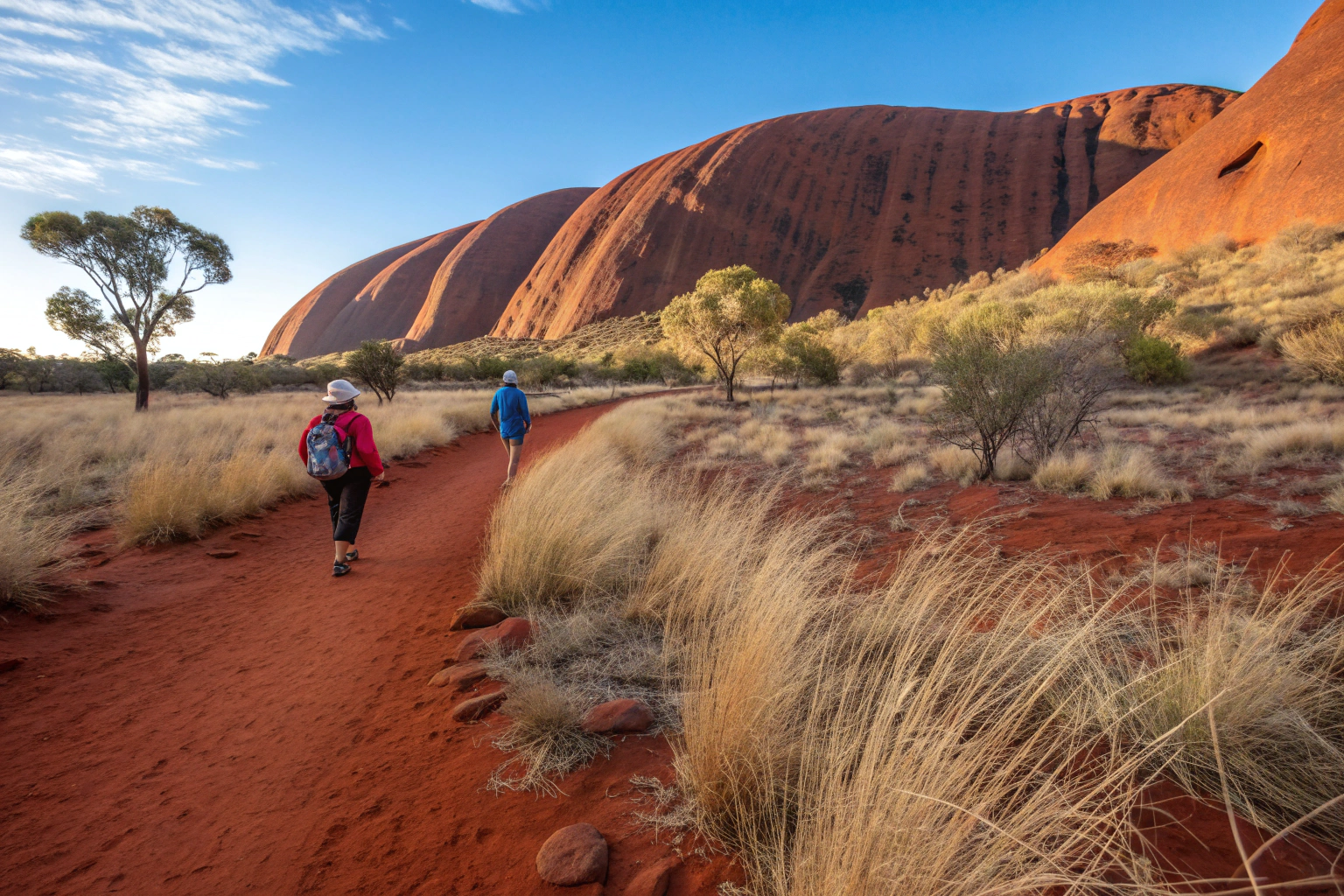
Uluru Base Walk
⏱️ 3-4 hours (10.6 km)Moderate
The complete circumnavigation of the monolith. Experience the changing textures, waterholes, and rock paintings up close. Flat but long.
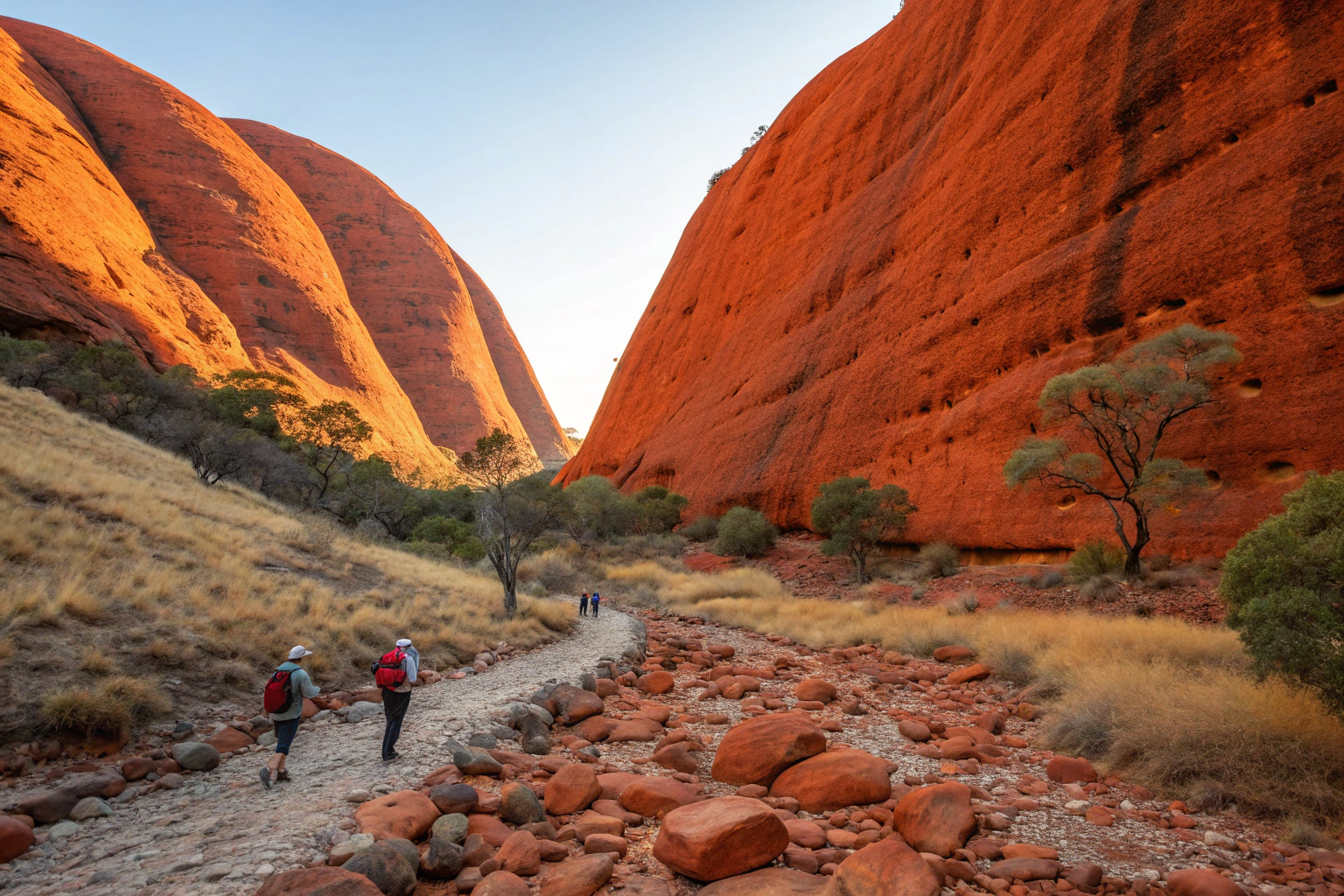
Valley of the Winds
⏱️ 3-4 hours (7.4 km)Challenging
Hike through the gorges of Kata Tjuta. Challenging terrain, spectacular views between the rock domes. Start early!
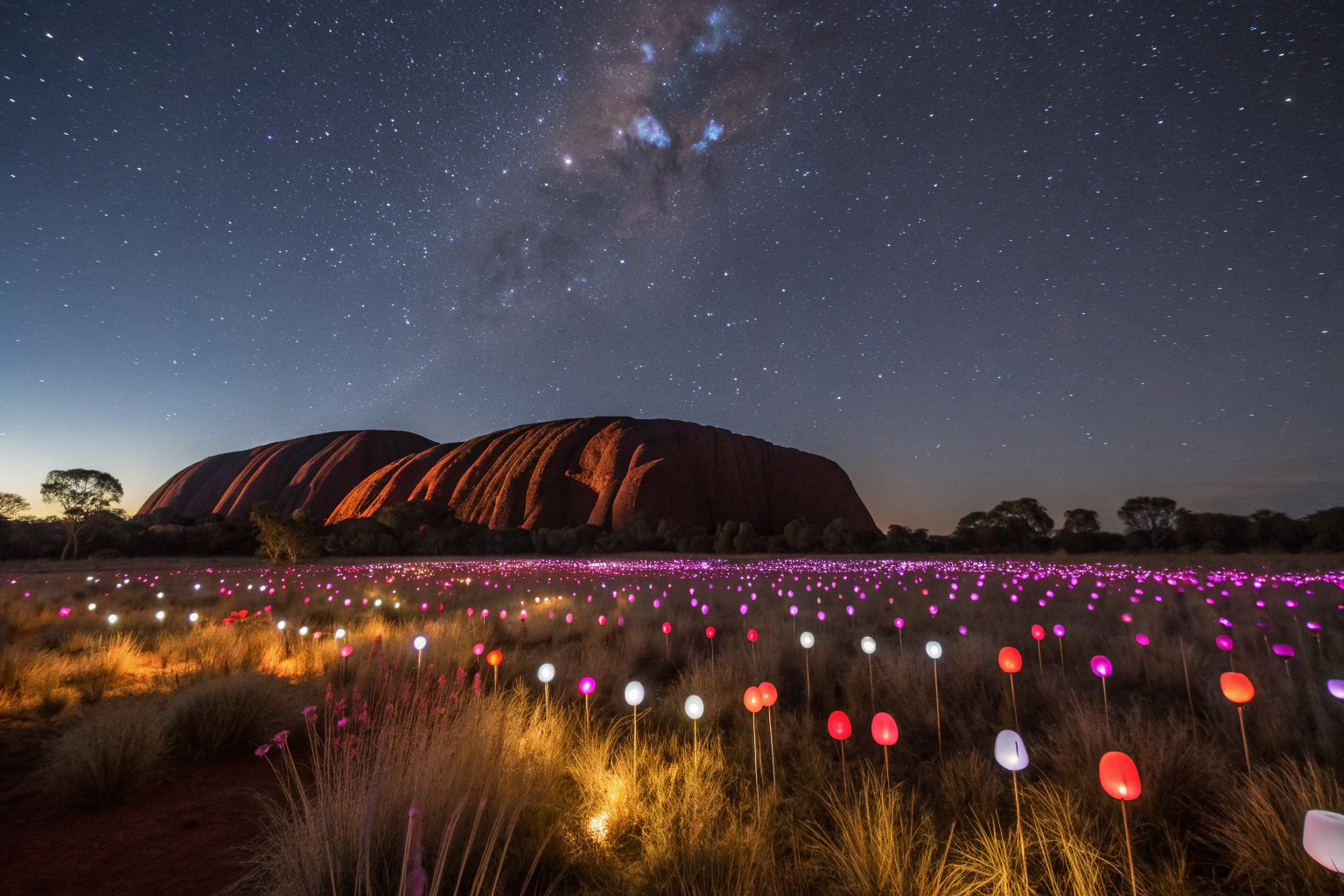
Field of Light
⏱️ 1.5 - 2 hoursEasy
Art installation by Bruce Munro. 50,000 solar-powered glass spheres illuminate the desert in front of Uluru. Magical in the silence.
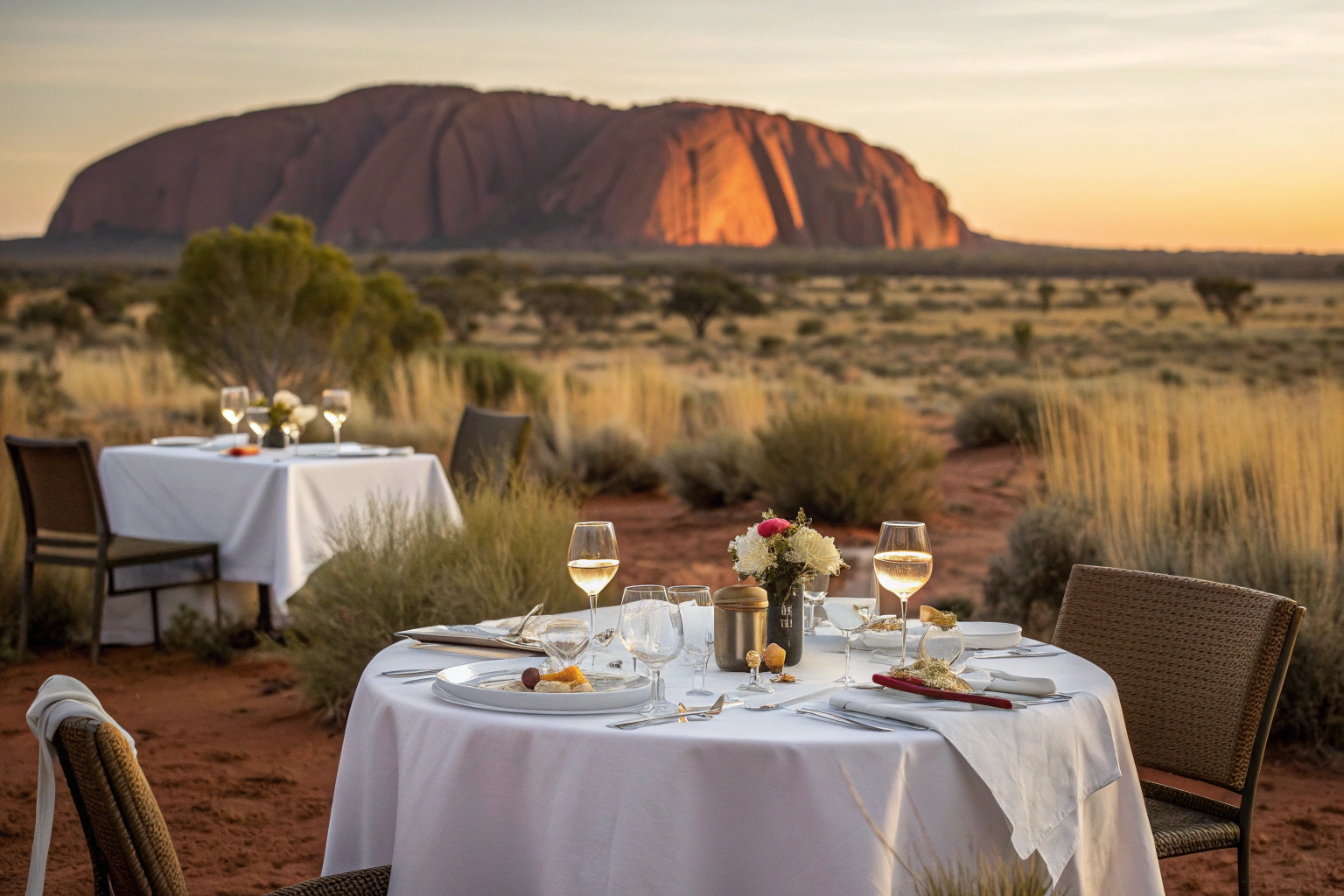
Sounds of Silence Dinner
⏱️ 4 hoursEasy
Exclusive dinner under the starry sky. Canapés at sunset, didgeridoo sounds, and an astronomy presentation.
Facts & Figures
Camping Region Northern Territory
- 🌍 Country
- 🇦🇺 Australien
- 📍 Region
- Northern Territory
- 🏛️ Province
- Central Australia
- ☀️ Climate
- Desert climate (semi-arid)
- 📅 Best Season
- May to September
- 🌡️ Summer Avg
- 36 °C (peaks up to 45°C)
- 🌸 Spring Avg
- 28 °C
- 🏕️ Campsites
- ~2 main sites (plus wild camps far outside)
- ✈️ Airport
- Ayers Rock Airport (AYQ)
- 🚌 Public Transport
- Hop-on hop-off bus in the resort, otherwise rental car required
- 🌧️ Rainy Days
- approx. 30 days/year (irregular)
- 🚗 From Munich
- Flight (approx. 22h) + rental car
- 🚗 From Hamburg
- Flight (approx. 22h) + rental car
- 💰 Price Level
- €€€
- 🐕 Dogs
- Low (prohibited in the national park)
- 🎯 Suitable For
- AdventurersPhotographersCulture enthusiasts
🚦 Occupancy by Month
Jan
Feb
Mar
Apr
May
Jun
Jul
Aug
Sep
Oct
Nov
Dec
Quiet Moderate Busy Crowded
 Rent Camper Northern Territory
 Campsites Northern Territory