


Buying a motorhome pays off: when your own home on wheels becomes worthwhile
Last updated: November 25, 2026
Quick Answer
Buying a motorhome typically pays off once you reach around 30 to 40 travel nights per year compared with long-term renting. For a used semi-integrated model priced at 45,000 euros with annual fixed costs of roughly 3,500 euros, the break-even point usually falls between the third and fifth year of ownership. Anyone traveling fewer than 20 nights a year is generally better off renting.
Key Takeaways
- A motorhome purchase pays off compared with renting once you reach about 30 to 40 nights of travel per year.
- Used semi-integrated motorhomes typically cost 35,000 to 60,000 euros; new vehicles start around 55,000 euros (CIVD, 2024).
- Annual fixed costs typically run 3,000 to 4,500 euros: insurance, tax, storage, maintenance, and depreciation.
- Renting costs 120 to 180 euros per day in peak season, often cheaper for roughly three weeks of annual vacation.
- Financing through installment loans or hire purchase is common for motorhomes, with effective interest rates usually between 5 and 9 percent.
- Used-vehicle purchases carry risk: moisture damage in the body is the most common costly defect.
- With proper care, motorhomes last 15 to 25 years, though the body often ages faster than the chassis.
- Winter readiness depends on insulation and auxiliary heating; not every standard model is frost-proof.
When Does a Motorhome Really Pay Off
A motorhome usually pays off financially after 30 to 40 travel nights per year. Below that threshold, renting almost always remains the cheaper option, because the fixed costs of owning a vehicle continue even while it sits in the garage.
The math is simple: fixed costs plus depreciation divided by nights per year gives the real cost per night. At 3,800 euros in fixed costs and 20 nights, that works out to 190 euros per night just for the vehicle sitting idle. At 40 nights, it drops to 95 euros; at 60 nights, to roughly 63 euros.
Decision rule: If you travel more than four weeks a year, or take regular spontaneous weekend trips that add up to 30-plus nights, the math tips in favor of buying. If you only take one two-week vacation annually, stick with renting.
Buying a Motorhome or Renting Instead
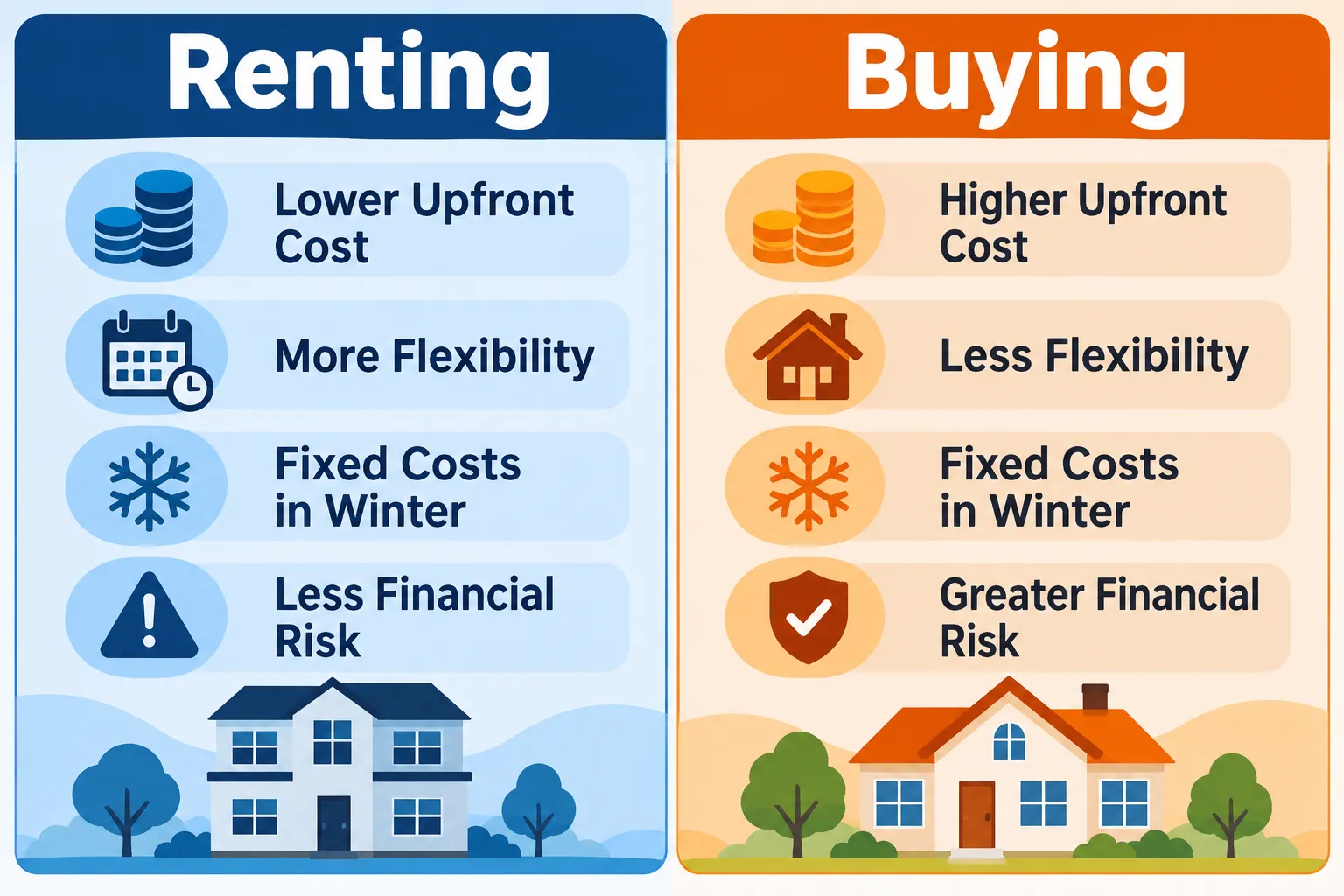
Renting suits occasional users; buying suits frequent travelers and families with fixed travel periods such as school holidays. The decision depends less on budget than on how often the vehicle gets used.
Renting means no fixed costs in winter and no depreciation risk, but daily rates of 100 to 180 euros in peak season plus deposits and often mileage limits. Buying means ongoing costs regardless of use, but full flexibility: leaving at six in the morning with no return deadline, your own bed, your own kitchen, no end-of-trip cleaning stress.
| Criterion | Renting | Buying |
|---|---|---|
| Ideal for | under 20 nights/year | over 30 nights/year |
| Winter fixed costs | none | roughly 250 to 350 euros/month |
| Flexibility | limited (scheduling) | full |
| Starting capital | low (deposit) | high (down payment) |
| Depreciation risk | none | borne by owner |
A middle ground exists: hire purchase, or renting out your own vehicle during idle periods through peer-to-peer platforms. Owners who rent out their motorhome during downtime often cut their effective fixed costs by several hundred euros a year.
How Much Does a New Motorhome Cost
A new motorhome costs between 55,000 and over 150,000 euros depending on body style. Semi-integrated models typically start at 55,000 to 70,000 euros, while fully integrated models and alcove motorhomes with more living space often run 80,000 to 120,000 euros.
The German Caravaning Industry Association (CIVD) counted over 1.6 million registered motorhomes in Germany in 2024, a record figure that has also kept market prices high. Delivery times for new vehicles often run 6 to 12 months, depending on manufacturer and trim level.
Used vehicles remain the more realistic entry point for most buyers:
- Entry-level van conversions (5-8 years old): 25,000 to 40,000 euros
- Semi-integrated, well maintained (3-6 years): 40,000 to 65,000 euros
- Fully integrated, higher-end (up to 5 years): 60,000 to 95,000 euros
Example calculation: A family that previously rented for two weeks a year (averaging 1,800 euros per week in peak season, or 3,600 euros total) plans to switch to 45 nights a year. A used semi-integrated motorhome costing 45,000 euros with 3,800 euros in annual fixed costs comes out to roughly 30,400 euros over eight years, plus residual value loss. Renting for the same 45 nights per year over eight years would often exceed 18,000 to 25,000 euros, especially once extras like pickup-station travel are factored in.
Motorhome Running Costs Overview
Running costs for a motorhome typically total 3,000 to 4,500 euros per year, regardless of how much or how little the vehicle is driven. This is the expense category many first-time buyers underestimate.
Typical annual fixed costs:
- Insurance (liability + comprehensive): 400 to 900 euros, depending on value and no-claims class
- Vehicle tax: 200 to 400 euros, scaled by weight and emissions class
- Storage or winter garage: 300 to 1,200 euros, depending on region
- Maintenance and inspection: 300 to 600 euros per year
- Gas system inspection (mandatory every 2 years): prorated at 30 to 50 euros per year
- Depreciation: often the largest line item, typically 5 to 8 percent of purchase price per year for a used vehicle
On a 45,000-euro vehicle, depreciation alone quickly adds up to 2,250 to 3,600 euros per year. Ignoring this massively understates the true cost of nights spent in your own vehicle.
Motorhome Insurance and Taxes: How Much
Insurance and tax combined typically run 600 to 1,300 euros per year for a mid-sized motorhome. The exact amount depends on weight, vehicle value, and the owner's no-claims class.
For vehicle tax, gross weight matters most: vehicles up to 3.5 tonnes typically pay 200 to 280 euros annually in Germany, while heavier models above 3.5 tonnes can reach 300 to 400 euros. For insurance, it's worth comparing basic liability coverage (cheaper, but no protection against theft or storm damage to your own vehicle) with comprehensive coverage, which is almost always worthwhile for a newer vehicle.
Common mistake: Many buyers insure their motorhome like a standard car and overlook that the living body, awning, and interior fittings often need to be separately listed in the policy. Without that extra clause, insurers frequently won't pay out for storm damage to an awning.
What to Check When Buying a Motorhome
Four factors matter more than anything else when buying: moisture in the body, chassis condition, service history, and actual payload capacity. Checking these four avoids the most expensive buying mistakes.
Inspection checklist:
- Moisture measurement of the body using a meter at roof edges, windows, and floor transitions
- Service book and invoices checked for gaps, especially chassis maintenance
- Tire age check (DOT code on the tire); tires over 6 years old should be replaced even with little tread wear
- Real payload calculation: empty weight plus water, gas, passengers, and luggage must not exceed the gross vehicle weight rating
- Test drive with a full tank to check braking and suspension behavior under realistic load
Decision rule: If a moisture meter shows readings above 20 percent at more than two spots, an experienced buyer would walk away or negotiate the price down significantly. Body moisture repairs often cost 2,000 to 8,000 euros.
Typical Motorhome Repair Costs and Breakdowns
The most common and costly repairs involve the body, not the engine. Moisture damage, failed roof seals, and gas system problems cause the biggest bills.
Typical repair cost ranges:
- Roof seal replacement: 500 to 1,500 euros
- Localized moisture damage in the body: 1,500 to 5,000 euros, significantly more for widespread damage
- Absorber refrigerator replacement: 800 to 1,500 euros
- Brakes and suspension (standard service): 400 to 900 euros
- Gas system inspection with defects found: 150 to 400 euros on top of the regular inspection fee
A roadside breakdown, say with the auxiliary heater or water pump, can often be fixed with basic tools. Bigger chassis problems should always go to a specialist shop, ideally an authorized dealer for the base vehicle's brand.
Who Really Benefits From Owning a Motorhome
A motorhome suits families with school-age children who travel during fixed holiday periods multiple times a year, retired couples with ample free time, and vanlife beginners who want to get away regularly on weekends.
A personal motorhome is less suited to:
- People with only one annual vacation of two to three weeks
- City dwellers without a private parking spot or garage, where parking fees blow up the math
- Occasional campers who prefer switching flexibly between motorhomes, houseboats, and hotels
Example: A retired couple, part of the growing group of owners aged 55-plus (roughly 38 percent of German motorhome owners fall into this age group, according to CIVD figures from 2024), often uses the vehicle 80 to 120 days a year. For this group, buying almost always pays off because fixed costs get spread across many nights.
Is Motorhome Travel Really Cheaper Than Hotels
Motorhome travel is often cheaper per night than hotel stays, but not automatically: campsite fees, fuel, and food on the road all count. The advantage grows with group size.
A campsite pitch typically costs 15 to 35 euros per night, while a mid-range European hotel room often runs 90 to 150 euros for two people. For a family of four who would otherwise need two hotel rooms, the advantage multiplies significantly. On top of that, home-cooked meals in a motorhome often save 20 to 40 euros per day per person compared with restaurant dining.
The cost advantage shrinks for solo travelers or childless couples, since fixed vehicle costs are spread across fewer people. For large families and groups, the math almost always favors the motorhome.
Buying a Used Motorhome: Hidden Defects
The most common hidden defects in used motorhomes are body moisture damage, manipulated mileage, and undisclosed chassis accident damage. A thorough on-site inspection prevents costly surprises later.
What to watch for during inspection:
- Smell test: A musty interior odor almost always signals moisture, even if nothing looks wrong visually
- Window and roof hatch seals: cracks or porous spots let water in
- Undercarriage and chassis: check for rust at weld seams or suspension points
- Chassis history report (from the manufacturer, for example) to rule out accident damage
Edge case: A vehicle that spent several years outdoors on a damp pitch without cover often shows damage only after purchase, even if the initial moisture reading looked fine. An independent inspection before buying, costing roughly 150 to 300 euros, is almost always worth it on vehicles above 30,000 euros.
Motorhome Financing: Loans and Hire Purchase
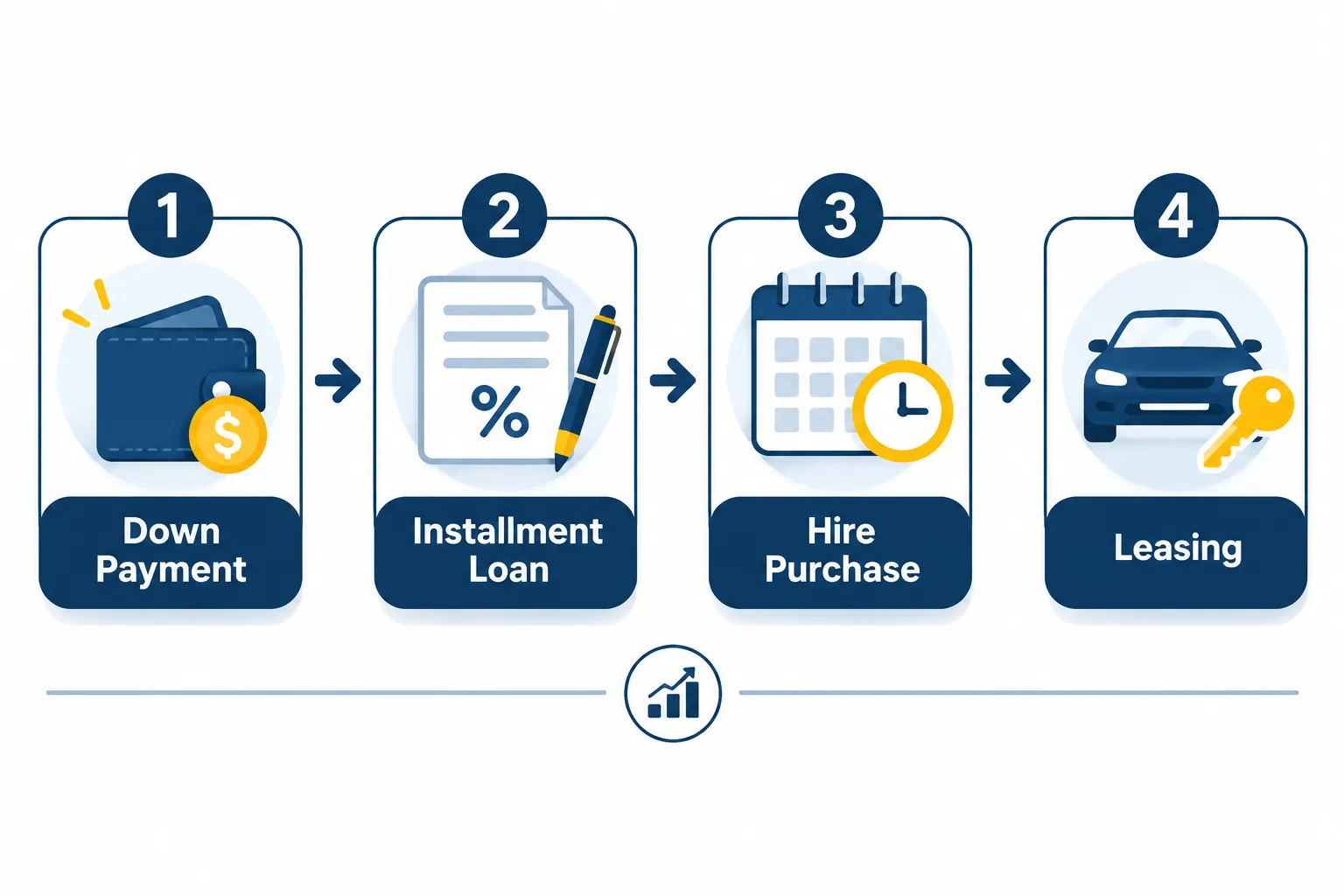
Motorhomes are typically financed through standard installment loans or hire purchase, with effective annual interest rates between 5 and 9 percent depending on creditworthiness and loan term. A down payment of 20 to 30 percent noticeably lowers the monthly payment.
Common financing routes:
- Installment loan via bank or dealer: terms of 36 to 120 months, often with a final balloon payment
- Hire purchase: monthly installments with a purchase option at the end, similar to leasing but with eventual ownership transfer
- Leasing for business users with heavy mileage: tax-advantaged but rarely worthwhile for private individuals
Decision rule: Buyers who can make a down payment of at least 20 percent and choose a term under 84 months keep interest costs manageable. Terms longer than 120 months raise the risk that the remaining loan balance exceeds the vehicle's declining value.
Driving a Motorhome in Winter: Worth It or Not
Winter trips with a motorhome make sense when the vehicle has double-floor insulation, an auxiliary heater, and frost-proof water tanks. Without that equipment, frozen pipes and a cold interior are likely.
What matters for winter use:
- Insulated double floor protects fresh and wastewater tanks from freezing
- Diesel or gas auxiliary heater with enough capacity for sub-zero temperatures
- Winter or all-weather tires on the base vehicle, especially for mountain travel
- Storing gas bottles indoors, since propane vaporizes worse than butane in hard frost
Vehicles without this equipment can still be driven but aren't comfortable for overnight use in freezing conditions. For dedicated winter sports trips with overnight stays, a model with a manufacturer "winter package" is recommended.
Common Beginner Mistakes When Buying a Motorhome
The biggest beginner mistake is overestimating how often the vehicle will actually get used while underestimating fixed costs. The second biggest problem is buying a vehicle too large for the actual travel profile.
Other common mistakes:
- Payload not recalculated: many buyers overload their vehicle with just two adults, a full water tank, and normal luggage
- Financing planned without buffer costs: repairs and depreciation often get left out of the monthly budget
- Test drive done unloaded: handling with an empty tank differs sharply from real-world, fully loaded conditions