


🌿 Natur & Wildnis👨👩👧👦 Familien
Camping Guide | Swedish Lapland
Adventure under the Midnight Sun
Schweden, 🇸🇪 Schweden
Camping Guide | Swedish Lapland
The crisp, cold air tickles your nose as the scent of pine and campfire mingles. In Swedish Lapland, a unique experience awaits you: camping in one of Europe's last great wildernesses. Here, where the sun barely sets in summer and the Northern Lights dance in winter, you'll find a fascinating blend of untouched nature, ancient Sami culture, and surprisingly comfortable campsites. Unlike overcrowded holiday regions, Swedish Lapland offers peace, vastness, and an incomparable sense of freedom.
💡Those who come here aren't looking for a crowded pool, but for real adventure.
The Region in Detail
Your comprehensive travel guide for camping Swedish Lapland.
Location & Arrival in Swedish Lapland
Swedish Lapland extends across the northern part of Sweden, within the historical region of Norrland. It mainly comprises the provinces of Norrbotten County and Västerbotten County. To the west, the region borders Norway, and to the east, Finland. Characteristic features include vast forests, numerous rivers and lakes, and the impressive mountain world that is part of the Scandinavian Mountains. The region lies north of the Arctic Circle, which explains the long days in summer and the polar nights in winter.
The journey by car is long but scenic. From Munich, you can reach Swedish Lapland via the A9 heading north, then continuing on the E4 through Sweden. The driving time is about 24 hours, covering a distance of around 2400 kilometers. Plan for several overnight stays along the route. There are no road tolls in Sweden, although fees may apply for bridges or tunnels.
From Hamburg, the route leads via the E45 through Denmark and Sweden. The driving time is about 20 hours, covering a distance of around 2000 kilometers. Here, too, it is recommended to spread the long journey over several days.
Alternatively, you can arrive by plane. The nearest airport is Kiruna Airport (KRN). There are regular domestic flights to Kiruna from Stockholm (ARN). From the airport, you can reach your campsite by bus or taxi.
Arrival by train is also possible, but very time-consuming. A night train runs from Stockholm to Narvik in Norway, which also stops in Kiruna. From there, you can explore the region by bus.
Once there, the best way to get around is by car. The road network is well-developed, but distances between individual towns are often large. In larger towns, there are bus connections, but flexibility is significantly higher with your own vehicle. Winter tires are mandatory in winter. Some routes are only passable with all-wheel drive. Bicycles are also a good option for exploring the immediate surroundings, especially in the summer months. However, distances are often too great to cover longer stretches by bike.
Overview of the Subregions
Swedish Lapland can be roughly divided into three zones: the coastal region, the inland, and the fjäll (mountains).
The coastal region stretches along the Baltic Sea. Here you will find charming coastal towns like Luleå and Piteå with their archipelago islands. The region is ideal for families who want to spend a relaxed camping holiday with swimming trips and boat tours. Luleå also offers a UNESCO World Heritage site, Gammelstad, a well-preserved church town.
The inland is characterized by vast forests, rivers, and lakes. This is the center of Sami culture. Places like Jokkmokk and Arvidsjaur are ideal for immersing yourself in the culture of the indigenous people and experiencing traditional crafts. This zone is particularly suitable for peace seekers and nature lovers who enjoy hiking, fishing, or canoeing. The traditional winter market takes place annually in Jokkmokk in February.
The fjäll, the mountains, stretch along the border with Norway. Here you will find Sweden's highest mountains, including Kebnekaise. The region is a paradise for hikers, mountaineers, and skiers. Places like Abisko and Riksgränsen are popular starting points for outdoor activities. In Abisko National Park, you can visit the famous Aurora Sky Station to observe the Northern Lights. This zone is ideal for sporty campers looking for a challenge.
Kiruna, Sweden's northernmost city, is also located in this region. Known for its iron ore mine, it also offers unique experiences such as visits to the Icehotel. Another city worth seeing is Gällivare, an important center for mining and Sami culture.
Regardless of the chosen zone, Swedish Lapland offers a variety of campsites, from simple nature-oriented sites to comfortable facilities with modern amenities. The region is rich in natural experiences and cultural treasures that will make your camping holiday to an unforgettable experience.
Camping in Swedish Lapland: What to Expect?
The camping landscape in Swedish Lapland is characterized by vastness and proximity to nature. There are an estimated 80 campsites throughout the region, which vary greatly in size, facilities, and location. You will find both large resort sites with pools and entertainment, especially near the coast, and small, nature-oriented sites in the middle of forests or by lakes. Agriturismo or farm camping is less common, but there are some farms that offer pitches. Pitches for motorhomes are also available, often in connection with rest areas or parking lots at tourist attractions.
The price range for a pitch varies depending on the season, location, and facilities. In the high season (June to August), a pitch for two people and a tent or motorhome costs between €25 and €45 per night. In the low season (May, September), prices are often significantly cheaper, sometimes under €20 per night. The pitches are usually generously sized, often over 100 square meters. Whether you prefer shade or sun depends on the location of the site and the vegetation. Many sites offer pitches on the lakeshore or in the forest.
The infrastructure at the campsites varies. Sanitary facilities are usually clean and well-maintained, but the standard can vary. Wi-Fi is available at many sites, but the quality can fluctuate depending on location and occupancy. Electricity connections (usually 10 or 16 amps) are available at most sites.
A reservation is recommended in the high season, especially if you prefer a specific pitch or are traveling with a larger group. Last-minute opportunities often exist, but the selection may then be limited. Some sites offer online booking, while others take reservations by phone or email.
Wild camping is generally allowed in Sweden (Allemansrätten), as long as you respect nature and cause no damage. However, there are restrictions in nature reserves and national parks, where camping is only allowed in designated areas. Inform yourself in advance about the applicable regulations.
Practical Information for Campers
For the trip to Swedish Lapland, there are no road tolls in Sweden itself. However, fees may arise for using certain bridges in Denmark and Sweden if you arrive by land. Payment is usually made in cash or by credit card on site.
Diesel prices in Sweden are similar to those in Germany but can vary depending on the region and time of day. Gas stations are sufficiently available in larger towns, but in more remote areas, you should refuel in time. Opening hours are generally generous, and many gas stations are also open on Sundays.
Supermarkets such as ICA, Coop, and Lidl are represented in most towns. Prices are slightly higher than in Germany. Opening hours are usually from 8 AM to 10 PM, and many supermarkets are also open on Sundays. For special needs or regional products, visiting farm shops or weekly markets is recommended.
German gas cylinders cannot be easily exchanged in Sweden. You will need either an adapter or a Swedish gas cylinder. Adapters are available in camping stores.
Disposal stations for motorhomes are available at many campsites and rest areas. Fees are usually included in the pitch price or are low.
Mobile network coverage is good in populated areas, but there may be limitations in more remote regions. Roaming within the EU is usually possible without any problems.
Medical care in Sweden is good. Hospitals and pharmacies are available in larger towns. The emergency number is 112.
Wild camping is, as mentioned, generally allowed as long as you respect nature. However, there are some rules to follow: keep your distance from residential houses, leave no trash, and avoid open fires during dry spells. Special regulations apply in nature reserves and national parks. There are currently no environmental zones in Sweden.
Tap water in Sweden is of high quality and can be drunk without hesitation.
Insider Knowledge & Secret Tips
The low season (May and September) offers several advantages for camping vacationers. Prices are significantly lower, the campsites are less crowded, and nature shows its most beautiful side. In May, wildflowers bloom; in September, the leaves of the trees turn vibrant colors.
A lesser-known place is the village of Hemavan Tärnaby, located at the foot of the Vindelfjällen mountains. Here you can enjoy wonderful hiking, fishing, and the peace of nature. The village is accessible via Road 365.
A secret tip for culinary discoveries is visiting a Sami camp. Here you can try traditional dishes such as reindeer meat or suovas (smoked reindeer meat). Many camps also offer overnight stays in traditional lavvus (tents).
Local markets take place regularly in larger towns. Here you can buy regional products such as berries, mushrooms, cheese, and handicrafts. A special highlight is the Jokkmokk Winter Market, which takes place every year in February.
A day trip worth taking is the drive to Storforsen, one of the largest unregulated waterfalls in Europe. The waterfall is located about 100 kilometers northwest of Skellefteå and is accessible via the E4 and Road 372. The drive takes about 1.5 hours.
A culinary must is tasting Kalix Löjrom, a fine fish roe caught only in the region around Kalix. The roe is traditionally served with blinis, sour cream, and onions.
A restaurant frequented by locals is Arctic Thai & Grill in Kiruna. It offers an interesting mix of Thai and Swedish cuisine.
Don't forget to watch the Northern Lights! The best time for this is from September to March. Find a dark spot away from towns and look out for the magical light show in the sky.
Experiences & Activities: Swedish Lapland
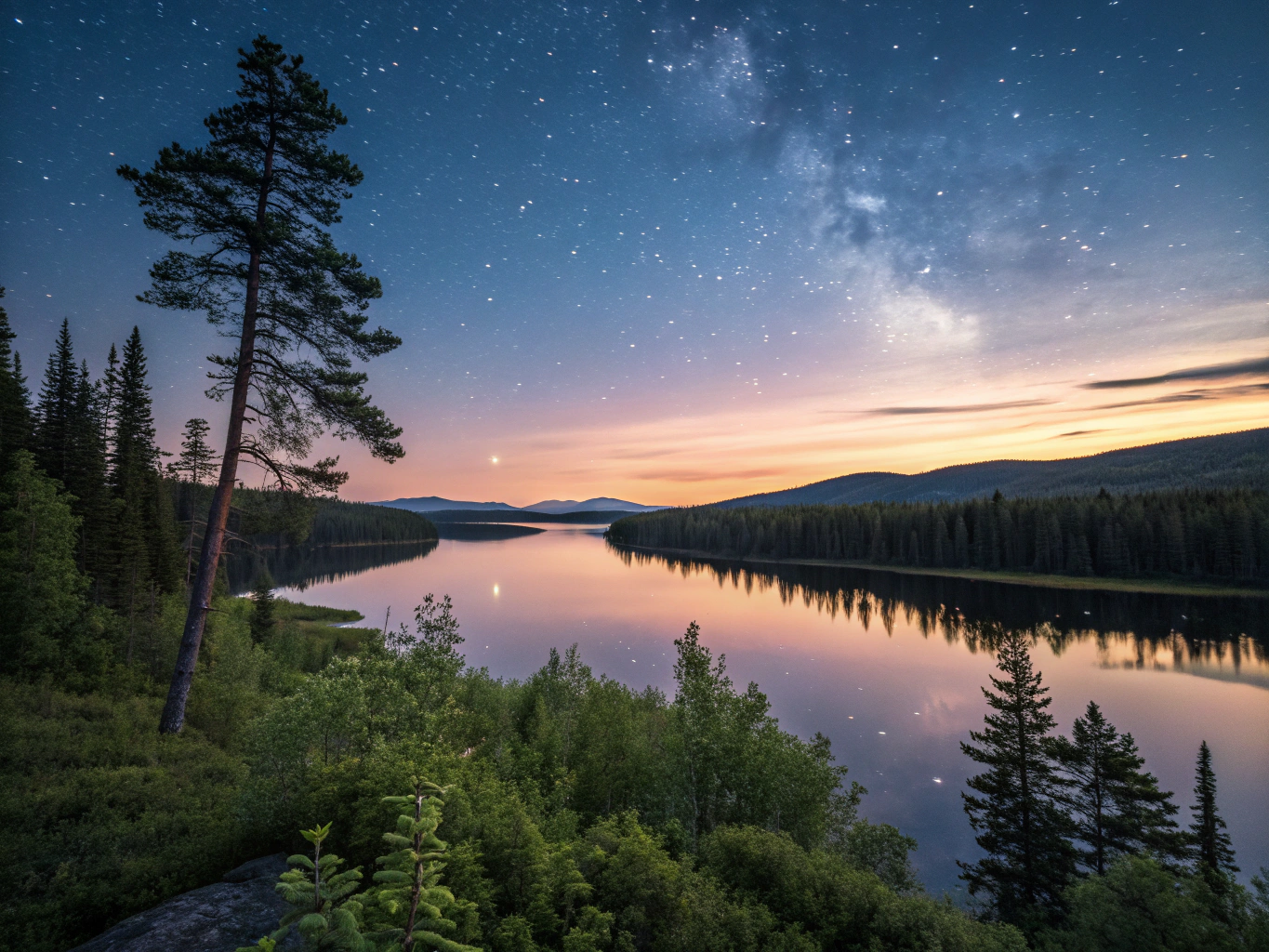
Midnight Sun at Torneträsk
⏱️ several hoursEasy
Enjoy the endless brightness of summer on the shores of Lake Torneträsk. Watch as the sun does not set and bathes the landscape in a golden light. An unforgettable experience, especially from a lakeside campsite.
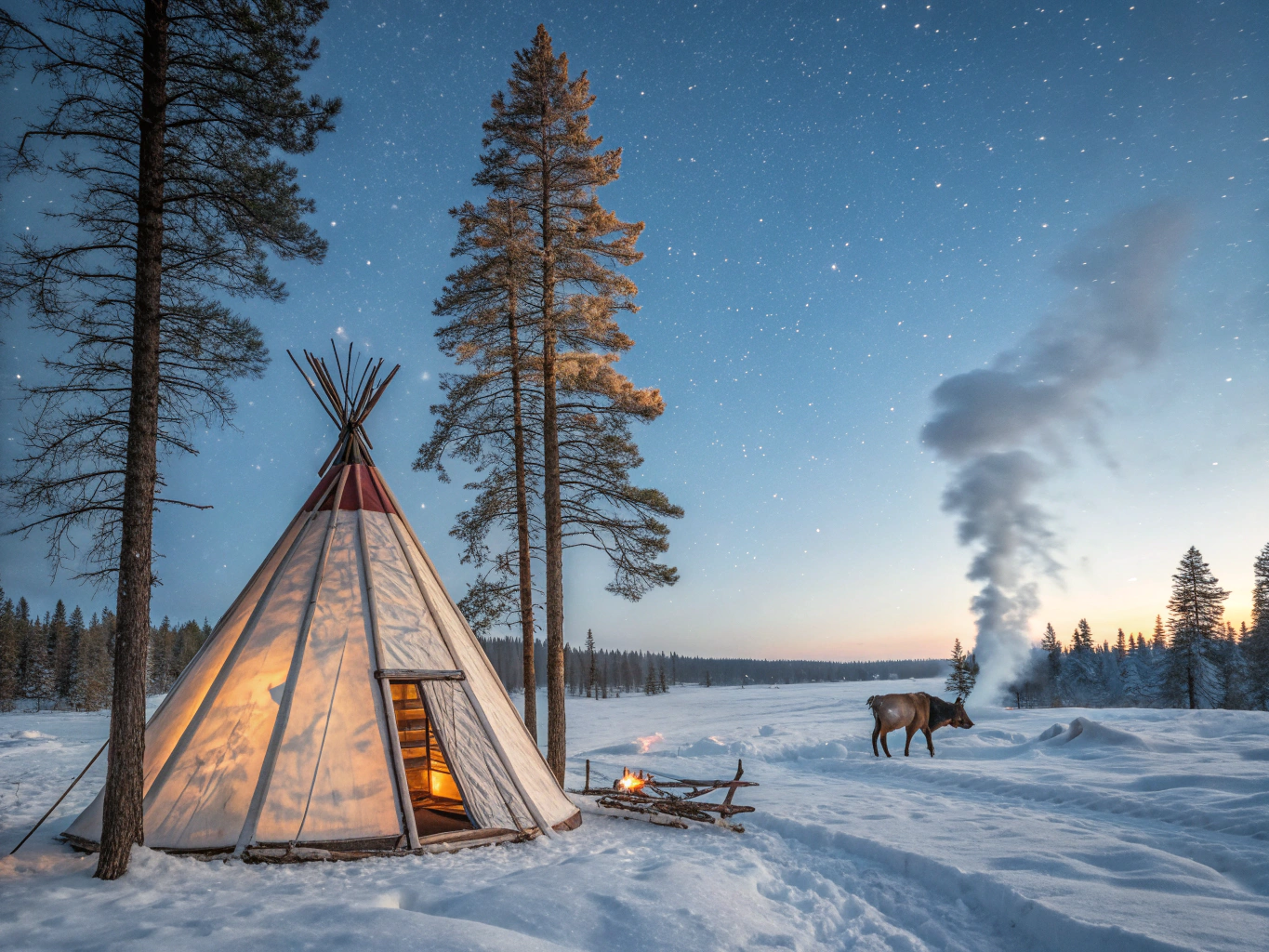
Reindeer Suovas in a Sami Camp
⏱️ several hoursEasy
Try the traditional dish Suovas (smoked reindeer meat) in an authentic Sami camp. Learn more about Sami culture and its close connection to nature. Many camps also offer overnight stays in lavvus.
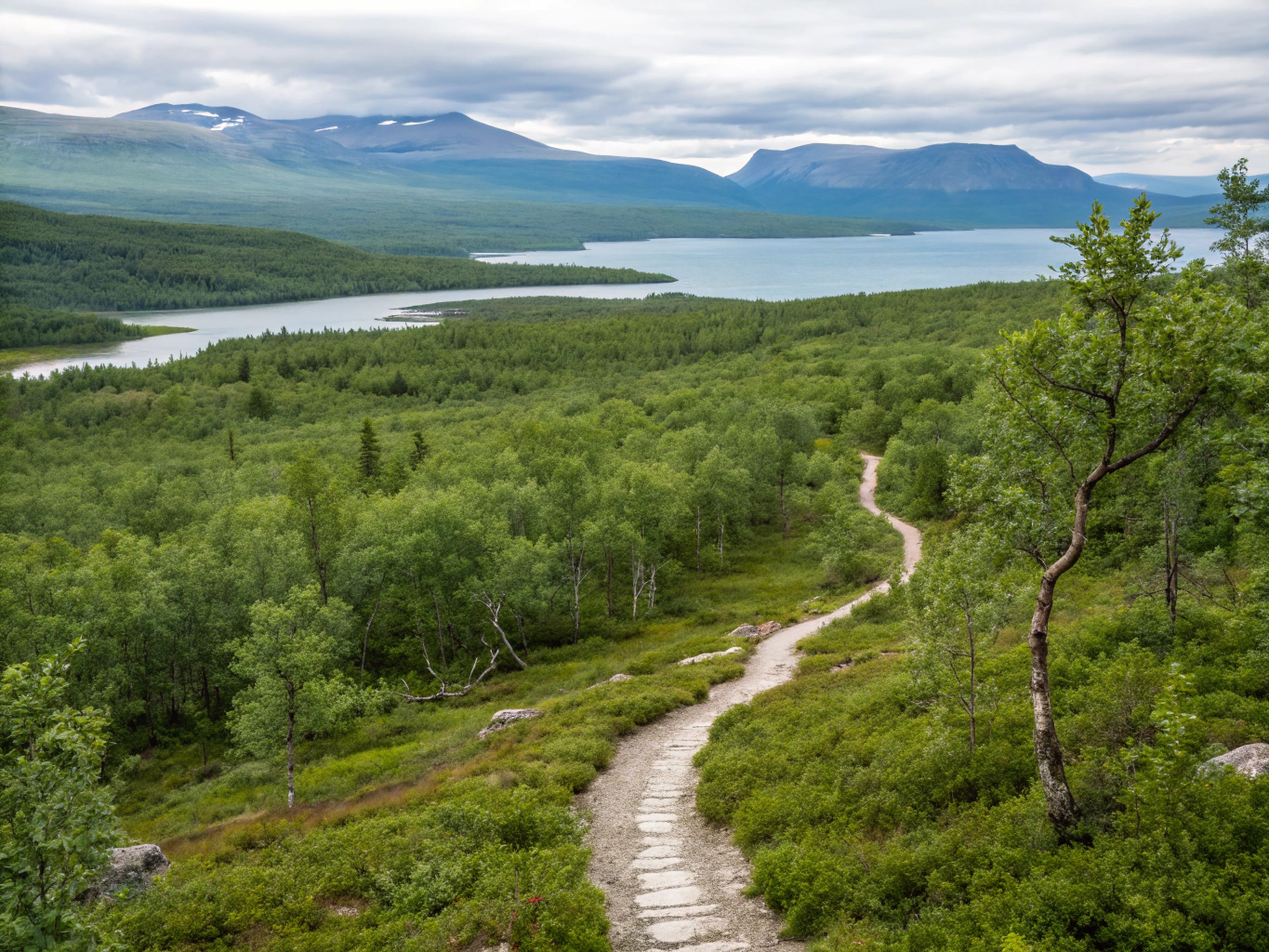
Hiking in Abisko National Park
⏱️ several hours to several daysModerate
Explore the impressive landscape of Abisko National Park on foot. Choose from various hiking trails, from easy walks to challenging trekking tours. Visit the Aurora Sky Station to observe the Northern Lights.
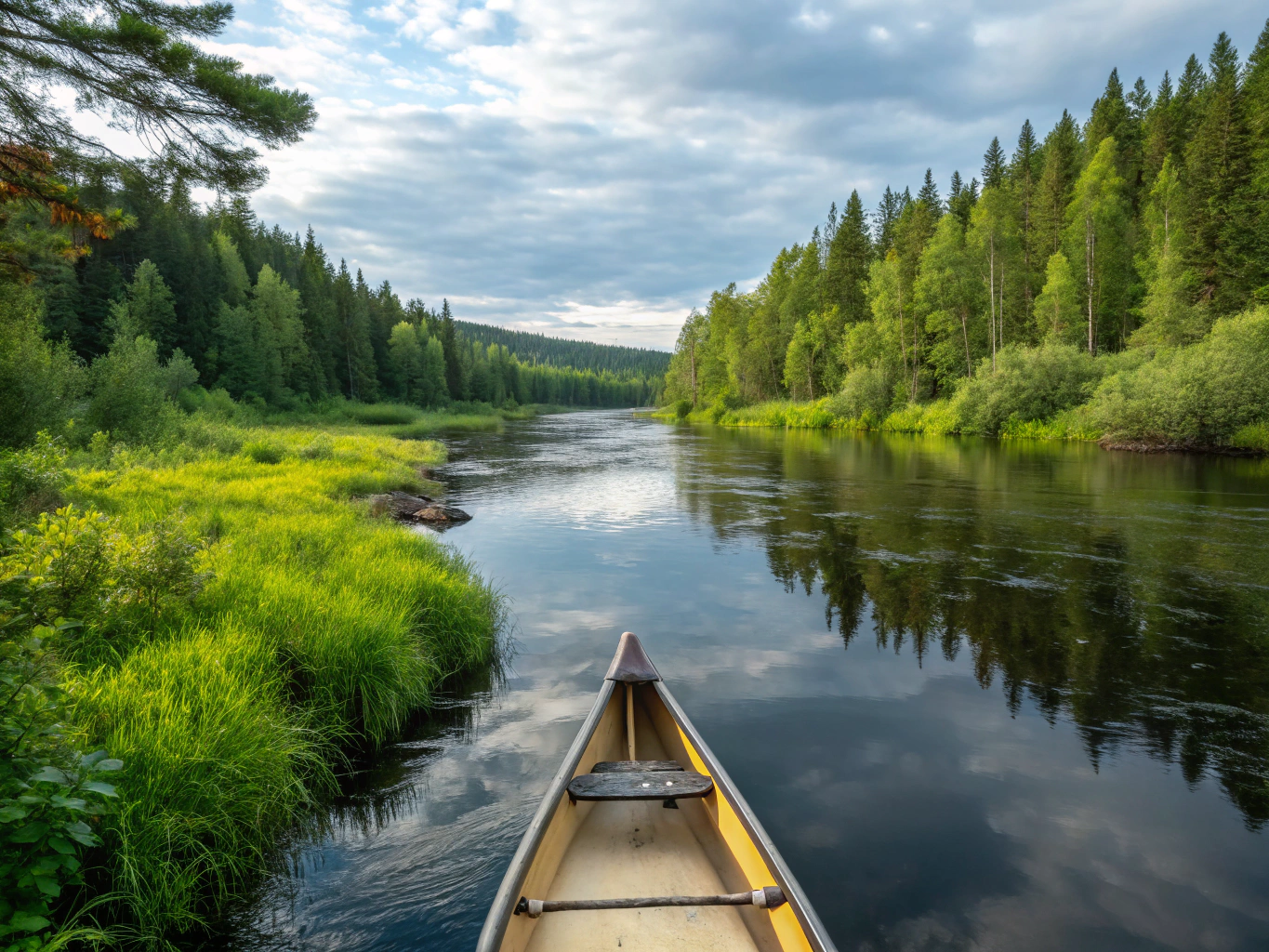
Insider Tip: Paddling on the Lainioälven
⏱️ several hoursModerate
Discover the untouched nature of the Lainioälven River by canoe. Enjoy the peace and vastness of the landscape away from the tourist trails. Rent a canoe in one of the surrounding villages and explore the river on your own.
Facts & Figures
Camping Region Swedish Lapland
- 🌍 Country
- 🇸🇪 Schweden
- 📍 Region
- Norrland
- 🏛️ Province
- Norrbotten County, Västerbotten County
- ☀️ Climate
- Subarctic climate
- 📅 Best Season
- June/July for hiking, February/March for winter camping
- 🌡️ Summer Avg
- 15°C
- 🌸 Spring Avg
- 5°C
- 🏕️ Campsites
- ~80
- ✈️ Airport
- Kiruna Airport (KRN)
- 🚌 Public Transport
- Limited, buses in larger towns
- 🌧️ Rainy Days
- 10-15 days per month in summer
- 🚗 From Munich
- approx. 24 hrs / 2400 km
- 🚗 From Hamburg
- approx. 20 hrs / 2000 km
- 💰 Price Level
- €€€ (upscale)
- 🐕 Dogs
- Top (large exercise areas, dog-friendly hiking trails)
- 🎯 Suitable For
- Adventure seekersNature loversPeace seekers
🚦 Occupancy by Month
Jan
Feb
Mar
Apr
May
Jun
Jul
Aug
Sep
Oct
Nov
Dec
Quiet Moderate Busy Crowded
 Rent Camper Swedish Lapland
 Campsites Swedish Lapland