


🌿 Natur & Wildnis👨👩👧👦 Familien
Camping Guide | Suðurland
Discover the Diversity
Island, 🇮🇸 Island
Camping Guide | Suðurland
Imagine waking up to the sound of an ice-blue river rushing by, while the first rays of sun kiss the glaciers in the background. Welcome to Suðurland, where camping becomes an unforgettable experience. This region of Iceland combines dramatic coastlines, active volcanoes, and green pastures. Here, you experience the forces of nature up close while finding peace and relaxation. Camping in Suðurland is more than just a holiday – it's a journey to yourself.
💡This is where camping turns into an adventure holiday!
The Region in Detail
Your comprehensive travel guide for camping Suðurland.
Location & Getting to Suðurland
Suðurland, also known as the South Coast of Iceland, stretches along the island's southern coastline. The region borders the capital region of Reykjavík to the west and the East Fjords to the east.
Arrival in Suðurland is usually via Keflavík International Airport (KEF). From there, the best way to reach the region is by rental car or motorhome. The Ring Road (Route 1) runs directly through Suðurland, connecting most major towns and sights. The drive from Keflavík to Selfoss, the largest town in Suðurland, takes about 1.5 hours.
Those traveling from Germany can either fly directly to Keflavík or take the ferry from Hirtshals (Denmark) to Seyðisfjörður (East Iceland). From there, it is about an 8-10 hour drive along the Ring Road to Suðurland.
The distances within Suðurland should not be underestimated. For example, it is about a 4-hour drive from Selfoss to the Jökulsárlón glacier lagoon. Therefore, plan enough time for the individual stages.
To explore the region flexibly, a rental car or motorhome is recommended. While there are bus connections, they are not very frequent and do not cover all the sights. Local bus lines exist within the larger towns.
The Ring Road (Route 1) is mostly paved and easy to drive. However, you should note that the weather in Iceland can be very changeable. Strong winds, rain, or even snowfall are not uncommon, even in summer. Therefore, check the current road conditions in advance and adjust your driving style accordingly. Some roads in the highlands (e.g., F-roads) are only accessible with 4x4 vehicles. For these routes, you need a suitable vehicle and experience in driving on unpaved roads. Access to F-roads is often only possible in summer (June to September), as they are closed in winter. Current conditions can be checked daily.
From Munich, Keflavik can be reached by flight in about 4-5 hours. Those who prefer the ferry must expect a travel time of at least 36 hours. Flight times from Hamburg are similar, and the ferry connection also takes about 32 hours.
Within the region itself, moving around with your own vehicle is the most comfortable option. Alternatively, there are organized tours and excursions offered by various providers. These are a good option especially if you want to explore the highlands or do not feel confident behind the wheel yourself.
The Sub-regions at a Glance
Suðurland can be roughly divided into four sub-regions, each with its own character and charm:
The Western Region: This is where the so-called Golden Circle (Gullni hringurinn) is located, featuring the famous sights of Geysir, Gullfoss waterfall, and Þingvellir National Park. This region is well-developed for tourism and offers a variety of accommodations, restaurants, and activities. The area is particularly popular with families and first-time visitors to Iceland.
The Coastal Region: Picturesque fishing villages, black sand beaches, and impressive rock formations stretch along the south coast. Highlights include the village of Vík í Mýrdal with its striking Reynisdrangar sea stacks and the Jökulsárlón glacier lagoon. This region is ideal for nature lovers and photographers. Numerous campsites with views of the sea or glaciers can be found here.
The Highlands: The Icelandic highlands are an untouched wilderness with barren landscapes, volcanoes, and hot springs. Parts of the highlands belong to Suðurland. This region is only accessible in summer and requires an off-road vehicle. Adventurous campers will find secluded pitches and unforgettable nature experiences here.
The Inland: Fertile pastures and rolling hills stretch across the interior of Suðurland. Numerous farms offering accommodation and activities can be found here. The region is ideal for families with children and those seeking peace and quiet. Here you can experience Icelandic hospitality and enjoy local products.
Within the western region, the towns of Selfoss, Hveragerði, and Fludir are particularly worth seeing. Selfoss is the largest center with good infrastructure. Hveragerði is known for its geothermal activity and greenhouses. Fludir attracts visitors with the Secret Lagoon, a natural thermal bath.
In addition to Vík í Mýrdal and Jökulsárlón, the coastal region also offers the village of Skógar with the impressive Skógafoss waterfall and Kirkjubæjarklaustur with its bizarre basalt columns. In Vík í Mýrdal, you should definitely take a hike to the Dyrhólaey cliffs to observe the puffins.
In the highlands, the areas of Landmannalaugar and Þórsmörk are particularly popular. Landmannalaugar is known for its colorful rhyolite mountains and hot springs. Þórsmörk is a green valley surrounded by glaciers, offering numerous hiking trails.
The inland offers charming towns like Hella and Hvolsvöllur, which serve as good starting points for excursions in the surrounding area. In Hella, you can fish for salmon, and in Hvolsvöllur, you will find the interesting Saga Centre, which tells the story of the Njáls Saga.
Camping in Suðurland: What to Expect?
The camping landscape in Suðurland is diverse and offers something for every taste. There is a good selection of campsites, ranging from simple nature-oriented sites to larger facilities with extensive infrastructure. Most campsites are open from June to September, with a few open year-round.
The number of campsites in Suðurland is estimated at about 40. Many of them are rather small and family-run. These smaller sites often offer a particularly authentic experience and allow you to experience nature up close. However, there are also larger resort-style sites that feature amenities such as swimming pools, restaurants, and entertainment programs. These are especially popular with families with children.
Agriturismo or farm camping is less common in Iceland than in other European countries, but there are some farms that offer pitches for motorhomes and tents. These often provide the opportunity to gain insight into Icelandic rural life and taste local products.
Prices for a pitch vary depending on the season and the site's facilities. In the high season (July/August), you can expect prices between €20 and €35 per night. In the low season (June/September), prices are often slightly lower. Many sites also offer discounts for longer stays. Specific prices should always be requested on-site, as they are not always available online.
The size of typical pitches also varies. On larger sites, the plots are often demarcated and offer sufficient space for motorhomes and tents. On smaller sites, space is often more limited. Shade is rare in Iceland, as there are hardly any trees. However, most sites offer wind protection and shelter from rain.
Sanitary facilities at Icelandic campsites are generally clean and well-maintained. However, the standard varies from site to site. Most sites have toilets, showers, and sinks. Some also offer washing machines and dryers.
Wi-Fi is available at many campsites, though quality can vary. Electricity hookups are available at most sites, with the current usually being 10-16 amps.
It is recommended to reserve campsites in advance during the high season, especially if you are traveling with a larger motorhome or prefer a specific spot. However, last-minute opportunities often exist, especially at smaller sites. It's worth simply calling and asking. Wild camping is generally prohibited in Iceland, but it is tolerated in some remote areas as long as you behave respectfully towards nature and leave no trash. It is advisable to inform yourself about the current rules beforehand.
Practical Information for Campers
There are no tolls for driving on the Ring Road (Route 1) and other paved roads in Suðurland. Some tunnels are subject to tolls, but these are not located in Suðurland. Information on toll routes and fees can be found online.
Diesel prices in Iceland are generally slightly higher than in Germany. In summer 2024, prices are around €2.00 - €2.30 per liter. Gas stations are usually open from 7 AM to 11 PM, with some open 24/7. Most gas stations accept credit cards.
Supermarkets such as Bonus, Krónan, and Nettó are available in the larger towns in Suðurland. Opening hours are usually from 10 AM to 6 PM, with some supermarkets staying open longer. Most supermarkets are open on Sundays, but with shorter hours.
German gas cylinders cannot be exchanged in Iceland. It is advisable to buy an Icelandic gas cylinder or bring an adapter. Adapters are available in camping stores.
Disposal stations for motorhomes are available at many campsites and some rest areas. Disposal is usually free or available for a small fee.
Mobile network coverage in Suðurland is mostly good, especially along the Ring Road. However, there may be limitations in remote areas. Roaming is possible in Iceland, but fees can be high. It is recommended to buy an Icelandic SIM card to save costs.
Medical care in Iceland is good. There are hospitals and pharmacies in the larger towns. The emergency number in Iceland is 112.
Wild camping is officially prohibited in Iceland. However, it is tolerated in some remote areas as long as you behave respectfully towards nature and leave no trash. It is advisable to inform yourself about the current rules beforehand. Wild camping is strictly prohibited in nature reserves and national parks.
Tap water in Iceland is of high quality and can be drunk without hesitation.
Road conditions in Iceland can change quickly. Inform yourself in advance about current conditions and adjust your driving style accordingly. Some roads in the highlands are only accessible with 4x4 vehicles.
Insider Knowledge & Secret Tips
The low season in Suðurland (June and September) has many advantages. It is less crowded, prices are often cheaper, and nature shows its most beautiful side. In June, the lupines bloom, and in September, you can already see the first Northern Lights.
A lesser-known place is the Þórsmörk valley, which is surrounded by glaciers and offers numerous hiking trails. It is only accessible by special buses or 4x4 vehicles, but the journey is worth it.
Local markets and direct sales occur mainly in the summer months. In Selfoss, a weekly market takes place every Saturday where you can buy local products. Many farms also offer direct sales of meat, vegetables, and dairy products.
A local festival not to be missed is Ljósanótt (Night of Light) in Reykjanesbær in September. The streets and houses are decorated with lights, and there are concerts, exhibitions, and fireworks.
Culinary tips: Be sure to try Icelandic lamb, Skyr (a yogurt product), and Plokkfiskur (a fish stew). Many restaurants also offer traditional Icelandic dishes.
Locals like to visit Kaffi Krús in Selfoss, a cozy café with delicious cakes and coffee. The restaurant Fjöruborðið in Stokkseyri is also very popular, known for its lobster soup.
A worthwhile day trip is the drive to the Reykjanes Peninsula, where the Blue Lagoon and numerous geothermal areas are located. The drive takes about 1 hour from Selfoss.
Another secret tip is the Seljavallalaug pool. It is hidden in a valley and is one of the oldest pools in Iceland. The water is geothermally heated but not always perfectly clean. The pool is accessible via a short walk.
Those who enjoy hiking should climb Mount Helgafell near Kirkjubæjarklaustur. From the top, you have a breathtaking view over the coast and the glaciers. The ascent takes about 2-3 hours.
Another highlight is the Secret Solstice Festival, which takes place annually in June in Reykjavík. It is one of the largest music festivals in Iceland and offers a diverse program with international and Icelandic artists. Although the festival takes place in Reykjavík, a visit from Suðurland is worthwhile if you are interested in music.
Experiences & Activities: Suðurland
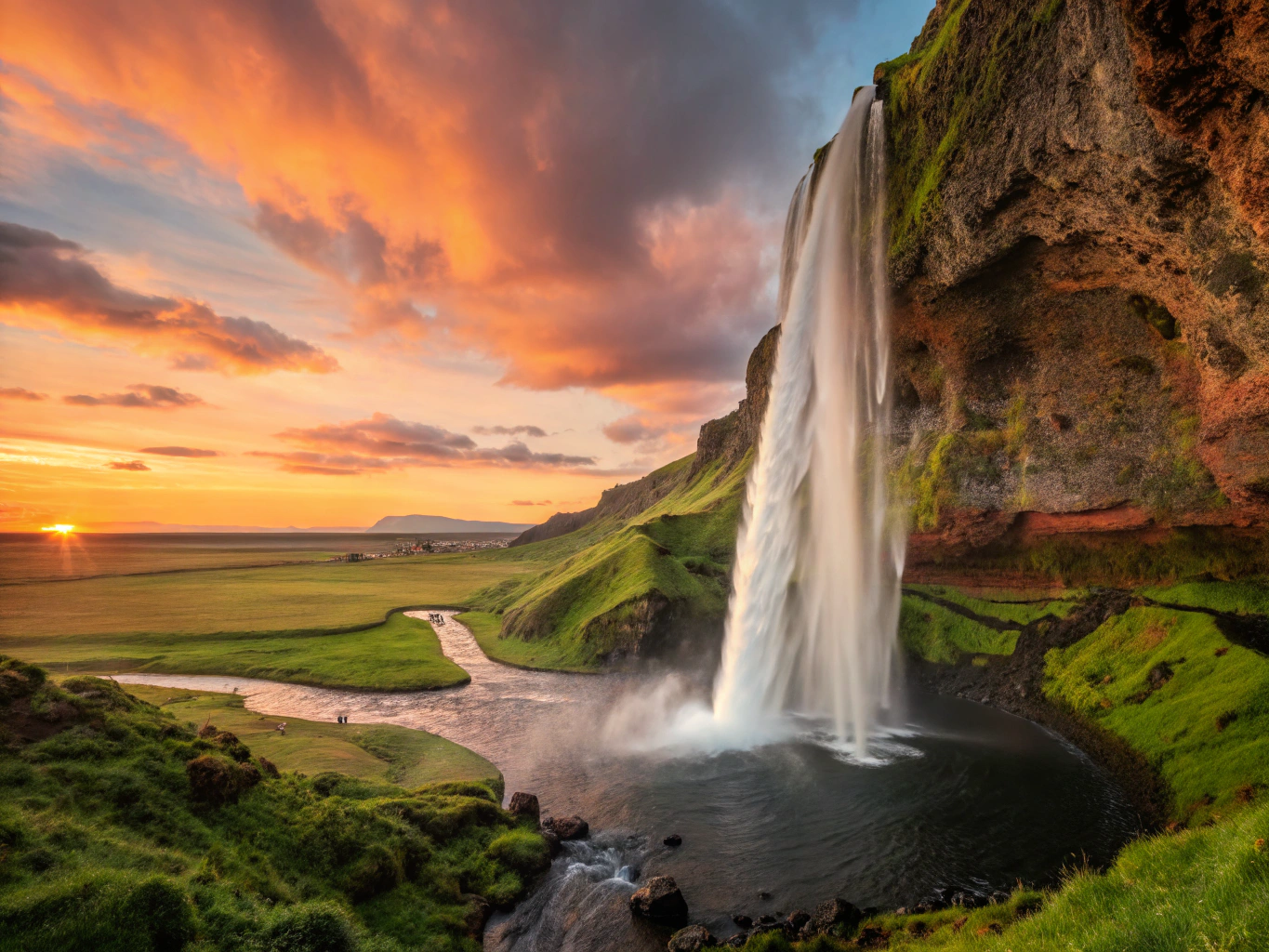
Seljalandsfoss Viewpoint
⏱️ 30 minutesEasy
Walk behind the thundering Seljalandsfoss waterfall and enjoy the view. A magical experience at sunset. Best visited with rain gear.
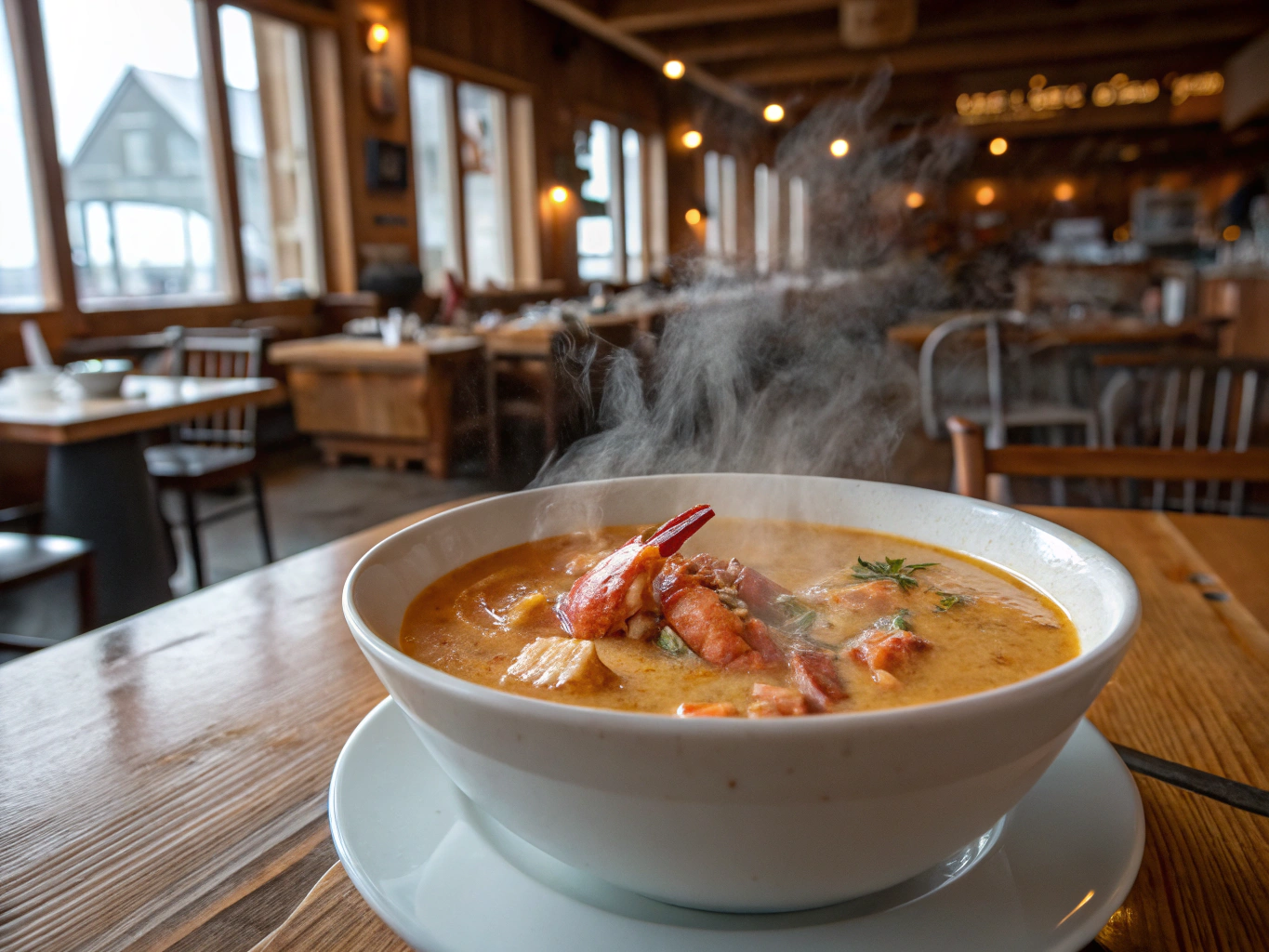
Lobster Soup in Stokkseyri
⏱️ 2 hoursEasy
Try the famous lobster soup at the restaurant Fjöruborðið in Stokkseyri. The restaurant is known for its fresh seafood and cozy atmosphere. Be sure to make a reservation!
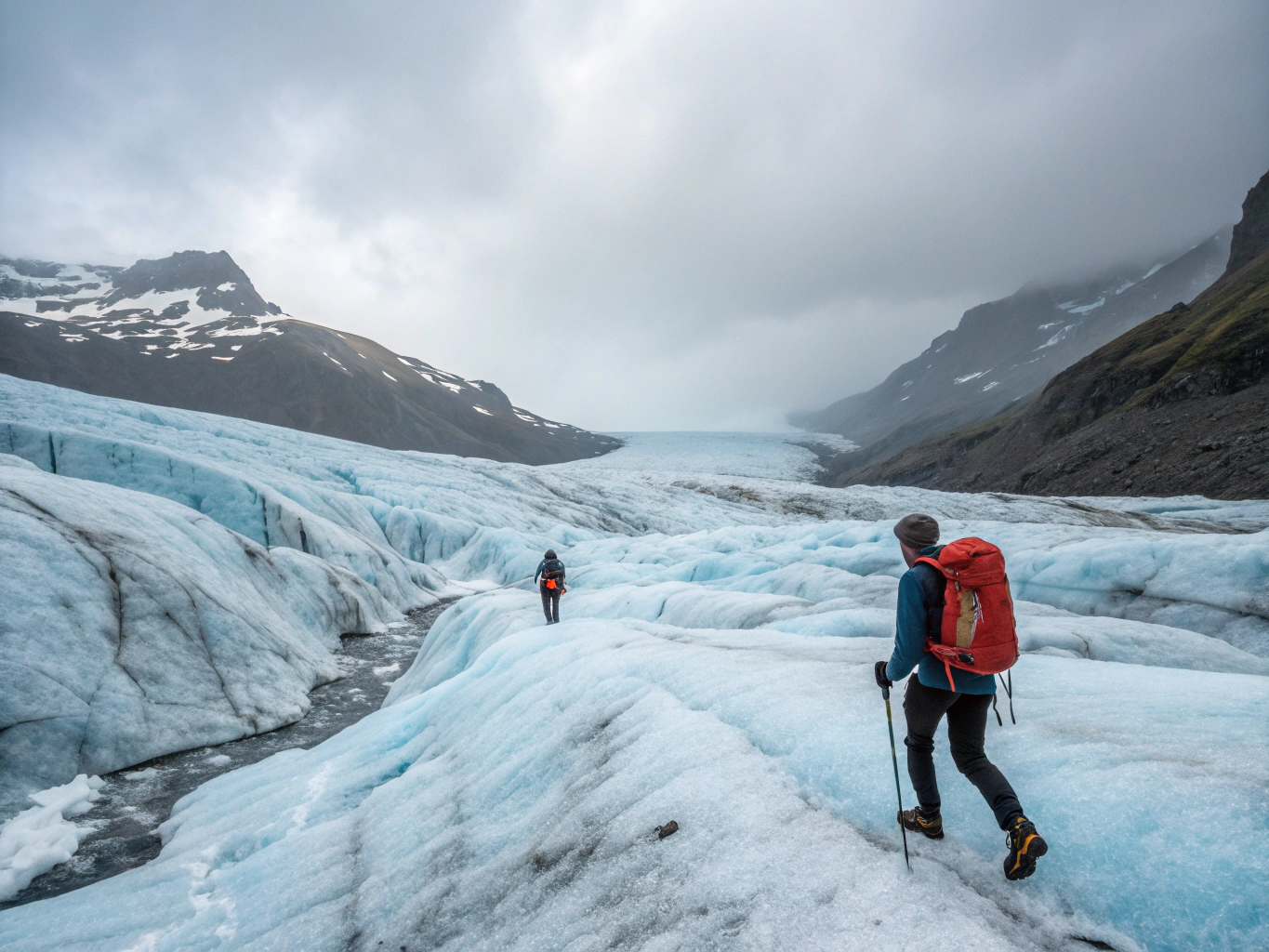
Glacier Hike on Sólheimajökull
⏱️ 3-4 hoursModerate
Experience a guided glacier hike on Sólheimajökull. Use crampons and ice axes to traverse the ice. An unforgettable adventure with breathtaking views.
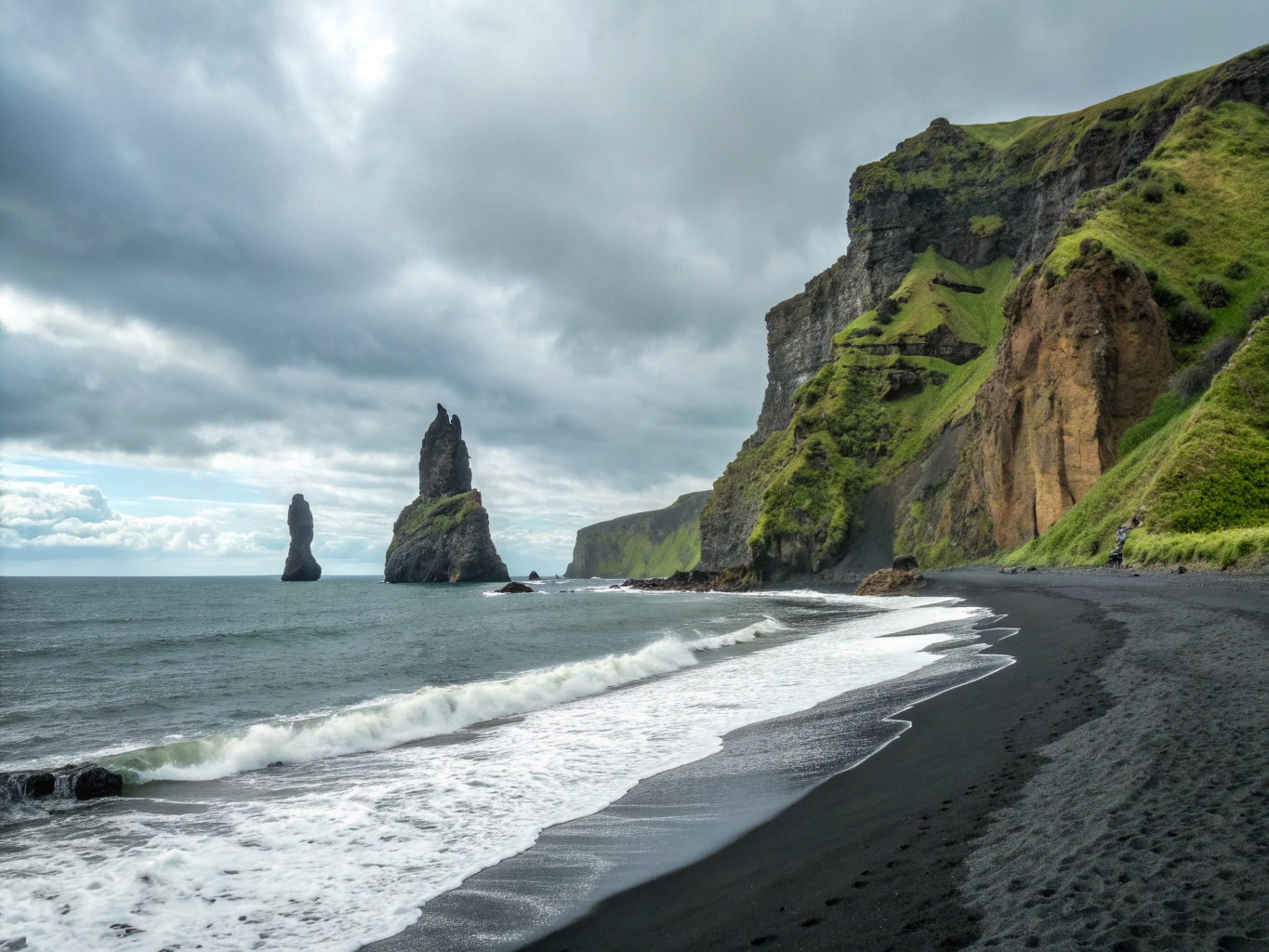
Black Sand Beach of Reynisfjara
⏱️ 1-2 hoursEasy
Visit the black sand beach of Reynisfjara with its impressive basalt columns and the Reynisdrangar sea stacks. Beware of the dangerous waves! Best visited at low tide.
Facts & Figures
Camping Region Suðurland
- 🌍 Country
- 🇮🇸 Island
- 📍 Region
- Suðurland
- 🏛️ Province
- Rangárvallasýsla, Árnessýsla
- ☀️ Climate
- Subarctic, changeable
- 📅 Best Season
- June/July for highlands, Aug/Sept for Northern Lights
- 🌡️ Summer Avg
- 12°C
- 🌸 Spring Avg
- 5°C
- 🏕️ Campsites
- ~40
- ✈️ Airport
- Keflavík International Airport (KEF)
- 🚌 Public Transport
- Buses (limited)
- 🌧️ Rainy Days
- 15-20 days per month
- 🚗 From Munich
- 36 hrs / 3400 km (incl. ferry)
- 🚗 From Hamburg
- 32 hrs / 3100 km (incl. ferry)
- 💰 Price Level
- €€€ Expensive but unforgettable
- 🐕 Dogs
- Limited. Observe leash requirements.
- 🎯 Suitable For
- Adventure seekersNature loversPhotographers
🚦 Occupancy by Month
Jan
Feb
Mar
Apr
May
Jun
Jul
Aug
Sep
Oct
Nov
Dec
Quiet Moderate Busy Crowded
 Rent Camper Suðurland
 Campsites Suðurland