


👨👩👧👦 Familien🧖 Wellness & Erholung
Camping Guide | Wallonie
Your camping holiday in the Ardennes
Wallonie, 🇧🇪 Belgien
Camping Guide | Wallonie
Imagine the morning mist slowly lifting over dense mixed forests, while the gentle murmur of the Ourthe or Semois breaks the silence. The air is fresh, smelling of damp moss, pine needles, and the smoke of an extinguished campfire. You are in the Ardennes, the green lung of Belgium. There is no Mediterranean glamour here, but rather a raw, primal beauty. Rugged rock formations rise from deep valleys, medieval castle ruins watch over picturesque villages made of grey quarry stone, and the hospitality is as warm as the cuisine is hearty. The Ardennes are the destination for campers who love their hiking boots, aren't afraid of kayaking, and would rather drink a Trappist beer on the riverbank in the evening than party in a disco.
💡The Campcruisers tip: Let's be honest – it's going to rain. The Ardennes are so green because the weather is unpredictable. Anyone coming here needs rubber boots, a waterproof awning groundsheet, and a sense of humor. Accept the mud as part of the adventure, and you will love the region. If you're looking for 30 degrees and bone-dry conditions, you're in the wrong place.
The Region in Detail
Your comprehensive travel guide for camping Wallonie.
Location & Arrival
The Ardennes stretch across Wallonia in southeastern Belgium and touch parts of Luxembourg and France. Geographically, it is an old slate mountain range, which characterizes the region with deep valleys and rounded peaks. For campers from Germany, the journey is an absolute plus: the region is practically on your doorstep.
Arriving with your own vehicle:
From western Germany (NRW, Rhineland-Palatinate), the journey is often doable in under two hours. The main arteries are the E40 (coming from Aachen) or the E42 (coming from Prüm/Trier). Those arriving from the north usually enter the region via Maastricht and Liège. Important for trailers and large motorhomes: as soon as you leave the motorways (especially the E25, which runs north-south through the heart of the Ardennes), road conditions change drastically. The N-roads are often winding, sometimes narrow, and the surface can be a bit rough, typically Belgian. In the deep valleys of the Semois or Ourthe, inclines and declines of over 10-12% can occur. Check your brakes beforehand! There are currently no tolls for cars and motorhomes on Belgian motorways (exception: Liefkenshoek Tunnel near Antwerp, usually irrelevant for Ardennes travelers).
Arriving by public transport:
Train travel in Belgium is straightforward, but for campers with backpacks, the 'last mile' is a challenge. Main stations such as Liège-Guillemins (an architectural highlight), Namur, or Libramont are served regularly. From there, TEC buses operate. Note: In rural areas where the most beautiful campsites are located, buses often run infrequently or not at all on weekends. A bicycle or good hiking boots are a must for the onward journey.
The Sub-regions at a Glance
The Ardennes are not a homogeneous block, but a mosaic of different landscapes. To find the perfect spot, you need to know what's happening where.
The North & East (High Fens / East Cantons):
Around Malmedy, Eupen, and Spa lies the 'High Fens' (Hautes Fagnes). This is the roof of Belgium. The landscape is characterized by moorland plateaus, wooden boardwalks, and wide horizons. German is spoken in many places here. It is the coldest and rainiest corner, but scenically the most spectacular for hikers. Ideal for those seeking peace and nature lovers.
The Heart (Ourthe Valley & La Roche):
This is the tourist center. Around La Roche-en-Ardenne, Hotton, and Durbuy (the 'smallest city in the world'), life is vibrant. The Ourthe meanders here through deep valleys. The range of campsites is huge, and the infrastructure is top-notch. You'll find kayak rentals on every corner, mountain bike trails, and many Dutch tourists. If you're looking for action and sociability, this is the place for you. However, it can get very crowded in high season.
The South (Semois Valley & Bouillon):
The further south you go, the more 'French' the flair becomes. The Semois valley is known for its extreme river loops and dense forests. Places like Bouillon with its massive castle fortress are highlights. This region often feels a bit wilder, more secluded, and less commercialized than the Ourthe valley. The roads are narrower, the villages sleepier. A paradise for romantics and motorcyclists.
The West (Lesse & Meuse):
Rocks and caves dominate here. The region around Han-sur-Lesse (stalactite caves) and Dinant (on the Meuse, the gateway to the Ardennes) offers spectacular cliffs. Campsites are often located directly on the riverbank. This region is culturally very rich, with many castles and abbeys.
Camping in the Ardennes: What to Expect?
Camping in the Ardennes has a long tradition but differs significantly from southern countries in some respects. The density of sites is extremely high, especially along the rivers Ourthe, Semois, Lesse, and Amblève.
Types of Sites:
There are roughly two categories. First: the large family sites, often run by Dutch operators. These offer animation, swimming pools, canteens ('Frituur'), and perfectly parceled pitches. They are mostly located in the tourist centers. Second: the 'Camping à la Ferme' or municipal sites (Camping Communal). These are often simpler and cheaper, but frequently located in dreamlike settings directly on the riverbank without parceling. Here you stand on the meadow, make a campfire in the evening (where allowed!), and enjoy the peace.
Facilities & Standards:
The standard is solid, but rarely 'glamping luxury' in the 5-star sense. Sanitary facilities are usually clean but often a bit older. Important: Electricity connections are widespread, mostly CEE (blue), but on small sites, you can still find old Belgian/French sockets (Type E with the pin in the socket) – an adapter is a must in your luggage. Wi-Fi is standard on large sites, but often hit-or-miss in the deep valleys (just like mobile reception).
Special Feature 'Bivouac':
For trekkers and bikepackers, there are designated 'Aire de Bivouac' zones. This is the legal wild camping equivalent. These spots are only accessible on foot/by bike, free of charge, but strictly regulated (only 1 night, observe tenting times). Due to over-use, some systems have switched to mandatory reservation – inform yourself exactly in advance!
Prices:
Belgium is fairly priced. A pitch for 2 people with electricity and shower costs between €25 and €45 in high season. In the low season, it becomes significantly cheaper, and many sites accept discount cards like ACSI.
Practical Information for Campers
To ensure your trip runs smoothly, here are the hard facts for everyday life on site.
Shopping & Supplies:
Supermarket density is good (Delhaize, Carrefour, Colruyt, Aldi/Lidl). Note: In Belgium, shops often close on Sundays or are only open in the morning. 'Nightshops' are expensive. Camping gas is a topic: grey German steel cylinders cannot be exchanged everywhere. Large sites and DIY stores often carry Campingaz (blue), but refilling German cylinders is difficult. Bring enough gas or get a Euro filling set/adapter.
Environmental Zones (LEZ):
The Ardennes themselves are free of environmental zones. However, if you plan a day trip to Liège, Namur, or Brussels, you must register your vehicle online beforehand (including foreign vehicles!). High fines apply.
Hunting Season (Chasse):
An extremely important point for autumn campers! Hunting season is from October to December. Entire forest areas are closed to hikers. It is essential to pay attention to the yellow/red signs ('Chasse' / 'Battue'). Ignoring them is life-threatening and punishable. Tourist offices have up-to-date maps of the hunting areas.
Drinking Water & Disposal:
Tap water is drinkable but often tastes slightly chlorinated. Disposal stations for chemical toilets are available at almost all sites; public stations (as is common in France) are rather rare in Belgium. Illegal disposal is punished extremely severely.
Health:
Ticks are a serious issue in the Ardennes (Lyme disease). Wear long clothing in tall grass and check yourself in the evening. Pharmacies are recognizable by the green neon cross. Medical care is good; German is spoken in the East Cantons, otherwise French (English usually works).
Wild Camping:
Free standing with motorhomes is generally prohibited in Belgium and is controlled in the Ardennes, especially in nature reserves. Use official pitches or farms.
Insider Knowledge & Secret Tips
Want to experience the Ardennes as they really are? Then get off the tourist trails of Durbuy.
Culinary for the Soul:
Forget the fries for a moment. Try 'Jambon d'Ardenne' (smoked ham), 'Truite à l'Ardennaise' (trout in butter), or in autumn, game dishes ('Marcassin' - young wild boar). Pair it with a local beer. Tip: The Achouffe brewery is world-famous but often overcrowded. Look for small brasseries in villages like Rochehaut. An absolute must for beer lovers is Orval Abbey in the deep south – the beer there is cult.
Hidden Places:
The Viroin Valley (Viroinval) in the southwest is beautiful and often less crowded than the Ourthe. Here you'll find almost Mediterranean limestone slopes with wild orchids. Another tip: The region around Saint-Hubert. Deep, almost Canadian-looking forests.
Best Time for Peace:
Go in late September or early October. The 'Indian Summer' coloring of the deciduous forests is spectacular, the air is clear, and the summer holiday crowds are gone. The campsites are still open but wonderfully empty.
Markets:
The 'Marché de la Batte' in Liège (Sundays) is huge and chaotic – an experience. For local flair, visit the market in Marche-en-Famenne or Bastogne. This is where the locals buy cheese and sausage.
Restaurant Tip:
'Le Cor de Chasse' in Wéris (near Durbuy) for upscale cuisine, or for a rustic experience: 'La Ferme de la Strée' near Rochefort – honest, local cuisine in an old farmhouse.
Experiences & Activities: Wallonie
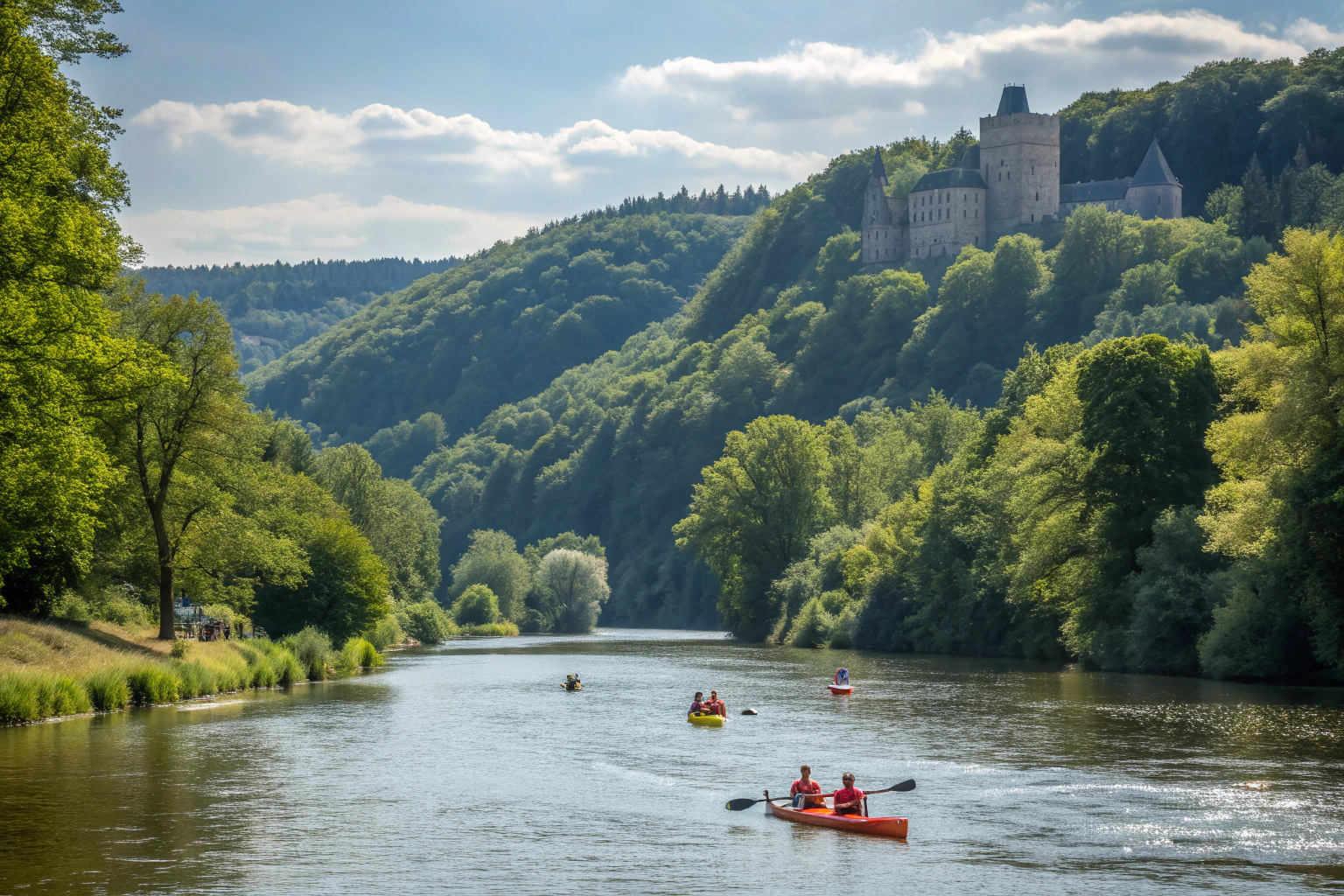
Kayak Tour on the Ourthe
⏱️ 2-4 hrs.Moderate
The classic: paddling from Maboge to La Roche. Past green banks and ducks, with a view of the castle ruins at the finish line.
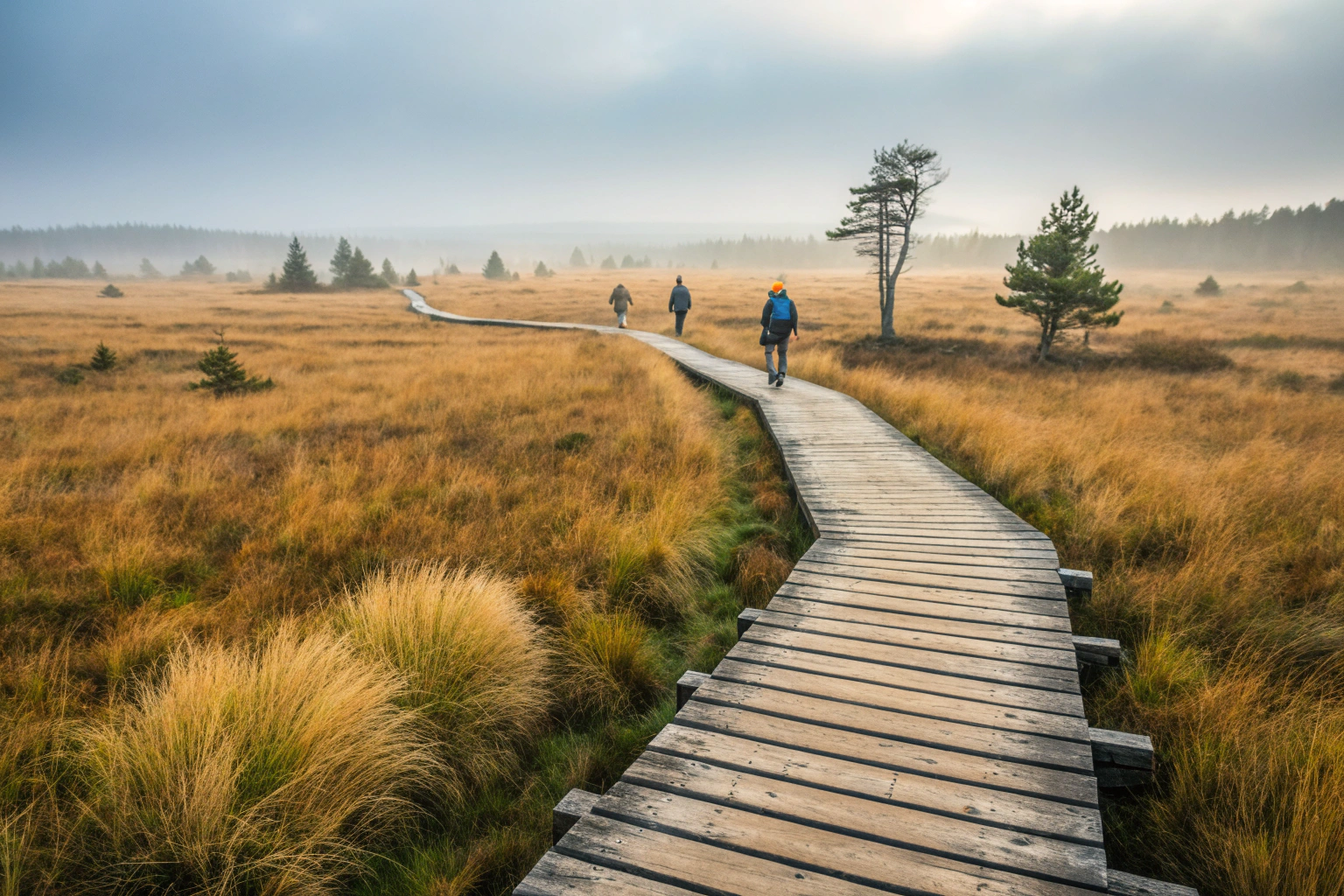
Hiking in the High Fens
⏱️ 3-5 hrs.Easy
Explore a unique moorland landscape on wooden boardwalks. Misty expanses, gnarled birches, and absolute silence in the nature reserve.
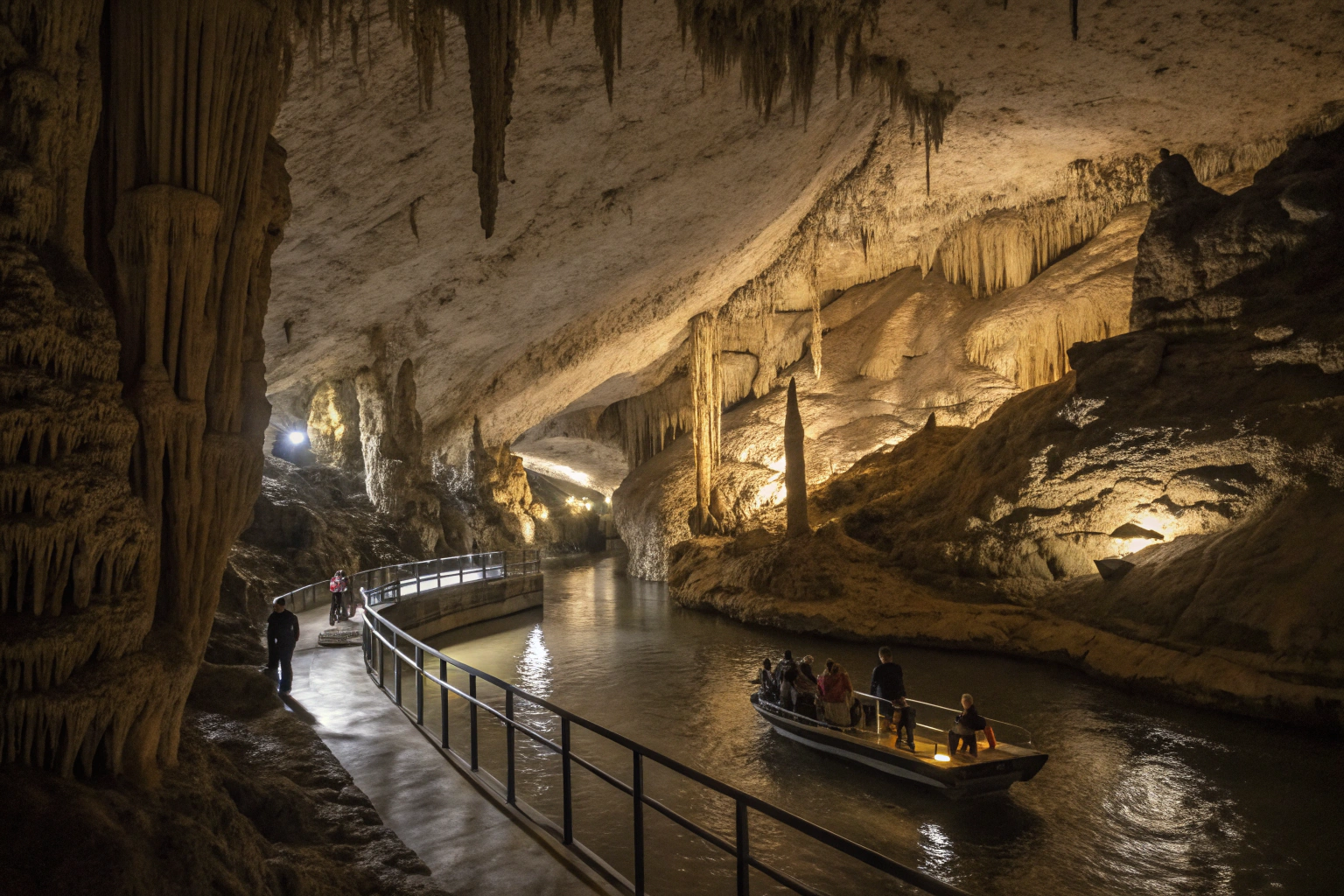
Caves of Han
⏱️ 2 hrs.Easy
One of the most impressive caves in Europe. Underground boat trip and giant halls. A cool adventure, perfect for rainy days.
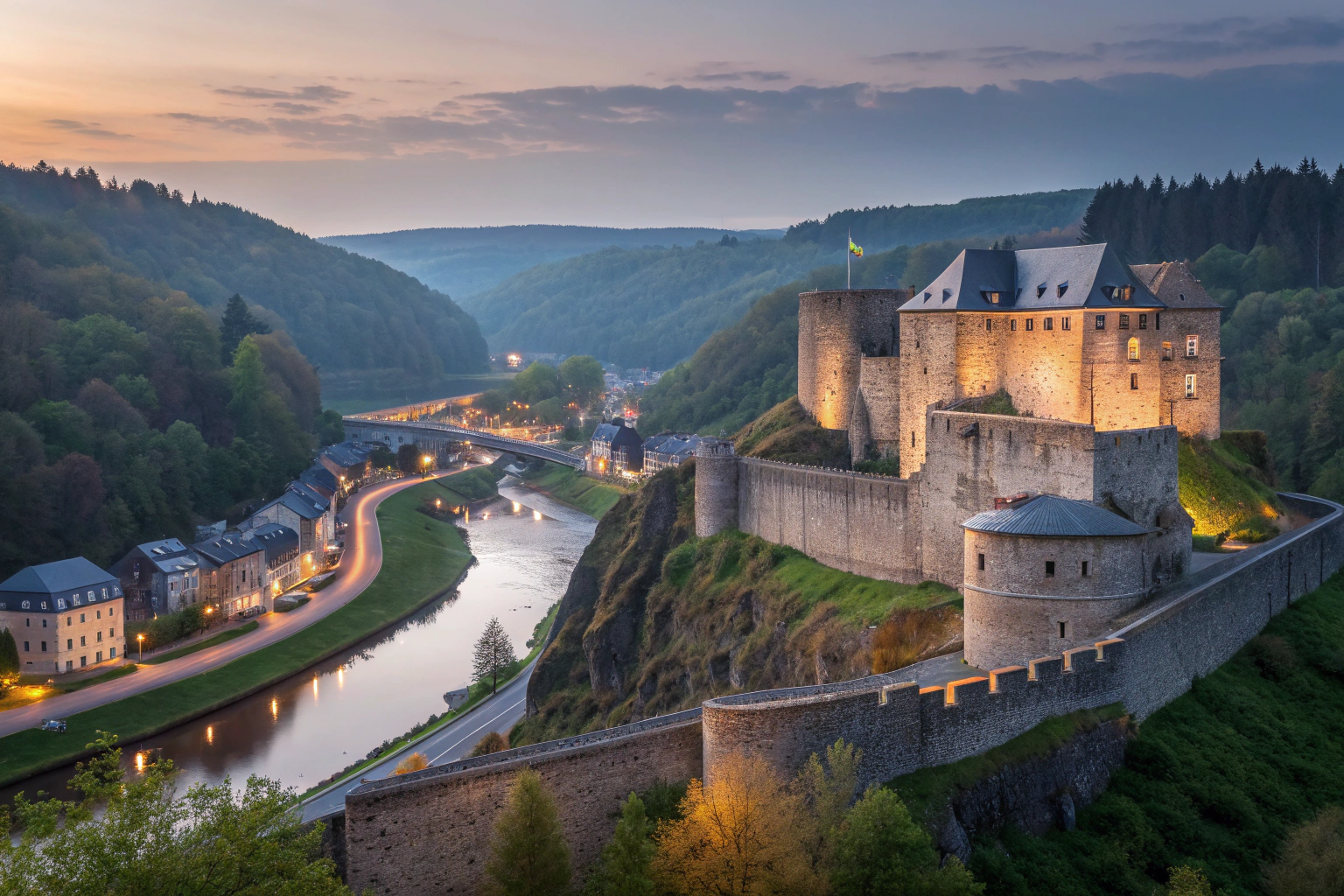
Bouillon Castle by Night
⏱️ 2-3 hrs.Moderate
Explore the massive fortress of Godfrey of Bouillon. Pure medieval atmosphere with torchlight tours in summer and falconry shows.
Facts & Figures
Camping Region Wallonie
- 🌍 Country
- 🇧🇪 Belgien
- 📍 Region
- Wallonia
- 🏛️ Province
- Luxembourg / Liège / Namur
- ☀️ Climate
- Temperate oceanic climate
- 📅 Best Season
- May to September
- 🌡️ Summer Avg
- 19-23 °C
- 🌸 Spring Avg
- 10-15 °C
- 🏕️ Campsites
- ~~350
- ✈️ Airport
- Liège (LGG) / Brussels (BRU)
- 🚌 Public Transport
- Train to main axes, rural buses rare
- 🌧️ Rainy Days
- Approx. 12-15 per month
- 🚗 From Munich
- Approx. 6.5 hrs.
- 🚗 From Hamburg
- Approx. 5.5 hrs.
- 💰 Price Level
- € - €€
- 🐕 Dogs
- Very high
- 🎯 Suitable For
- HikersKayakersHistory buffs
🚦 Occupancy by Month
Jan
Feb
Mar
Apr
May
Jun
Jul
Aug
Sep
Oct
Nov
Dec
Quiet Moderate Busy Crowded
 Rent Camper Wallonie
 Campsites Wallonie