


🌿 Natur & Wildnis👨👩👧👦 Familien
Camping Guide | Finnische Seenplatte
Discover the Finnish Lakeland
Finnland, 🇫🇮 Finnland
Camping Guide | Finnische Seenplatte
Imagine waking up to the gentle rustling of leaves and the distant call of a cuckoo. The scent of fresh pine wood hangs in the air as the sun peeks through the canopy, illuminating the glittering water of a pristine lake. Welcome to camping in the Finnish Lakeland! This unique region, characterized by an infinite number of lakes connected by rivers and canals, offers you the perfect backdrop for an unforgettable camping holiday in the Finnish Lakeland. Here, you can experience pure nature, far away from mass tourism, and find peace and relaxation in one of Europe's most beautiful landscapes.
💡Don't expect crowded beaches, but rather solitude and pure nature.
The Region in Detail
Your comprehensive travel guide for camping Finnische Seenplatte.
Location & Arrival at the Finnish Lakeland
The Finnish Lakeland stretches across large parts of Southern and Eastern Finland. It is Europe's largest lake district and lies between Helsinki in the south and Lapland in the north. The region includes numerous provinces, including South Savo, North Karelia, Päijät-Häme, Pirkanmaa, South Karelia, Central Finland, and North Savo. Getting there is a bit more involved, as Finland is not directly accessible by car when coming from Central Europe.
The most common route is across the Baltic Sea. You can take a ferry to Finland from various German ports (e.g., Travemünde, Rostock, Kiel). Ferry connections usually go to Helsinki or Turku. The ferry crossing typically takes between 24 and 36 hours, depending on the route and shipping company. The costs for the ferry crossing vary depending on the season, cabin category, and vehicle size. Expect to pay around 500 to 1500 euros for a round trip with a motorhome.
Alternatively, you can also travel via Sweden and Norway. Although this route is longer, it offers the opportunity to explore Scandinavia. From Germany, you drive through Denmark to Sweden and then on to Finland. Note that tolls apply on certain roads and bridges in Sweden and Norway. In Finland itself, the motorways are free.
The destination airport for your arrival is Helsinki-Vantaa (HEL). From there, you can continue into the camping region by rental car or public transport. There are also domestic flights to smaller airports in the Lakeland, e.g., to Mikkeli or Joensuu.
Once there, it is best to get around by car or motorhome. The road network is well-developed, but distances can be large. Alternatively, you can also use buses or trains to explore the region. A special attraction is the numerous canals and waterways, which are ideal for boat trips and canoe tours. Many campsites offer boat rentals.
Overview of the Sub-regions
The Finnish Lakeland can be roughly divided into several sub-regions, each with its own character and charm.
The Saimaa region, named after Finland's largest lake, is a true camping paradise. Here you will find a variety of campsites directly on the lakeshore, from simple nature sites to comfortable resort sites. The region is ideal for families, water sports enthusiasts, and nature lovers. Places worth seeing include Lappeenranta, a lively city with a historical fortress, and Savonlinna, known for the medieval Olavinlinna Castle, which sits on an island in the lake.
The Päijänne region, around Finland's second-largest lake, is characterized by its untouched nature and diverse leisure opportunities. Here you can hike, cycle, fish, or explore the lakes and rivers by canoe. Lahti, the largest city in the region, is a well-known winter sports center and also offers numerous activities in summer. Jyväskylä, another important city in the region, is known for its architecture by Alvar Aalto.
The Karelia region, in eastern Finland, is shaped by its proximity to Russia and its unique culture. Here you will find dense forests, crystal-clear lakes, and traditional villages. Joensuu, the capital of North Karelia, is a modern university city with a rich cultural offering. Koli National Park, with its breathtaking views over the lake landscape, is a popular destination for hikers and nature lovers.
The Häme region, in the south of the Lakeland, is known for its historic towns and picturesque landscapes. Hämeenlinna, Finland's oldest inland city, houses a medieval castle and the birthplace of Jean Sibelius, Finland's most famous composer. Tampere, Finland's second-largest city, is an important industrial center and offers numerous museums and cultural attractions.
No matter which sub-region you choose, the Finnish Lakeland offers you an unforgettable camping experience in the midst of breathtaking nature.
Camping in the Finnish Lakeland: What to Expect?
The camping landscape in the Finnish Lakeland is diverse and offers something for every taste. In total, there are an estimated 300 campsites in the region, many of which are located directly on the shore of a lake.
You will find both large resort sites with extensive facilities such as pools, restaurants, and entertainment programs, as well as small, nature-oriented sites that are ideal for those seeking peace and quiet. Agritourism or farm camping is also common in the region, where you have the opportunity to get to know country life and enjoy regional products. For motorhomes, there are special pitches with supply and disposal facilities.
Prices for a pitch vary depending on the season, location, and facilities. In high season (June to August), you should expect to pay around 25 to 40 euros per night. In the low season (May, September), prices are often significantly lower, around 15 to 25 euros per night. Many campsites also offer package deals for longer stays.
The size of typical pitches varies, but they are usually large enough for a motorhome or a caravan with an awning. Many sites offer both sunny and shady plots. It is worth asking about your preferences when booking.
The infrastructure at the campsites is generally good. Sanitary standards are usually clean and well-maintained. Many sites offer free Wi-Fi, but the quality can vary. Electricity connections are standard, with the amperage ranging between 6 and 16 amps.
It is recommended, especially in high season, to reserve campsites in advance. Many sites are fully booked months in advance. While there are always last-minute opportunities, you shouldn't rely on them. Use online portals or contact the campsites directly to make your booking. It is also advisable to book in advance outside of the high season.
Practical Information for Campers
For a smooth camping trip to the Finnish Lakeland, some practical information is helpful.
Tolls do not apply to motorways in Finland. However, some bridges may be subject to fees. Find out in advance about the respective fees and payment options.
Diesel prices in Finland are generally slightly higher than in Germany. Gas stations are well-signposted and usually have long opening hours, even on weekends.
Supermarkets such as Lidl, Eurospar, and K-Market are available in the larger towns of the Lakeland. Opening hours are usually from 8 am to 10 pm, including Saturdays. Some supermarkets are open on Sundays, but the selection may be limited.
German gas cylinders cannot usually be exchanged in Finland. It is advisable to take an adapter with you or buy a Finnish gas cylinder. Find out in advance about the different adapter types and sources of supply.
Disposal stations for motorhomes are available at many campsites. There are also public disposal stations, but they are not always easy to find. Find out in advance about the locations and disposal options.
Mobile network coverage in Finland is good, especially in inhabited areas. Roaming charges within the EU do not apply. Outside the EU, you should find out about roaming charges in advance.
Medical care in Finland is good. There are hospitals and pharmacies in the larger towns. The European Health Insurance Card (EHIC) is accepted.
Wild camping is generally allowed in Finland as long as you are not in nature reserves or on private property. However, note that you must leave your pitch clean and respect nature. Open fires are only allowed at designated fire pits.
The tap water in Finland is of excellent quality and can be drunk without hesitation.
Insider Knowledge & Secret Tips
The Finnish Lakeland holds some secrets that can make your camping holiday an unforgettable experience.
The low season (May, September) is ideal for those seeking peace and quiet. The campsites are less crowded, prices are lower, and nature shows its most beautiful side. Especially in September, the forests glow in the most beautiful autumn colors.
Away from the well-known tourist paths, there are numerous small lakes and bays that you can explore by canoe or kayak. A particularly beautiful place is Repovesi National Park, located about 2 hours' drive northeast of Helsinki. Here you can paddle on the lakes, hike, and enjoy the untouched nature.
At local markets, you can buy regional specialties and fresh products directly from the producer. Weekly markets take place regularly in many towns, where you can purchase fresh fish, berries, vegetables, and handcrafted products, for example. Direct sales from wineries and farm shops are also common in the region.
A special highlight is the numerous local festivals and events that take place throughout the year. In summer, for example, there is the Savonlinna Opera Festival, a renowned opera festival held annually in the medieval Olavinlinna Castle. In winter, you can visit the International Ice Sculpture Festival in Lappeenranta, where artists from all over the world create impressive ice sculptures.
Culinary-wise, you should definitely try local specialties such as Karelian pasties (Karjalanpiirakka), salmon soup (Lohikeitto), or sautéed reindeer (Poronkäristys). In restaurants and bars, locals tend to visit the small places that are often a bit hidden. Just ask where the locals go to eat.
A worthwhile day trip leads to the Suomenlinna island group off Helsinki. The fortress island, which is a UNESCO World Heritage site, can be reached by ferry from Helsinki in about 15 minutes. The cost for the ferry crossing is about 5 euros.
Experiences & Activities: Finnische Seenplatte
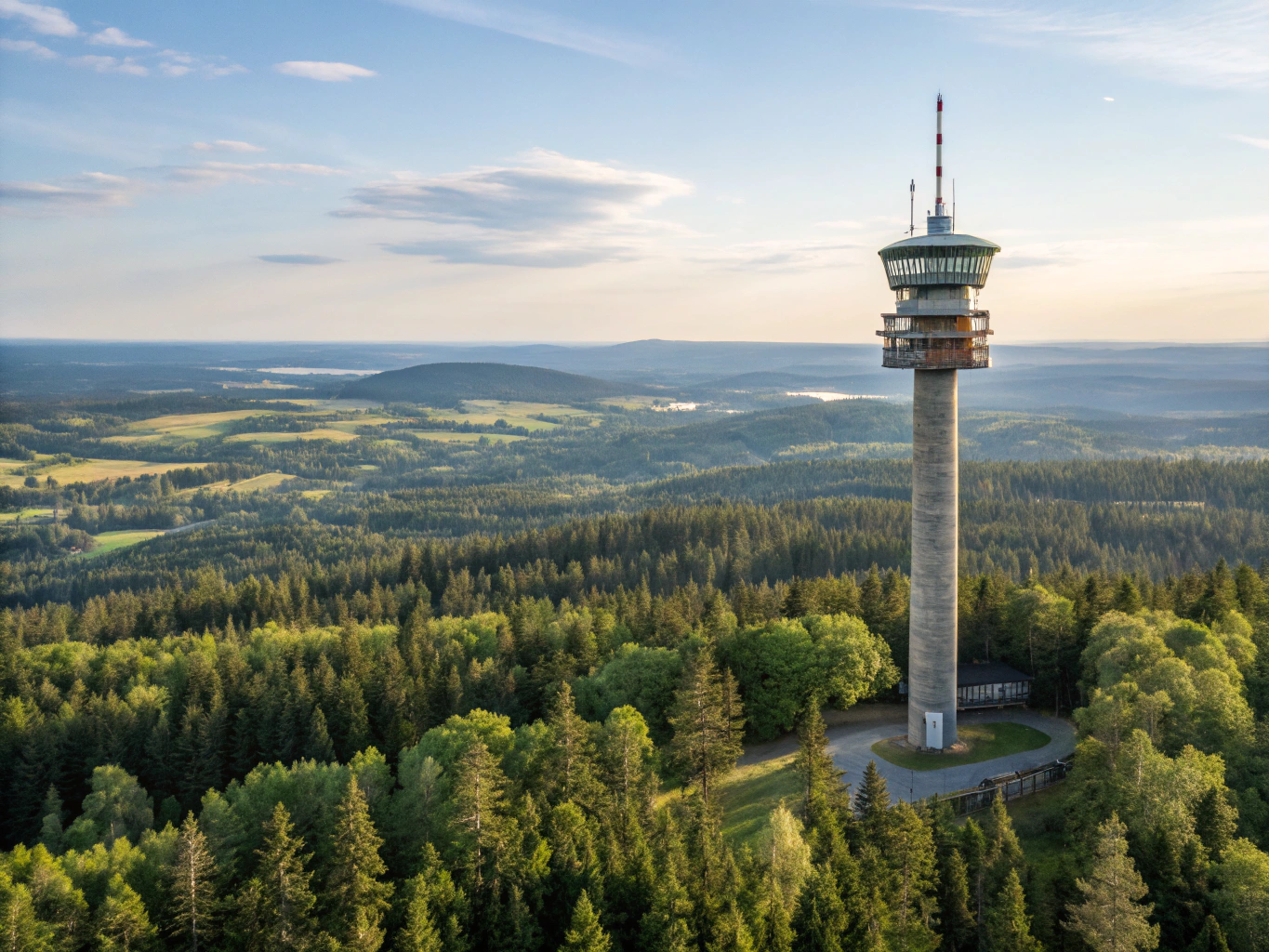
Puijo Observation Tower
⏱️ 1-2 hoursEasy
The Puijo Observation Tower in Kuopio offers a breathtaking panoramic view over the lake landscape. You can easily reach the observation platform by elevator, from where you can admire the vastness of the lakes and forests. The tower also houses a restaurant where you can enjoy regional specialties.
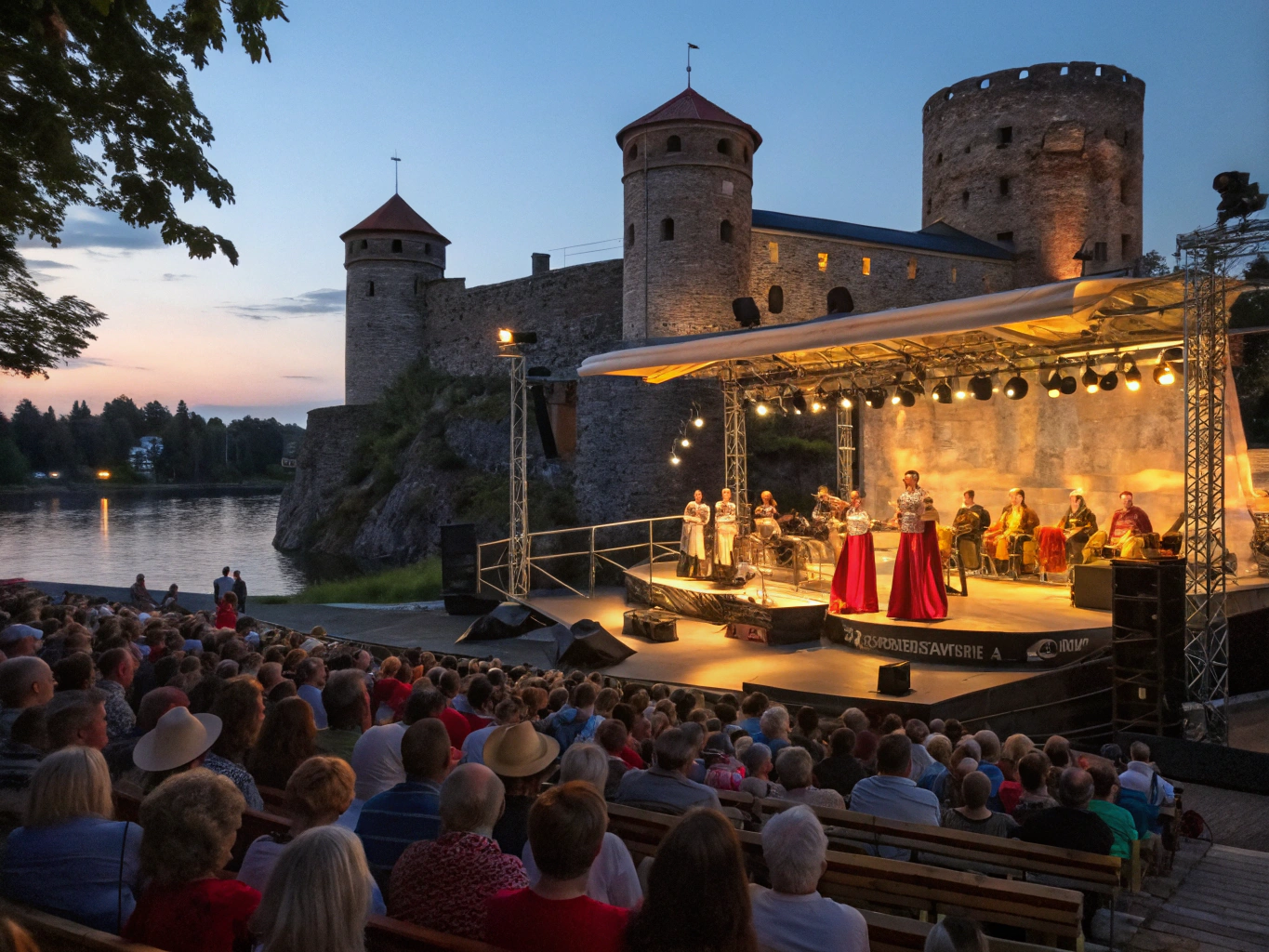
Savonlinna Opera Festival
⏱️ 3-4 hoursEasy
The Savonlinna Opera Festival is a renowned opera festival held annually in July in the medieval Olavinlinna Castle. The unique setting of the castle and the high-caliber performances make the festival an unforgettable experience for opera lovers.
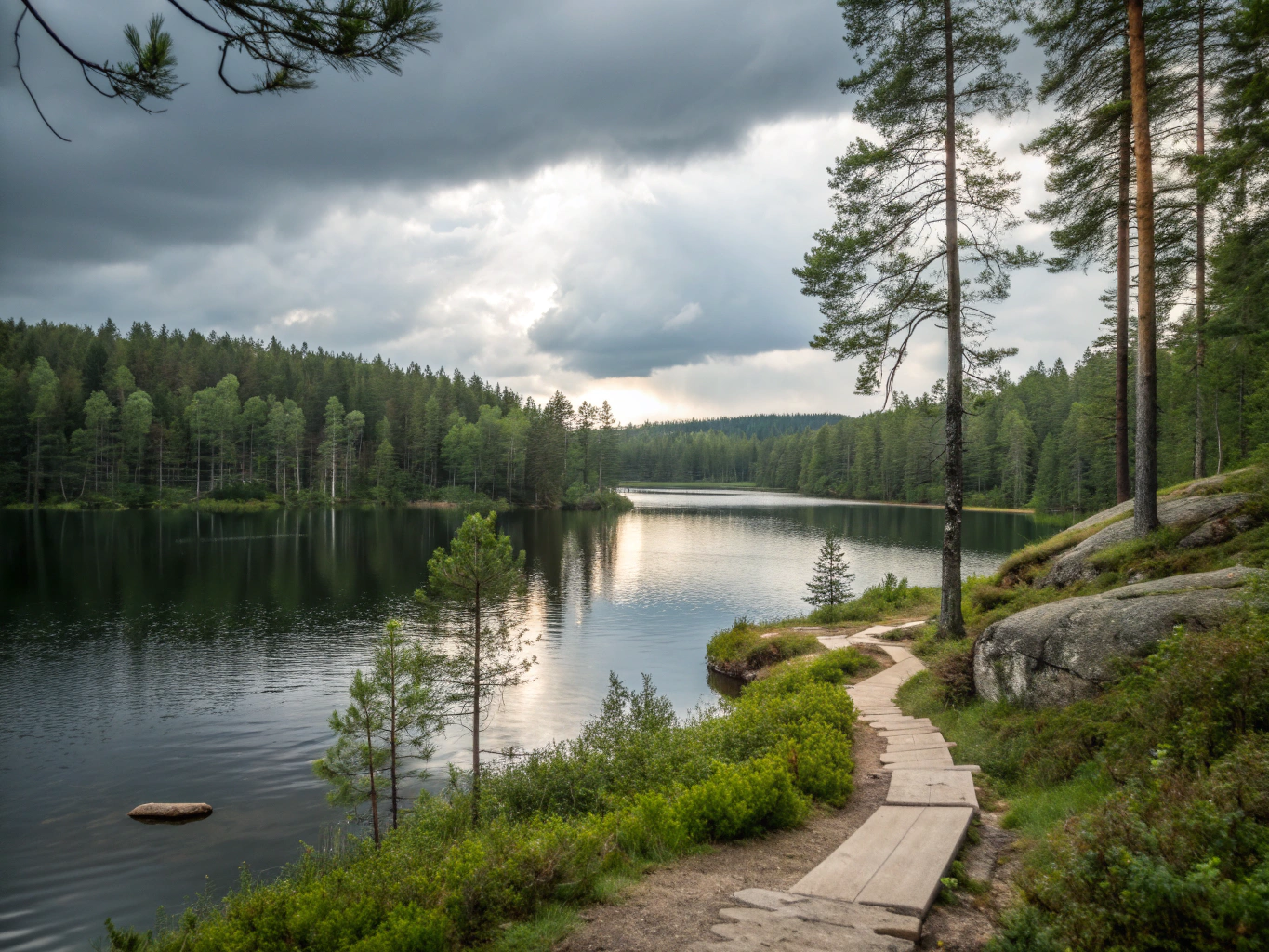
Canoe Tour in Repovesi National Park
⏱️ 4-6 hoursModerate
Repovesi National Park is a paradise for canoeists. On the numerous lakes and rivers, you can explore untouched nature and enjoy the peace and quiet. There are various canoe routes of different lengths and difficulties.
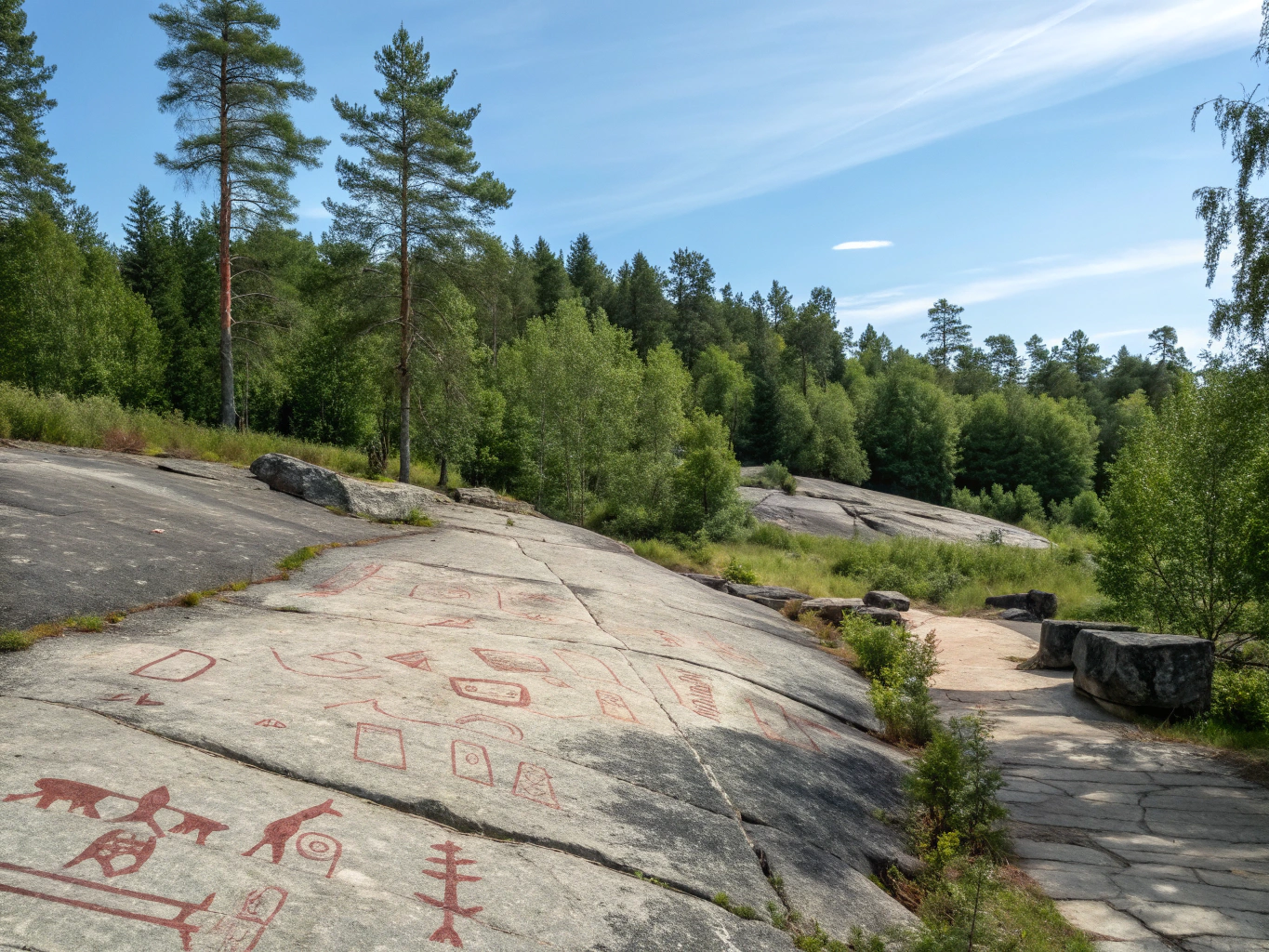
Astuvansalmi Rock Paintings
⏱️ 2-3 hoursModerate
The rock paintings of Astuvansalmi are one of Finland's most significant prehistoric sites. The paintings, which are up to 6000 years old, show human figures, animals, and geometric patterns. The site is located on the shore of Lake Yövesi and is accessible via a hiking trail.
Facts & Figures
Camping Region Finnische Seenplatte
- 🌍 Country
- 🇫🇮 Finnland
- 📍 Region
- Southern and Eastern Finland
- 🏛️ Province
- South Savo, North Karelia, Päijät-Häme, Pirkanmaa, South Karelia, Central Finland, North Savo
- ☀️ Climate
- Temperate cool, short summers
- 📅 Best Season
- June/July for warmth, August/September for peace
- 🌡️ Summer Avg
- 20°C
- 🌸 Spring Avg
- 10°C
- 🏕️ Campsites
- ~300
- ✈️ Airport
- Helsinki-Vantaa (HEL)
- 🚌 Public Transport
- Limited, buses
- 🌧️ Rainy Days
- 10-15 days/month
- 🚗 From Munich
- 24 hrs / 2200 km (with ferry)
- 🚗 From Hamburg
- 21 hrs / 1900 km (with ferry)
- 💰 Price Level
- €€€ More expensive due to travel
- 🐕 Dogs
- Top - dogs are welcome!
- 🎯 Suitable For
- Nature loversPeace seekersActive vacationers
🚦 Occupancy by Month
Jan
Feb
Mar
Apr
May
Jun
Jul
Aug
Sep
Oct
Nov
Dec
Quiet Moderate Busy Crowded
 Rent Camper Finnische Seenplatte
 Campsites Finnische Seenplatte