


🌿 Natur & Wildnis👨👩👧👦 Familien
Camping Guide | Schwäbische Alb
Alb Happiness: Experience Nature
Deutschland, 🇩🇪 Deutschland
Camping Guide | Schwäbische Alb
The scent of aromatic herbs lingers in the air, mixed with the fresh aroma of pine forests. The Swabian Jura, a region shaped by volcanic activity and limestone, surprises with its diversity. Here, vast juniper heaths alternate with dense beech forests, bizarre rock formations rise up, and quiet lakes invite you to linger. Camping in the Swabian Jura means experiencing nature up close – whether hiking, cycling, or simply relaxing at one of the many campsites. Unlike in the Alps, you won't find overcrowded tourist paths here, but rather peace and authenticity. The Swabian Jura is a paradise for nature lovers and active vacationers who want to escape mass tourism.
💡Honest hospitality instead of tourist staging.
The Region in Detail
Your comprehensive travel guide for camping Schwäbische Alb.
Location & Arrival to the Swabian Jura
The Swabian Jura extends in the south of Germany, more precisely in the federal state of Baden-Württemberg. It forms a land strip about 200 kilometers long and 40 kilometers wide, stretching from northeast to southwest. In the north, it borders the Neckar Basin, in the south the Danube and the Alpine foothills. The region is characterized by its striking ridges, the so-called Albtrauf, as well as numerous valleys, caves, and karst springs.
Getting to the Swabian Jura is very easy, whether by car, train, or plane. Those arriving by car can best do so via the A8 (Stuttgart-Munich) and A81 (Stuttgart-Singen) motorways. From the A8, you can reach the region via various exits, for example via the B27 near Stuttgart-Möhringen or the B312 near Münsingen. From the A81, the Rottenburg or Horb exits are ideal. Please note that no tolls are charged on German motorways. Only trucks over 7.5 tons are subject to a toll.
For train travelers, there are numerous connections to the larger cities on the edge of the Swabian Jura, such as Stuttgart, Tübingen, or Ulm. From there, you can reach the smaller towns and communities within the region by regional trains or buses. Deutsche Bahn regularly offers discount deals and group tickets, which are particularly worthwhile for families and groups.
The nearest airport is Stuttgart Airport (STR). From there, you can easily reach the Swabian Jura by rental car or public transport. The S-Bahn lines S2 and S3 connect the airport directly with Stuttgart Main Station, from where regional trains start in the various directions of the Alb. Alternatively, you can use one of the numerous rental car providers at the airport to explore the region flexibly.
From Munich, you can reach the Swabian Jura in about 3 hours via the A8. Those starting from Frankfurt take the A5 and then the A8 towards Munich. The travel time is around 2.5 hours. From Hamburg, the A7 south is recommended, with a travel time of about 7.5 hours. From Vienna, you reach the region via the A8 and A9, with a travel time of approx. 6 hours. From Zurich, you take the A81, with a travel time of around 3 hours.
Within the Swabian Jura, it is best to move around by car or bicycle. Numerous well-signposted cycle paths crisscross the region and invite you to extensive tours. For hikers, the use of public buses is recommended to get to the starting points of the hiking trails.
The Subregions at a Glance
The Swabian Jura can be roughly divided into three subregions: the Western Alb, the Middle Alb, and the Eastern Alb. Each of these regions has its own character and offers different focuses for camping vacationers.
The Western Alb, also known as the Zollernalb, is characterized by its rolling hills, wide meadows, and dense forests. Here you will find numerous small villages and communities that have preserved their original charm. The best-known places in the Western Alb include Hechingen with Hohenzollern Castle, Balingen with its textile museum, and Albstadt, the center of the German knitwear industry. The Western Alb is ideal for families and those seeking peace and quiet who want to enjoy nature and relax. Active vacationers get their money's worth hiking and cycling.
The Middle Alb is characterized by its striking rock formations, deep valleys, and numerous caves. The highest mountain of the Swabian Jura, the Lemberg (1015 m), is also located here. The best-known places in the Middle Alb include Münsingen with its former military training area, Bad Urach with its thermal baths, and Blaubeuren with the Blautopf, a mysterious karst spring. The Middle Alb is a paradise for hikers, climbers, and cave explorers. Mountain bikers will also find challenging routes here.
The Eastern Alb is characterized by its vast juniper heaths, rolling hills, and numerous castles and palaces. The oldest town in the Swabian Jura, Aalen, is also located here. The best-known places in the Eastern Alb include Schwäbisch Gmünd with its historic old town, Ellwangen with its castle, and Neresheim with its baroque abbey church. The Eastern Alb is ideal for those interested in culture and history. Families and active vacationers also get their money's worth here.
Within these three main regions, there are numerous other, smaller subregions, each with its own charm. For example, the Danube Valley is known for its picturesque villages and its numerous castles and palaces. The Erms Valley, on the other hand, is known for its meadow orchards and its numerous hiking trails. And the Lauter Valley is known for its numerous caves and its bizarre rocky landscape.
No matter which subregion you choose, every camping vacationer will find the right offer on the Swabian Jura. Whether large campsites with extensive infrastructure or small, natural pitches, the selection is large and diverse.
Camping in the Swabian Jura: What to Expect?
The camping landscape on the Swabian Jura is diverse and offers something for every taste. From large resort sites with pools and animation to small, natural campsites, everything is included. Agritourism/farm camping and pitches for motorhomes can also be found on the Swabian Jura.
In total, there are about 80 campsites on the Swabian Jura. Most sites are family-run and value a personal atmosphere. Many campsites are open year-round, but some are only open during the season. It is therefore advisable to check in advance whether the desired campsite is open.
The price ranges for a pitch vary depending on the season, the size of the pitch, and the facilities of the campsite. In the high season (July/August), a pitch for two people costs an average of between 25 and 35 euros per night. In the low season (May/June and September/October), prices are slightly lower, ranging between 20 and 30 euros per night. For larger pitches or pitches with a view, prices can also be higher. Many campsites also offer special deals for families or groups.
Typical pitches on the Swabian Jura are between 80 and 120 square meters in size. Many pitches are parceled out and thus offer more privacy. Most pitches are equipped with electricity connections, some also with water and wastewater connections. Whether the pitches are shady or sunny depends on the location of the campsite and the vegetation. Many campsites also offer rental accommodation such as mobile homes, bungalows, or holiday apartments.
The sanitary standard on the campsites of the Swabian Jura is generally good to very good. Most campsites have modern sanitary facilities with showers, toilets, and sinks. Some campsites also offer special sanitary facilities for children or people with disabilities. Wi-Fi quality varies, but many campsites offer free Wi-Fi. The current strength is usually 6 to 16 amps.
It is advisable to reserve a pitch at the desired campsite in good time, especially in the high season. Many campsites accept reservations online or by telephone. Last-minute chances exist mainly in the low season or during the week. Those who are flexible and do not necessarily need a specific pitch can also arrive spontaneously and try their luck.
Practical Information for Campers
For a relaxed camping holiday on the Swabian Jura, it is important to find out about some practical information in advance. Here is an overview of the most important points:
Tolls: There is no general toll for cars and motorhomes under 7.5 tons on German motorways. A toll is only charged for trucks over 7.5 tons. The amount of the toll depends on the distance traveled and the emission class of the vehicle. Payment is made electronically via an On-Board Unit (OBU) or manually at the toll stations.
Gas stations: Diesel prices in Germany are relatively low compared to other European countries. However, prices can vary depending on the region and time of day. Most gas stations are open from early morning until late at night, some even around the clock. At motorway service stations, prices are usually slightly higher than at gas stations in towns and villages.
Shopping: There are numerous supermarkets on the Swabian Jura where you can find everything for your daily needs. The best-known supermarket chains include Lidl, Aldi, Edeka, and Rewe. Opening hours are usually Monday to Saturday from 7 or 8 am to 8 or 10 pm. On Sundays, most supermarkets are closed, but a few in tourist areas are open.
Gas supply: German gas cylinders can be easily exchanged or refilled in Germany. However, it is advisable to find out in advance which gas cylinders are accepted at the respective campsite. Adapters are generally not required.
Disposal: Most campsites have disposal stations for greywater and feces. Use is usually included in the pitch price. It is important to follow the disposal instructions of the respective campsite to avoid environmental pollution.
Mobile communications: Network coverage in Germany is generally good. However, there may be restrictions in some remote areas. Roaming charges within the EU have been abolished since 2017, so you can use your mobile phone on holiday as usual.
Medical care: There are numerous doctors and pharmacies on the Swabian Jura. In an emergency, you can contact the nearest hospital. The emergency number in Germany is 112.
Rules: Wild camping is generally prohibited in Germany. It is therefore advisable to stay at official campsites or pitches. In some cities and municipalities, there are environmental zones that only vehicles with a green environmental sticker may enter. Information on environmental zones is available on the internet or from the respective city administrations.
Drinking water: Tap water in Germany is generally of drinking water quality. However, it is advisable to find out in advance whether this is also the case in the respective region.
Insider Knowledge & Secret Tips
The Swabian Jura holds some secrets that are not in every travel guide. Here are a few insider tips to make your camping holiday an unforgettable experience:
Low season advantages: The months of May, June, and September are ideal for a camping holiday on the Swabian Jura. The weather is pleasantly mild, the campsites are less crowded, and prices are lower. In addition, you can enjoy nature in peace and quiet without being disturbed by crowds of tourists.
Less known places and beaches: Away from the well-known tourist paths, there are numerous small places and lakes that are worth a visit. The Schopflochsee, an idyllic swimming lake in the middle of a nature reserve, is located about 5 km south of Lenningen. It can be reached via the L1215 country road. The romantic town of Bad Urach with its half-timbered houses and thermal baths is also worth a visit.
Local markets and direct sales: At the weekly markets of the Swabian Jura, you can buy regional products directly from the producer. A large weekly market takes place in Reutlingen every Wednesday and Saturday. The numerous farm shops also offer a large selection of regional specialties. In autumn, a visit to the meadow orchards is worthwhile, where you can buy fresh fruit and homemade apple juice.
Local festivals and events: There are numerous festivals and events on the Swabian Jura throughout the year. In summer, many wine festivals take place where you can taste the regional wines. In autumn, there are numerous harvest festivals, and in winter, the Christmas markets invite you to linger. A special highlight is the Shepherd's Run (Schäferlauf) in Markgröningen, which takes place every year in August.
Culinary tips: You should definitely try the regional specialties on the Swabian Jura. These include the famous Swabian Spätzle, Maultaschen, and lentils with Spätzle. Onion roast beef (Zwiebelrostbraten) and the 'Schlachtplatte' (meat platter) are also very popular. If you like it sweet, you should try the apple cake or the 'Kirschenmichel' (cherry bread pudding). In the numerous inns and restaurants in the region, you can enjoy Swabian cuisine to the fullest. Locals like to visit the Gasthaus Rössle in Bad Urach or the Landgasthof Linde in Münsingen.
Day trips that are worthwhile: From the Swabian Jura, you can go on numerous interesting day trips. A visit to Lichtenstein Castle, also known as the 'Fairytale Castle of Württemberg', is definitely worth it. The driving time is about 30 minutes. A trip to Lake Constance, Germany's largest lake, is also recommended. The driving time is about 1.5 hours. For those interested in culture, a visit to the Roman city of Aalen, which is about 1 hour away, is ideal.
Experiences & Activities: Schwäbische Alb
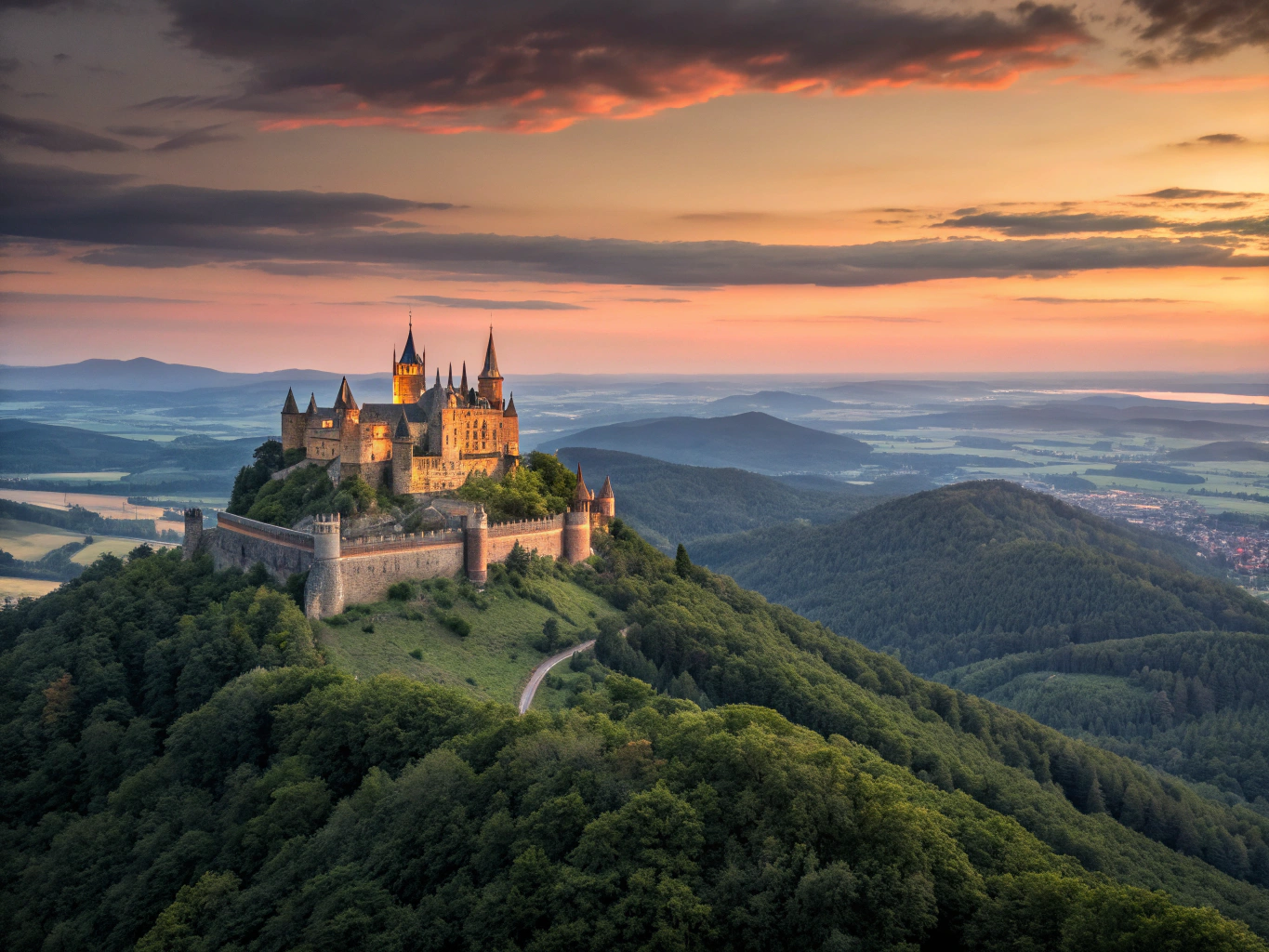
Hohenzollern Castle
⏱️ 3-4 StundenModerate
Experience the breathtaking panoramic view from Hohenzollern Castle, the ancestral seat of the Prussian royal family. The magnificent architecture and the impressive location on a mountain cone make the visit an unforgettable experience. Wander through the historical walls and let yourself be captivated by the history of the Hohenzollerns. A must for every visitor to the Swabian Jura.
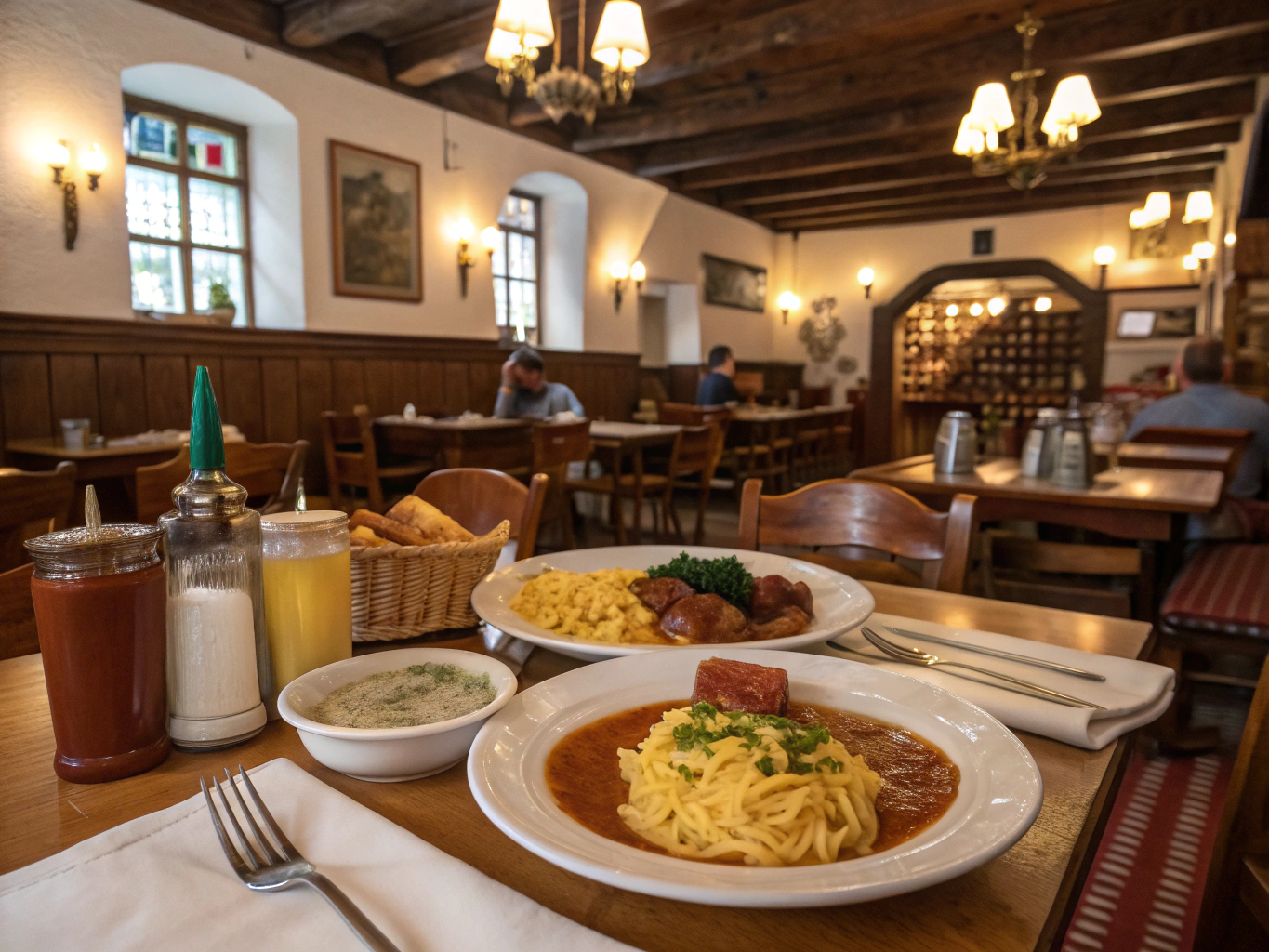
Alb Culinary Delights
⏱️ 2-3 StundenEasy
Enjoy traditional Swabian cuisine in a cozy inn on the Swabian Jura. Try the famous Spätzle with gravy or Maultaschen, filled pasta pockets that are considered Swabian national dishes. Let yourself be pampered by the hearty home cooking and discover the regional specialties. A culinary experience you shouldn't miss.
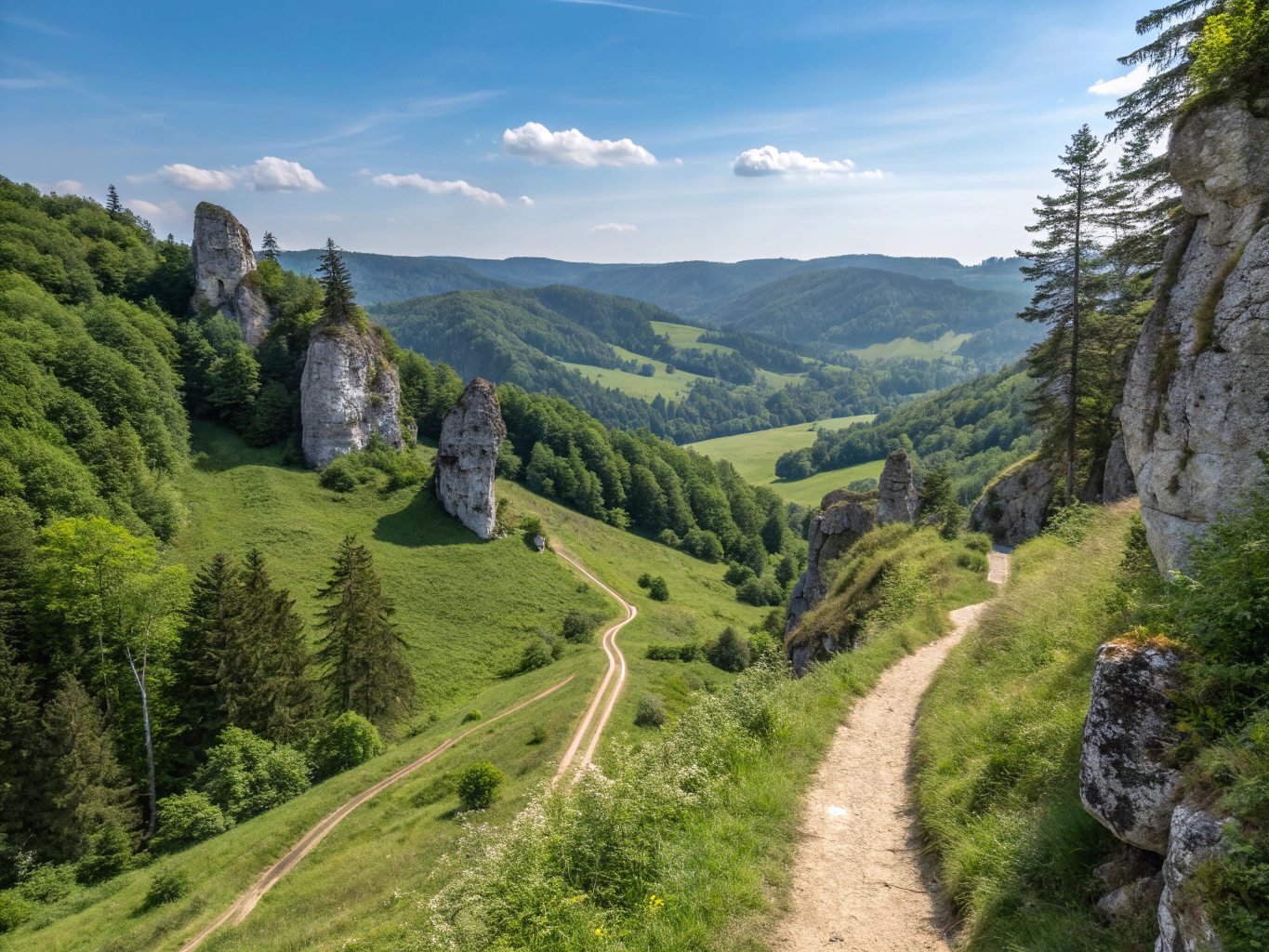
Hiking in the Biosphere Reserve
⏱️ 4-6 StundenModerate
Explore the diverse nature of the Swabian Jura Biosphere Reserve on a hike. Discover rare plants and animals and enjoy the peace and vastness of the landscape. Choose from numerous hiking trails of varying difficulty levels and let yourself be enchanted by the beauty of the Alb. An unforgettable experience for nature lovers and active vacationers.
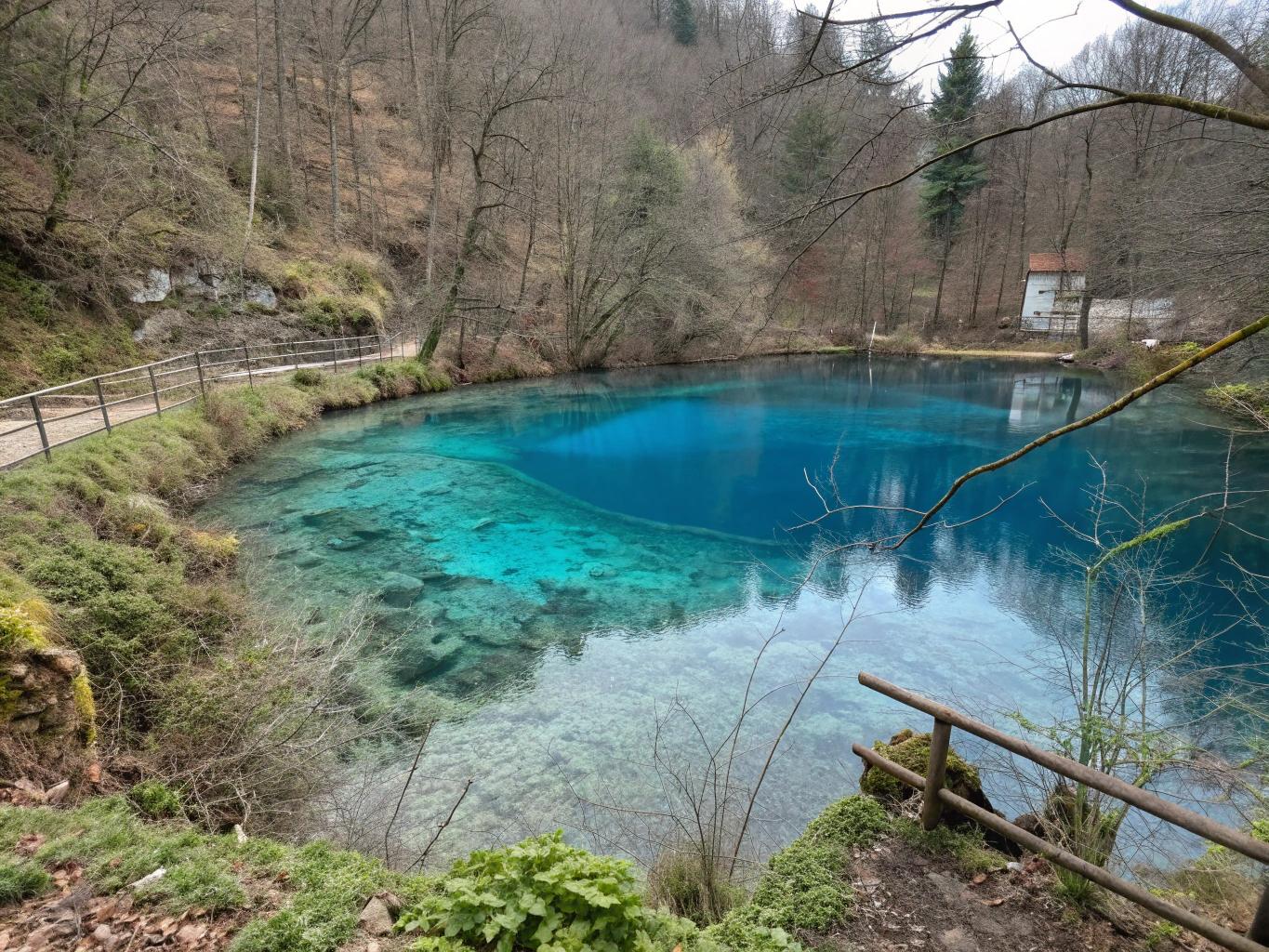
Blautopf and Blaubeuren
⏱️ 2-3 StundenEasy
Immerse yourself in the mysterious world of the Blautopf, a karst spring with intensely blue water. Explore the surrounding caves and let yourself be enchanted by the unique atmosphere. Enjoy a boat trip on the Blautopf and learn more about the origin and history of this fascinating place. A magical place off the beaten track.
Facts & Figures
Camping Region Schwäbische Alb
- 🌍 Country
- 🇩🇪 Deutschland
- 📍 Region
- Baden-Württemberg
- 🏛️ Province
- Reutlingen, Tübingen, Zollernalbkreis, Alb-Donau-Kreis, Göppingen, Esslingen
- ☀️ Climate
- Temperate, with cool winters and warm summers.
- 📅 Best Season
- May/June for hiking, July/August for swimming fun
- 🌡️ Summer Avg
- 22 °C
- 🌸 Spring Avg
- 12 °C
- 🏕️ Campsites
- ~80
- ✈️ Airport
- Stuttgart Airport (STR), approx. 30-60 km away
- 🚌 Public Transport
- Regional trains and buses connect the larger towns.
- 🌧️ Rainy Days
- 10-12 days per month (summer)
- 🚗 From Munich
- 3 hrs / 250 km via A8
- 🚗 From Hamburg
- 7.5 hrs / 700 km via A7
- 💰 Price Level
- €€ / Moderate, seasonal fluctuations
- 🐕 Dogs
- Top / Many hiking trails and campsites are dog-friendly.
- 🎯 Suitable For
- Close to natureActiveRelaxed
🚦 Occupancy by Month
Jan
Feb
Mar
Apr
May
Jun
Jul
Aug
Sep
Oct
Nov
Dec
Quiet Moderate Busy Crowded
 Rent Camper Schwäbische Alb
 Campsites Schwäbische Alb