


🌿 Natur & Wildnis👨👩👧👦 Familien
Camping Guide | Deutsche Ostseeküste
Discover Your Baltic Sea Adventure
Deutschland, 🇩🇪 Deutschland
Camping Guide | Deutsche Ostseeküste
Close your eyes and take a deep breath: the salty breeze of the Baltic Sea blows around your nose, the screeching of seagulls accompanies the gentle sound of the waves. The German Baltic Coast is a paradise for campers longing for relaxation and adventure. Here, where endless sandy beaches alternate with steep cliffs and historic Hanseatic cities compete with quaint fishing villages for the favor of visitors, a first-class camping holiday awaits you. Unlike many other coasts in Europe, you will find a unique combination of untouched nature, cultural treasures, and a relaxed atmosphere. The Baltic Coast is authentic and honest, far away from mass tourism.
💡There's more than just a light breeze blowing here – plan your holiday in good time!
The Region in Detail
Your comprehensive travel guide for camping Deutsche Ostseeküste.
Location & Arrival at the German Baltic Coast
The German Baltic Coast extends across the federal states of Mecklenburg-Vorpommern and Schleswig-Holstein and includes a variety of islands, peninsulas, and coastal sections. It borders the Baltic Sea to the north and the German inland to the south. The region is characterized by its diverse landscape, ranging from fine sandy beaches and steep cliffs to picturesque Bodden lagoon landscapes.
Arrival by car is usually via the A1, A20, and A24 motorways. From Munich, you can reach the Baltic Coast in about 8 hours via the A9 and A24. Those starting from Frankfurt take the A5 and A7 and need about 7 hours. Coming from Hamburg, it is best to take the A1, which will get you to your destination in around 2 hours. Note that tolls apply on some motorway sections in Germany for trucks over 7.5 tons. For cars and motorhomes, the motorways are free of charge.
As an alternative to traveling by car, the train is a good option. Deutsche Bahn (DB) offers regular connections to the larger cities on the Baltic Coast, such as Rostock, Stralsund, or Kiel. From there, you can continue to your destination by regional trains or buses. The travel time from Munich to Rostock, for example, is about 7-8 hours with the ICE.
The nearest airport is Rostock-Laage (RLG). From there, there are bus connections to various locations on the Baltic Coast. Another option is Hamburg Airport (HAM), which has good connections to the public transport network.
Locally, it is best to get around by bus, train, or bicycle. There are numerous cycle paths along the coast that are ideal for excursions. The ferries to the islands of Rügen, Hiddensee, or Usedom are also a popular means of transport. The Usedomer Bäderbahn (UBB) connects the seaside resorts on the island of Usedom with each other.
Overview of the Sub-regions of the German Baltic Coast
The German Baltic Coast can be divided into various sub-regions, each with its own charm and character. Each of these regions offers unique experiences and is ideal for an unforgettable camping holiday.
Lübeck Bay, located in Schleswig-Holstein, is known for its long sandy beaches and popular seaside resorts such as Travemünde, Timmendorfer Strand, and Scharbeutz. Families and water sports enthusiasts feel particularly at home here. Travemünde impresses with its maritime atmosphere and the historic four-masted sailing ship Passat. Timmendorfer Strand attracts visitors with an elegant promenade and numerous shops. Scharbeutz is a paradise for surfers and kiters.
The island of Fehmarn, also in Schleswig-Holstein, is a popular destination for campers and water sports enthusiasts. Burgtiefe is a well-known surfing area, while the west coast of the island invites you to relax with its natural beaches. Fehmarn also offers a variety of campsites, from simple tent sites to comfortable resort sites.
The Mecklenburg Baltic Coast extends from Lübeck Bay to the island of Rügen. Numerous seaside resorts such as Kühlungsborn, Warnemünde, and Heiligendamm are located here. Kühlungsborn is the largest seaside resort in Mecklenburg and impresses with its long promenade and marina. Warnemünde, a district of Rostock, is known for its wide sandy beach and the Alter Strom, where numerous fishing cutters and restaurants can be found. Heiligendamm is the oldest seaside resort in Germany and attracts visitors with its elegant resort architecture.
The island of Rügen, Germany's largest island, is a paradise for nature lovers and those interested in culture. The famous chalk cliffs in the Jasmund National Park are a UNESCO World Heritage site and offer spectacular views of the Baltic Sea. Binz is the largest seaside resort on Rügen and impresses with its magnificent resort architecture. Sellin is known for its pier with the historic diving gondola. Göhren attracts visitors with two fine sandy beaches and an idyllic town center.
The island of Usedom, Germany's second-largest island, is known for its Imperial Spas: Ahlbeck, Heringsdorf, and Bansin. These seaside resorts impress with their elegant resort architecture and long promenades. Świnoujście, a Polish part of the island, attracts visitors with a wide sandy beach and numerous shops. On Usedom, there are many campsites, which are often located directly on the beach.
Camping on the German Baltic Coast: What to Expect?
The camping landscape on the German Baltic Coast is diverse and offers something for every taste and budget. From large resort sites with pools and animation to small, nature-oriented sites, everything is available. In total, there are an estimated 250 campsites along the coast.
The large resort sites, often located near the seaside resorts, offer a comprehensive infrastructure with sanitary facilities, restaurants, supermarkets, and leisure activities. Here you will often find swimming pools, playgrounds, and animation programs for children. These sites are ideal for families who want to spend a comfortable and varied camping holiday. Prices for a pitch in the high season are between 30 and 50 euros per night.
Those who prefer something quieter and closer to nature will also find numerous small campsites on the Baltic Coast, which are often located directly on the beach or near the coast. These sites are often more simply equipped but offer a relaxed atmosphere and the opportunity to experience nature up close. Prices for a pitch in the high season are between 20 and 35 euros per night.
For motorhome owners, there are also numerous pitches along the Baltic Coast that are specifically tailored to the needs of motorhome drivers. These pitches often offer a supply and disposal station, electricity connections, and sanitary facilities. Prices for a pitch in the high season are between 15 and 30 euros per night.
The size of the pitches varies depending on the campsite. As a rule, the pitches on the large resort sites are slightly larger than on the small, nature-oriented sites. Many pitches offer shade from trees or bushes, but there are also sunny pitches. Most campsites have an electricity connection (usually 6 or 16 amps) and WLAN. However, the quality of the WLAN can vary depending on the campsite.
It is advisable to reserve campsites on the Baltic Coast in good time, especially in the high season. While there are always last-minute opportunities, the best spots are often fully booked months in advance.
Practical Information for Campers on the German Baltic Coast
For a relaxed camping holiday on the German Baltic Coast, it is helpful to know some practical information. Here you will find everything you need to know about tolls, petrol stations, shopping, gas supply, disposal, mobile communications, medical care, rules, and drinking water.
Tolls in Germany only apply to trucks over 7.5 tons on motorways. For cars and motorhomes, the motorways are free of charge. However, some cities charge a city toll for certain vehicles to improve air quality. Find out in advance whether your destination is affected.
Diesel prices in Germany are relatively moderate compared to the rest of Europe. However, prices vary depending on the region and time of day. There are plenty of petrol stations along the Baltic Coast. Most petrol stations have long opening hours, and some are even open around the clock.
There are plenty of shopping opportunities on the Baltic Coast. In the larger cities and seaside resorts, you will find supermarkets such as Lidl, Rewe, Edeka, and Netto. Discounters such as Aldi and Penny are also represented. Supermarket opening hours are usually Monday to Saturday from 7 or 8 am to 8 or 10 pm. Some supermarkets are also open on Sundays, especially in tourist areas.
The gas supply is well-developed in Germany. German gas cylinders can be exchanged without any problems. Adapters are usually not required.
Disposal stations for motorhomes and caravans are available at many campsites and pitches. Some petrol stations also offer disposal facilities.
Mobile network coverage on the Baltic Coast is good. In most areas, there is 4G or even 5G reception. Roaming charges within the EU were abolished in 2017. You can therefore use your mobile phone as you do at home.
Medical care in Germany is very good. There are hospitals and pharmacies in all larger cities and seaside resorts. Doctors and dentists are also available in sufficient numbers. The emergency number in Germany is 112.
Strict camping regulations apply in Germany. Wild camping is generally prohibited and can be punished with high fines. However, there are a few exceptions, for example in Schleswig-Holstein, where camping for one night in the wild is permitted, provided you are not in a nature reserve and have asked the property owner for permission.
Tap water in Germany is generally of drinking water quality. You can drink it without hesitation. In some areas, however, the water may have a high lime content.
Insider Knowledge & Secret Tips for the German Baltic Coast
The German Baltic Coast has much more to offer than just the well-known seaside resorts and beaches. Those who travel off the beaten track can discover real secret tips here. As an experienced travel journalist, I am happy to share my local knowledge with you.
The low season (May/June and September/October) is ideal for a relaxed camping holiday on the Baltic Coast. The temperatures are pleasantly mild, the beaches are emptier, and the prices are lower. In addition, nature is particularly attractive during this time.
A less well-known place is the fishing village of Vitt on the island of Rügen. The village can only be reached on foot or by carriage and impresses with its picturesque thatched-roof houses. A walk through the village is like a journey into the past.
Another secret tip is the beach of Ahrenshoop on the Fischland-Darß-Zingst peninsula. The beach is known for its tranquility and the impressive cliffs. Here you can unwind and enjoy nature.
Local markets and direct sales are plentiful on the Baltic Coast. At the weekly markets in the towns and villages, you can buy fresh products from the region, such as fish, vegetables, fruit, and cheese. Many farms also offer direct sales from the farm. Here you can buy regional specialties such as sea buckthorn products, honey, and jam.
A culinary tip is the fish roll (Fischbrötchen). The fish roll is a classic of Baltic cuisine and is sold on almost every corner. Be sure to try a fish roll with Bismarck herring or Matjes.
A day trip that is worthwhile is the trip to the island of Hiddensee. The island is car-free and can only be reached by ferry. Hiddensee is a paradise for nature lovers and offers numerous hiking trails. The travel time from Stralsund is about 1 hour, and the cost for the ferry crossing is approx. 20 euros per person.
A restaurant visited by locals is "Zur Fähre" in Warnemünde. The restaurant is located directly on the Alter Strom and offers a large selection of fish dishes. The prices are moderate and the quality is excellent.
Experiences & Activities: Deutsche Ostseeküste
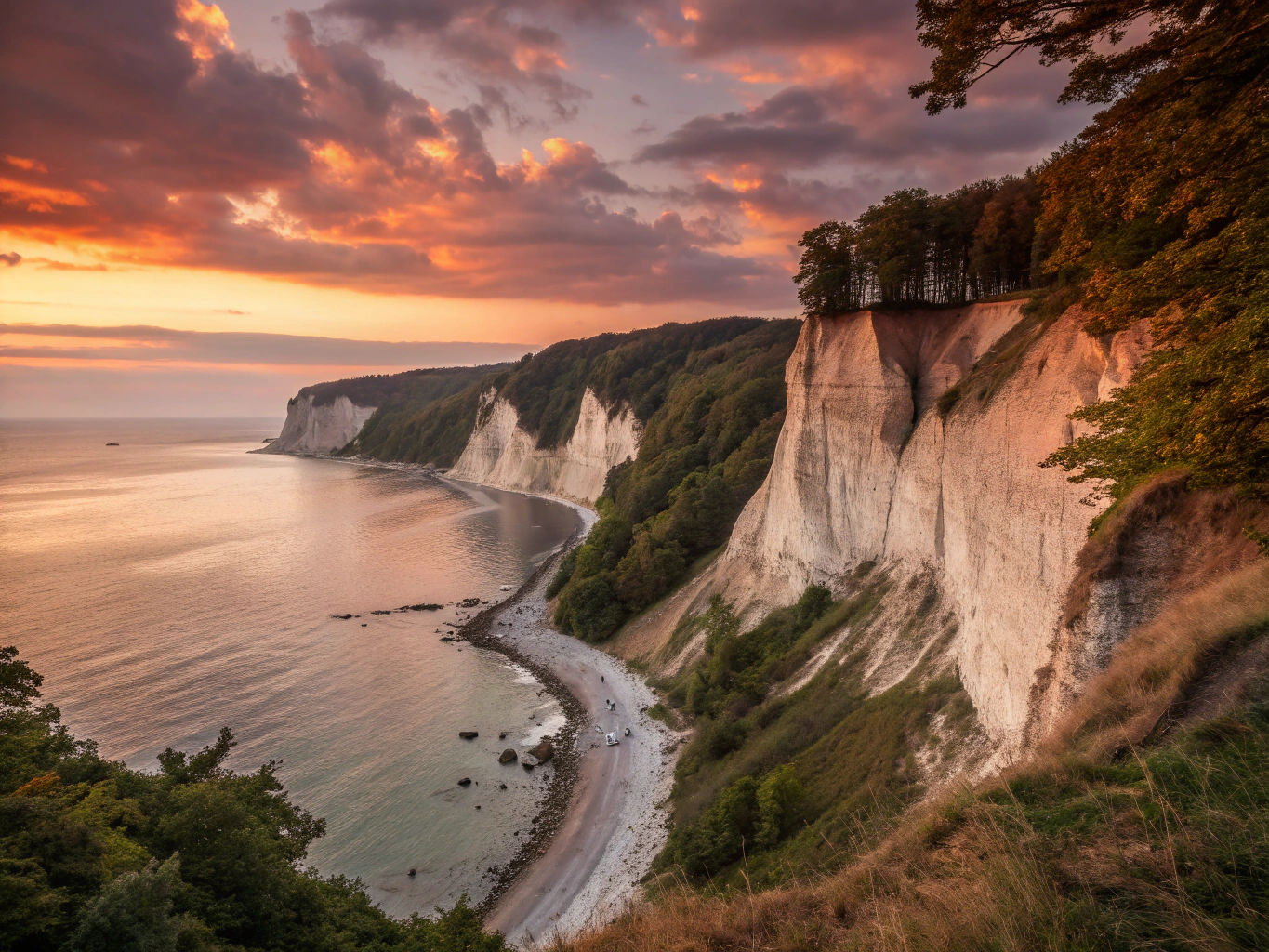
Chalk Cliffs of Rügen
⏱️ 2-3 hoursEasy
Experience the breathtaking view from the famous chalk cliffs in the Jasmund National Park. Hike along the coast and enjoy the untouched nature. An unforgettable experience!
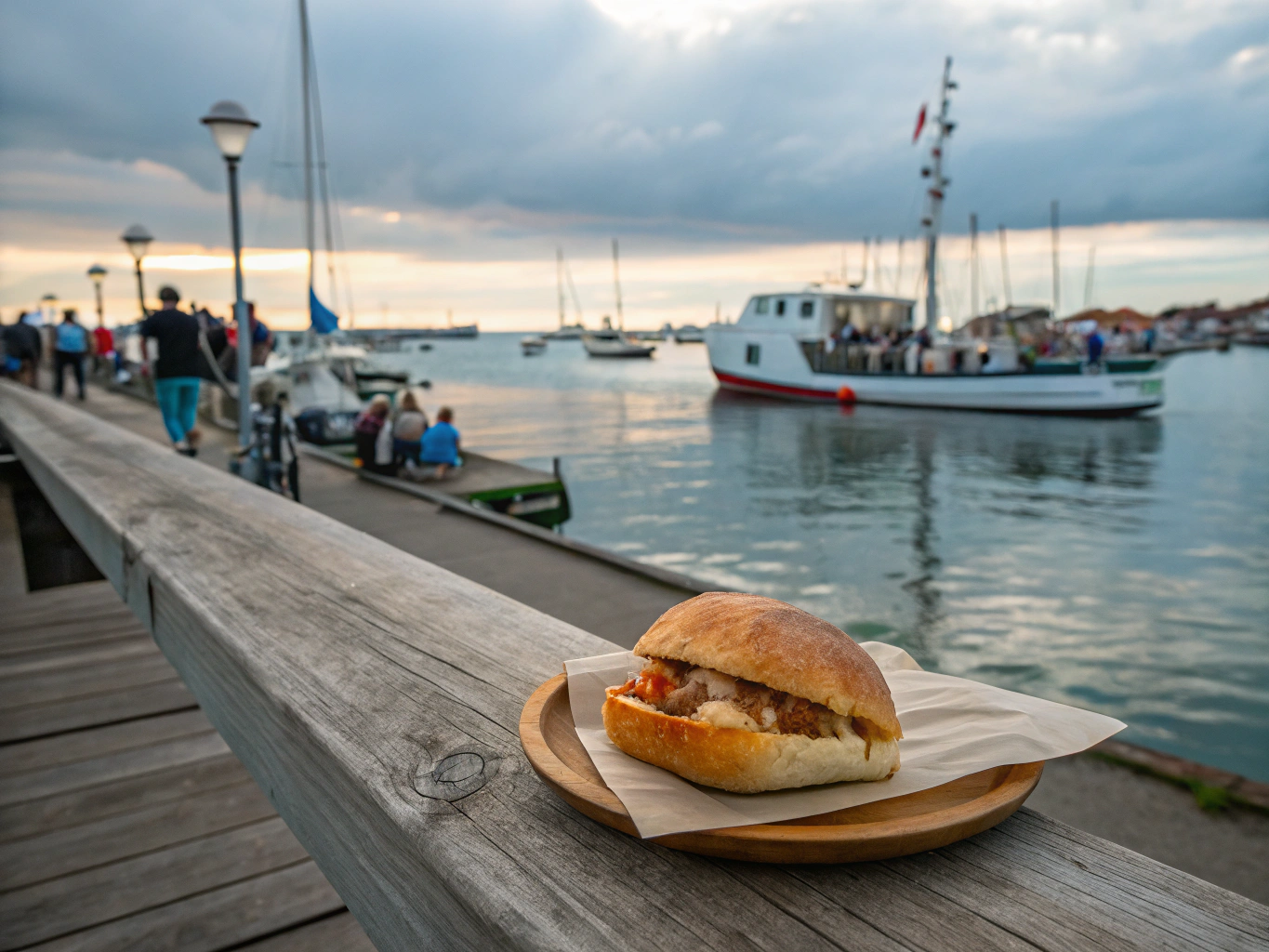
Fish Rolls in Warnemünde
⏱️ 30 minutesEasy
A visit to the Baltic Sea is not complete without a fresh fish roll. Enjoy the maritime atmosphere at the Alter Strom in Warnemünde and try the local specialties. Simply delicious!
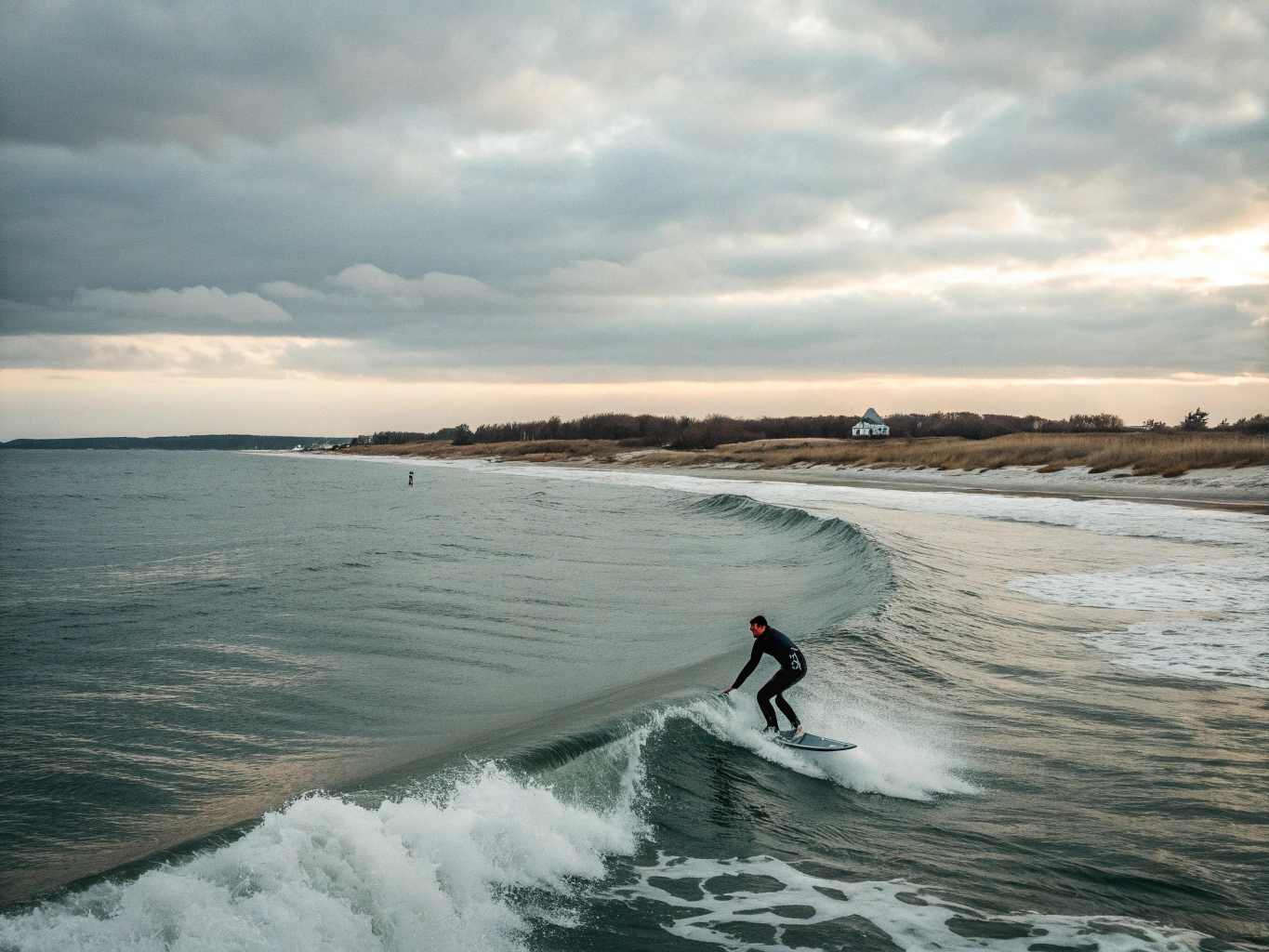
Surfing on Fehmarn
⏱️ all dayModerate
Fehmarn is a paradise for surfers and kiters. Whether beginner or professional, here you will find the perfect conditions for your Baltic Sea adventure. Rent a board and plunge into the waves!
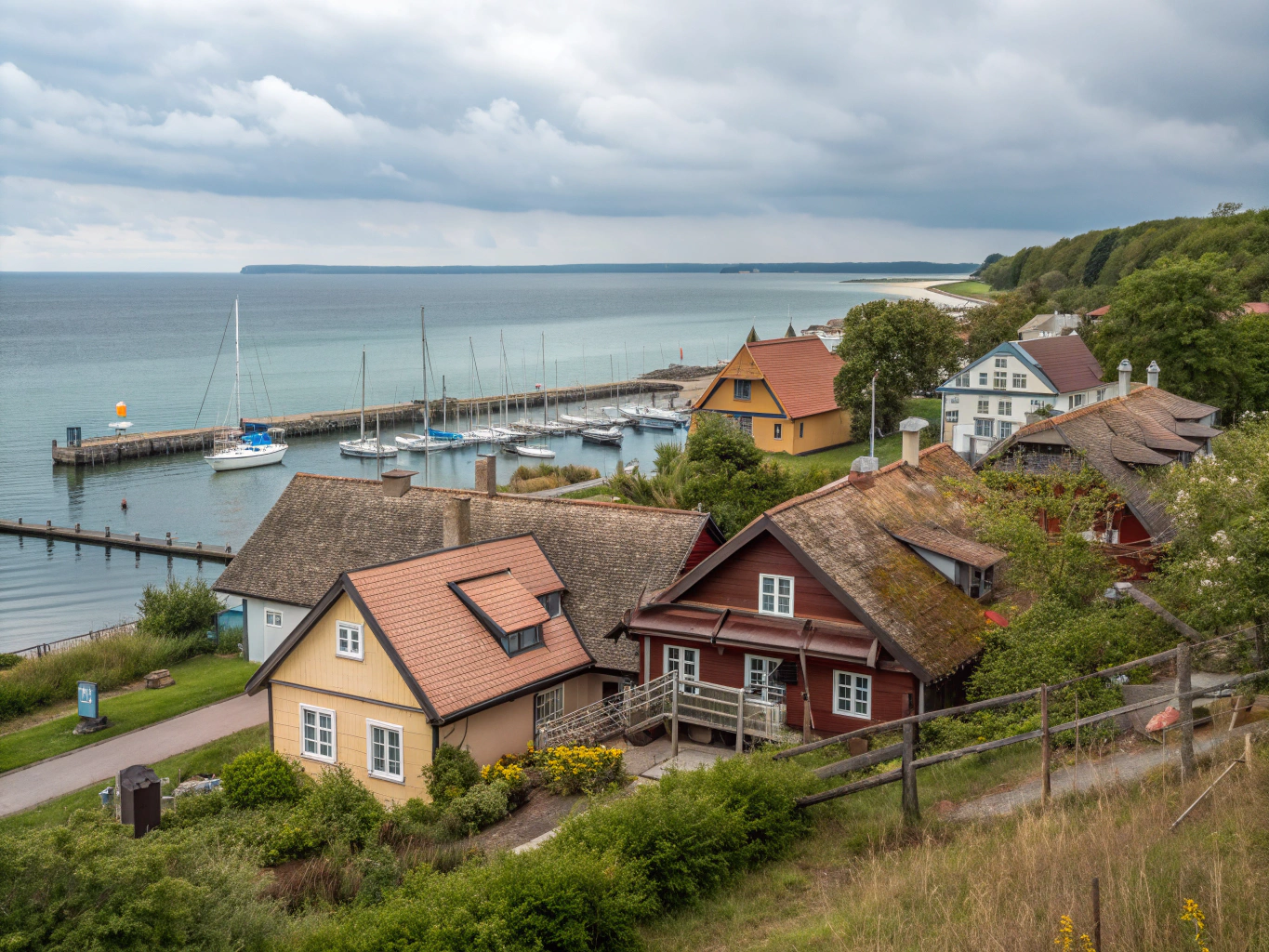
Vitt on Rügen
⏱️ 2-3 hoursEasy
Discover the idyllic fishing village of Vitt on Rügen, which can only be reached on foot or by carriage. Stroll through the alleys with the thatched-roof houses and enjoy the peace and quiet away from the hustle and bustle. A real secret tip!
Facts & Figures
Camping Region Deutsche Ostseeküste
- 🌍 Country
- 🇩🇪 Deutschland
- 📍 Region
- Mecklenburg-Vorpommern / Schleswig-Holstein
- 🏛️ Province
- Vorpommern-Rügen, Nordwestmecklenburg, Schleswig-Holstein
- ☀️ Climate
- Temperate maritime, influenced by the proximity to the Baltic Sea.
- 📅 Best Season
- May/June for cycling tours, July/August for beach holidays
- 🌡️ Summer Avg
- 22°C
- 🌸 Spring Avg
- 14°C
- 🏕️ Campsites
- ~250
- ✈️ Airport
- Rostock-Laage (RLG)
- 🚌 Public Transport
- Well-developed bus and rail network, ferries to the islands.
- 🌧️ Rainy Days
- 10-12 days per month
- 🚗 From Munich
- 8 hrs / 800 km via A9 and A24
- 🚗 From Hamburg
- 2 hrs / 200 km via A1
- 💰 Price Level
- €€
- 🐕 Dogs
- Top. Many beaches and campsites are dog-friendly.
- 🎯 Suitable For
- Nature-orientedRelaxedCultural
🚦 Occupancy by Month
Jan
Feb
Mar
Apr
May
Jun
Jul
Aug
Sep
Oct
Nov
Dec
Quiet Moderate Busy Crowded
 Rent Camper Deutsche Ostseeküste
 Campsites Deutsche Ostseeküste