


🌿 Natur & Wildnis👨👩👧👦 Familien
Camping Guide | Lake Lucerne
Camping Bliss on the Lakeshore
Schweiz, 🇨🇭 Schweiz
Camping Guide | Lake Lucerne
Breathe in the clear mountain air while the sparkling water of Lake Lucerne glitters in the sun. Camping at Lake Lucerne means experiencing the Swiss Alps at their most beautiful. Here, majestic peaks, green hills, and a deep blue lake combine to create a unique panorama. Unlike other Alpine regions, Lake Lucerne offers a perfect blend of nature experiences and cultural highlights. Numerous charming towns line the shore and invite exploration. Whether you're an active vacationer or seeking peace and quiet, everyone will find their personal holiday paradise here.
💡If you're looking for postcard-perfect views, you're guaranteed to find them here.
The Region in Detail
Your comprehensive travel guide for camping Lake Lucerne.
Location & Arrival at Lake Lucerne
Lake Lucerne is located in the heart of Switzerland and spans the cantons of Lucerne, Uri, Schwyz, Obwalden, and Nidwalden. Its unique shape, reminiscent of four forest settlements (Waldstätten), gave it its German name. The region is excellently connected in terms of transport, making arrival very comfortable both by car and by public transport.
By car, you can best reach Lake Lucerne via the Swiss motorways A2 and A4. Coming from the north, drive via Basel and Lucerne (A2) or via Zurich and Zug (A4) towards the south. Travelers from the Stuttgart area can use the A81 and A4, while campers from the Munich area arrive via the A96 and A1. Please note that a vignette is mandatory on Swiss motorways. The annual vignette costs CHF 40 (approx. €41) and is available at border crossings, gas stations, and post offices. Additional toll fees apply for the Gotthard Tunnel, which is an important north-south connection. The cost for a single trip through the Gotthard Tunnel is about CHF 20 (approx. €21).
For rail travelers, Lake Lucerne is also very easy to reach. The Swiss Federal Railways (SBB) offer regular connections from all major Swiss cities and neighboring countries. From Zurich, you can reach Lucerne, the central hub on the lake, in less than an hour. From there, there are numerous train and bus connections to the various towns around the lake. There are also direct train connections to Lucerne from Germany, for example from Frankfurt or Hamburg.
The nearest international airport is Zurich Airport (ZRH). From there, you can easily reach Lucerne by train in about an hour. Alternatively, rental cars are available at the airport to explore the region on your own.
Once there, the best way to get around is by public transport. The boats of the Lake Lucerne Navigation Company (SGV) connect the various towns on the lake and offer a unique way to enjoy the landscape. In addition, there is a well-developed network of buses and trains that also reaches the more remote regions. For sporty vacationers, the bicycle is a great option. There are numerous cycle paths along the lakeshore that invite you to take relaxed tours. Taking bicycles on trains and boats is generally possible.
From Munich, you can reach Lake Lucerne in about 4.5 hours via the A96 and A1. Those starting from Frankfurt take the A5 and A3 and need around 5.5 hours. From Hamburg, the journey time is about 9 hours via the A7 and A5. From Vienna, it is about 8 hours via the A1 and A14. And from Zurich, you are at Lake Lucerne in about an hour.
Overview of the Sub-regions
Lake Lucerne can be roughly divided into four sub-regions, each with its own character and charm. The north shore, shaped by the city of Lucerne, is the tourist center of the region. Life pulsates here, with numerous hotels, restaurants, and shops. Lucerne itself impresses with its historic old town featuring the famous Chapel Bridge and the Water Tower. The Culture and Convention Center Lucerne (KKL) is also an architectural highlight. Numerous campsites are found along the north shore, providing an ideal starting point for excursions into the city and the surrounding mountains. Families, culture enthusiasts, and city travelers feel particularly at home here.
The south shore, especially the region around Alpnachstad and Stansstad, is known for its impressive mountain massifs. Here towers Mount Pilatus, a striking peak that can be climbed with the world's steepest cogwheel railway. The Stanserhorn, reachable by a CabriO cable car, also offers a breathtaking panoramic view of the lake and the Alps. The south shore is a paradise for hikers, mountaineers, and nature lovers. The campsites in this region are often a bit quieter and closer to nature than on the north shore. Active vacationers and families who love nature will find exactly what they are looking for here.
The east shore, around Brunnen and Weggis, is characterized by its rolling hills and picturesque villages. Here lies the Rütli meadow, a historic site considered the cradle of Switzerland. The region is ideal for relaxed hikes, boat trips, and excursions to nearby mountains. In Weggis, you'll find the Mark Twain monument, as the writer spent some time here. The east shore is a popular destination for couples, those seeking peace, and families looking for a relaxed atmosphere.
The west shore, between Hergiswil and Küssnacht am Rigi, is known for its diverse leisure activities. There are numerous water sports opportunities here, such as sailing, surfing, and stand-up paddling. Mount Rigi, the Queen of the Mountains, is also easily accessible from here. The region offers a mix of nature experiences and urban flair. The campsites on the west shore are often modernly equipped and offer good infrastructure. Water sports enthusiasts, families, and active vacationers will find ideal conditions here.
Particularly noteworthy is the town of Vitznau at the foot of Mount Rigi. From here, Europe's oldest cogwheel railway starts its journey to the summit. A visit to the Swiss National Museum in Schwyz is also recommended to learn more about the history of the region. In the summer months, numerous festivals and events take place around the lake, providing insight into the local culture.
Camping at Lake Lucerne: What to Expect?
The camping landscape at Lake Lucerne is diverse and offers something for every taste and budget. There are around 50 campsites in the region, ranging from small, nature-oriented sites to large resort sites with pools and animation. Many of the campsites are located directly on the lakeshore and offer a magnificent view of the water and the mountains.
The large resort sites, such as Camping Lido in Lucerne, often have extensive infrastructure with swimming pools, restaurants, supermarkets, and animation programs for children. These sites are ideal for families who want to spend a comfortable and varied camping holiday. The smaller, nature-oriented sites, such as Camping Wagenmoos in Weggis, offer a quieter and more relaxed atmosphere. Here, the focus is on the nature experience. Many of these sites are ideal for hikers, cyclists, and nature lovers.
In addition to classic campsites, there are also some agritourism farms and farm campsites at Lake Lucerne. These offer an authentic and original experience. Here you can get to know country life, enjoy regional products, and actively participate in farm life. For motorhomes, there are special pitches, which are often provided with comfortable equipment. These pitches are ideal for travelers who want to be flexible on the road and value good infrastructure.
The prices for pitches vary depending on the season, location, and equipment. In the high season (July/August), you should expect prices between CHF 35 and CHF 50 (approx. €36 to €51) per night for a pitch. In the low season (May/June and September/October), prices are often significantly lower, ranging between CHF 25 and CHF 40 (approx. €26 to €41) per night. The plots are usually sufficiently large and offer space for a tent, a caravan, or a motorhome. Many pitches are shaded, but there are also sunny spots.
The sanitary standard at the campsites at Lake Lucerne is generally very high. Most sites have modern sanitary facilities with showers, toilets, and sinks. Wi-Fi quality is also usually good, but there can be bottlenecks in the high season. The power supply is usually sufficient, but it is advisable to bring an adapter, as different sockets are used in Switzerland.
A reservation is recommended, especially in the high season, as the most popular campsites are often fully booked. However, there are always last-minute opportunities, especially at the larger sites. It is worth inquiring at short notice or searching online for available pitches.
Practical Information for Campers
For a relaxed camping holiday at Lake Lucerne, it is important to know some practical information. Toll fees in Switzerland are settled via the vignette, which applies to all motorways. The annual vignette costs CHF 40 (approx. €41) and is available at border crossings, gas stations, and post offices. Additional toll fees apply for the Gotthard Tunnel, which are around CHF 20 (approx. €21) per trip. Payment is usually made in cash or by credit card.
Diesel prices in Switzerland are slightly higher than in Germany. On average, a liter of diesel costs about CHF 1.80 (approx. €1.85). Gas stations are usually open from 7 am to 10 pm, and many gas stations also have 24-hour operation. Payment is usually made in cash or by credit card.
Shopping options are available in all major towns around Lake Lucerne. Supermarkets such as Coop, Migros, and Lidl are widespread and offer a large selection of food and camping items. Opening hours are usually from 8 am to 7 pm, and some supermarkets are also open on Sundays. In smaller towns, there are often farm shops and direct marketers where you can buy regional products.
Gas supply for campers can be a bit more complicated in Switzerland, as German gas cylinders usually cannot be exchanged directly. It is advisable to bring an adapter or rent a Swiss gas cylinder. Information on this can be obtained at the campsites or in specialist shops.
Disposal stations for wastewater and chemical toilets are available at most campsites. Public disposal stations are also available, for example at motorway service areas. Use is usually free of charge.
Mobile network coverage in the region is very good. However, roaming charges may apply if you use a foreign SIM card. It is recommended to check the conditions of your mobile provider in advance or buy a Swiss SIM card.
Medical care at Lake Lucerne is excellent. There are hospitals and pharmacies in all major towns. In an emergency, you can reach the rescue service at 144.
In Switzerland, there are some camping regulations to observe. Wild camping is generally prohibited and is punished with high fines. Camping is also often prohibited in nature reserves and near bodies of water. There are no environmental zones at Lake Lucerne.
The tap water in Switzerland is of very good quality and can be drunk without hesitation.
Insider Knowledge & Secret Tips
Off the beaten tourist paths, there are numerous secret tips to discover at Lake Lucerne. The low season (May/June and September/October) offers many advantages: fewer tourists, milder temperatures, and lower prices. Especially in spring, the landscape is in full bloom and offers a colorful spectacle.
A lesser-known place is the small village of Isleten on Lake Uri, the southernmost part of Lake Lucerne. There is an idyllic swimming beach and a small campsite here. Isleten can be reached via the A2 motorway, Flüelen exit, or by boat from Lucerne. Another highlight is the hike from Seelisberg to the Rütli, the historic site of the Swiss Confederation. The path leads through dense forests and offers breathtaking views of the lake.
For culinary discoveries, a visit to one of the numerous weekly markets in the region is recommended. In Lucerne, a large market takes place every Tuesday and Saturday at the Rathausquai. Here you can buy regional specialties such as cheese, sausage, bread, and vegetables. A visit to a winery in the region is also worthwhile. Some excellent wines are grown at Lake Lucerne, especially Riesling-Sylvaner and Pinot Noir. Many wineries offer wine tastings and tours.
A local festival you shouldn't miss is the Seenachtsfest in Lucerne, which takes place every year in August. There are large fireworks, live music, and numerous food stalls. The Alpine Cheese Festival in Sörenberg in September is also a highlight, where you can taste and buy traditional alpine cheese.
Culinary-wise, you should definitely try Älplermagronen, a traditional Swiss dish with pasta, cheese, potatoes, and apples. Lucerne Chügelipastete, a puff pastry pie filled with veal meatballs and mushrooms, is also a local specialty. Locals like to visit the Fräkmüntegg restaurant on Mount Pilatus, where you can enjoy regional dishes with a panoramic view.
A rewarding day trip leads to the Stanserhorn, reachable by a CabriO cable car. From there, you have a breathtaking view over the lake and the Alps. The trip takes about 30 minutes and costs CHF 74 (approx. €76) per person. Another tip is a visit to the Swiss Museum of Transport in Lucerne, an interactive museum showing the history of mobility in Switzerland.
Experiences & Activities: Lake Lucerne
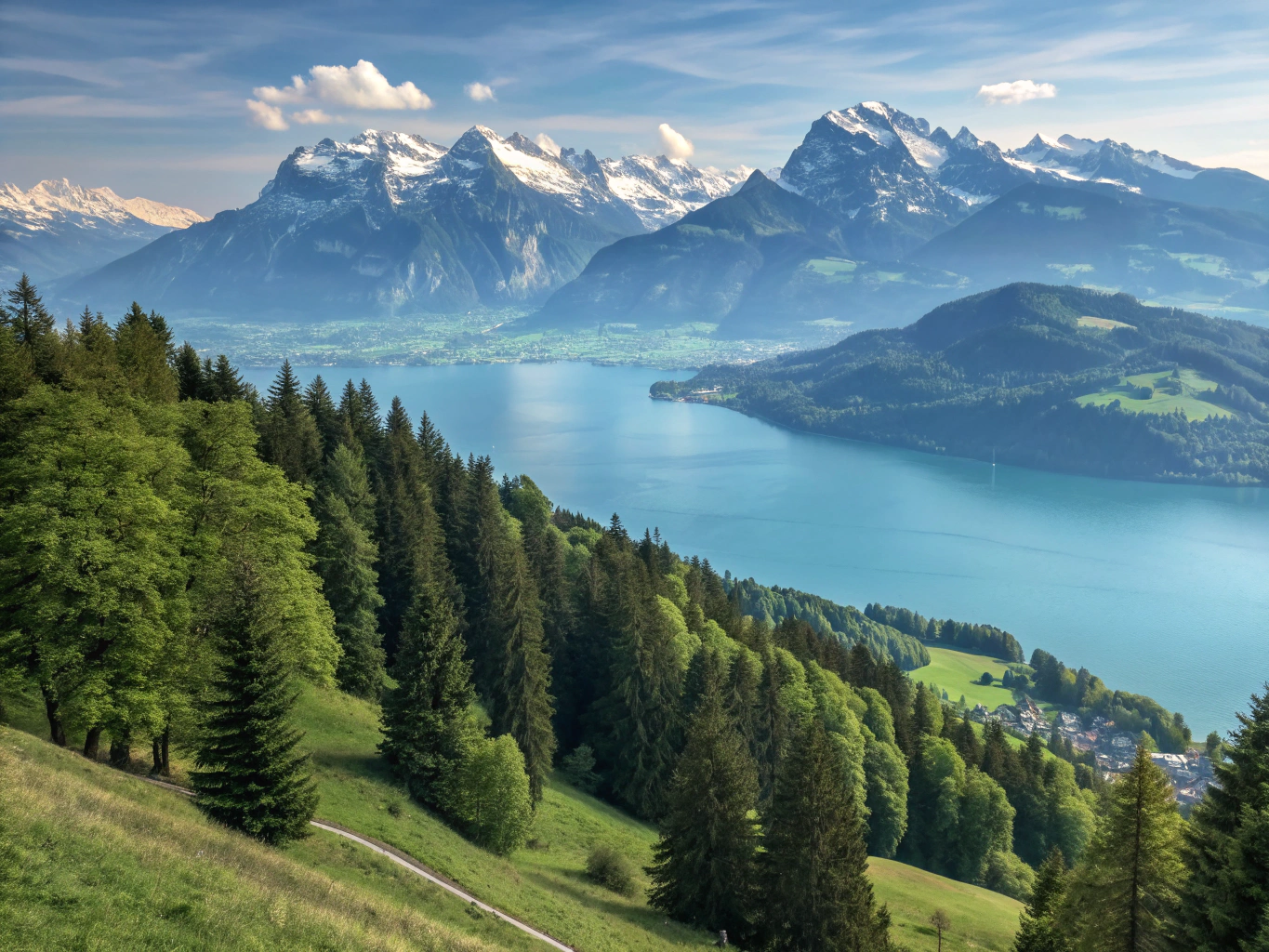
Panoramic View from Mount Pilatus
⏱️ Full dayModerate
Climb the striking Mount Pilatus with the world's steepest cogwheel railway and enjoy an incomparable 360-degree view of Lake Lucerne and the surrounding Alps. On clear days, the view extends as far as the Black Forest. Mount Pilatus is a must for every visitor to the region. Accessible from Alpnachstad.
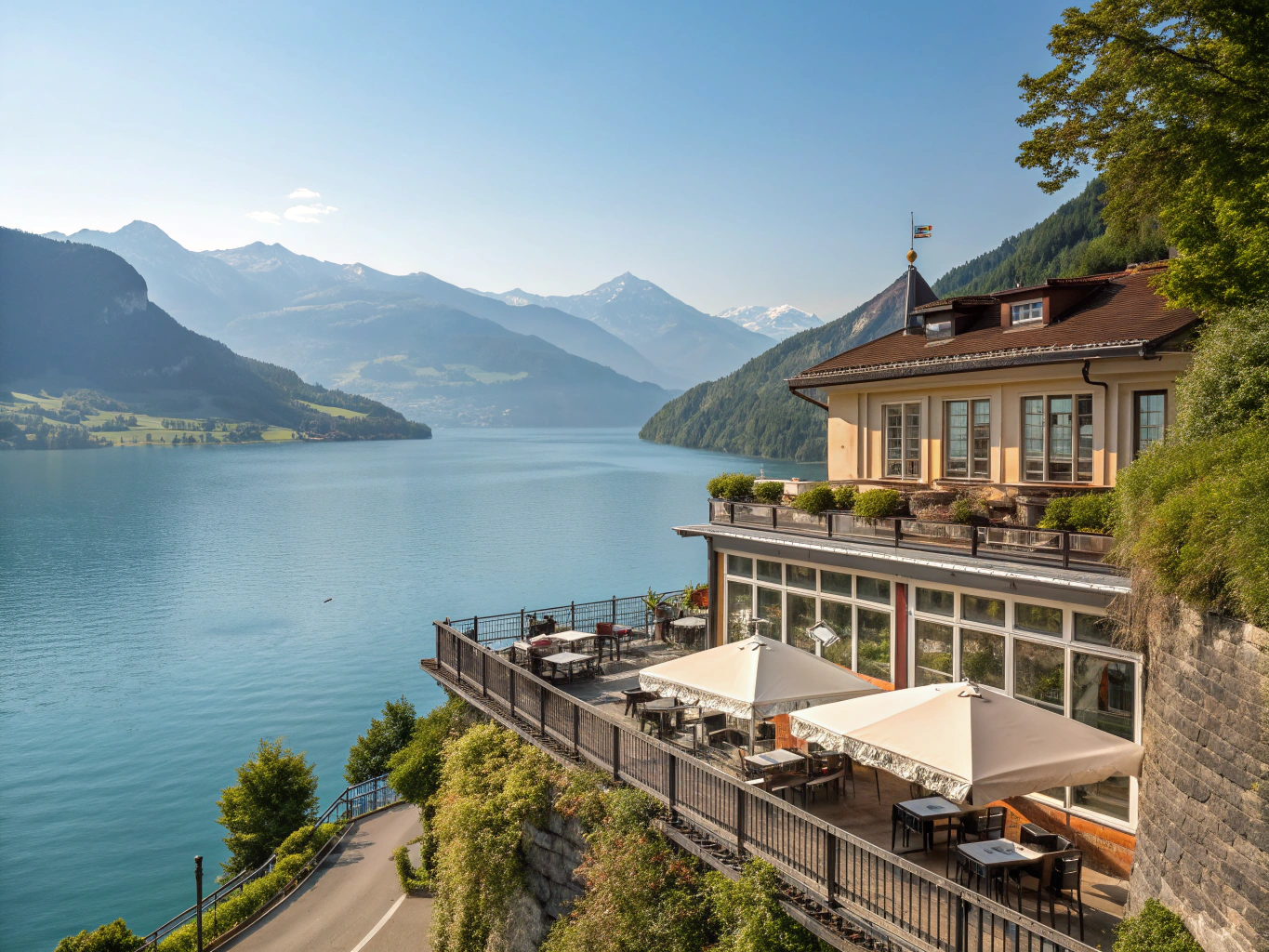
Culinary Journey at Seerestaurant Belvédère
⏱️ 2-3 hoursEasy
Indulge in regional specialties at Seerestaurant Belvédère in Hergiswil while enjoying the magnificent view of the lake. The restaurant is known for its fresh fish dishes and seasonal menus. An unforgettable culinary experience awaits you. Located on the west shore in Hergiswil.
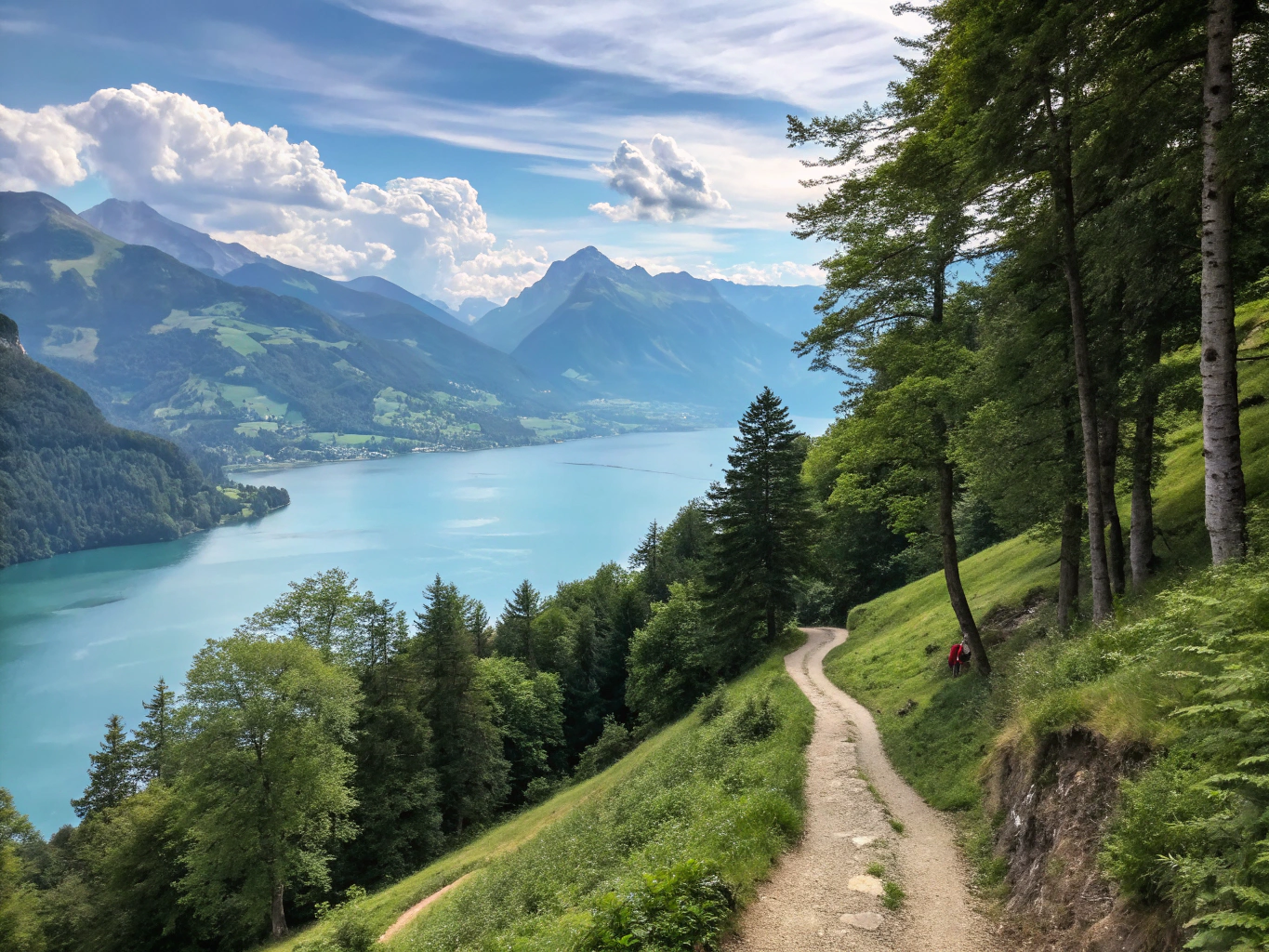
Hiking on the Swiss Path
⏱️ Several daysModerate
Explore the history of Switzerland on the Swiss Path (Weg der Schweiz), a 35-kilometer hiking trail that leads around Lake Uri. The path is divided into stages and offers breathtaking views of the lake and the mountains. Ideal for hikers of all ages. Starts in Brunnen.
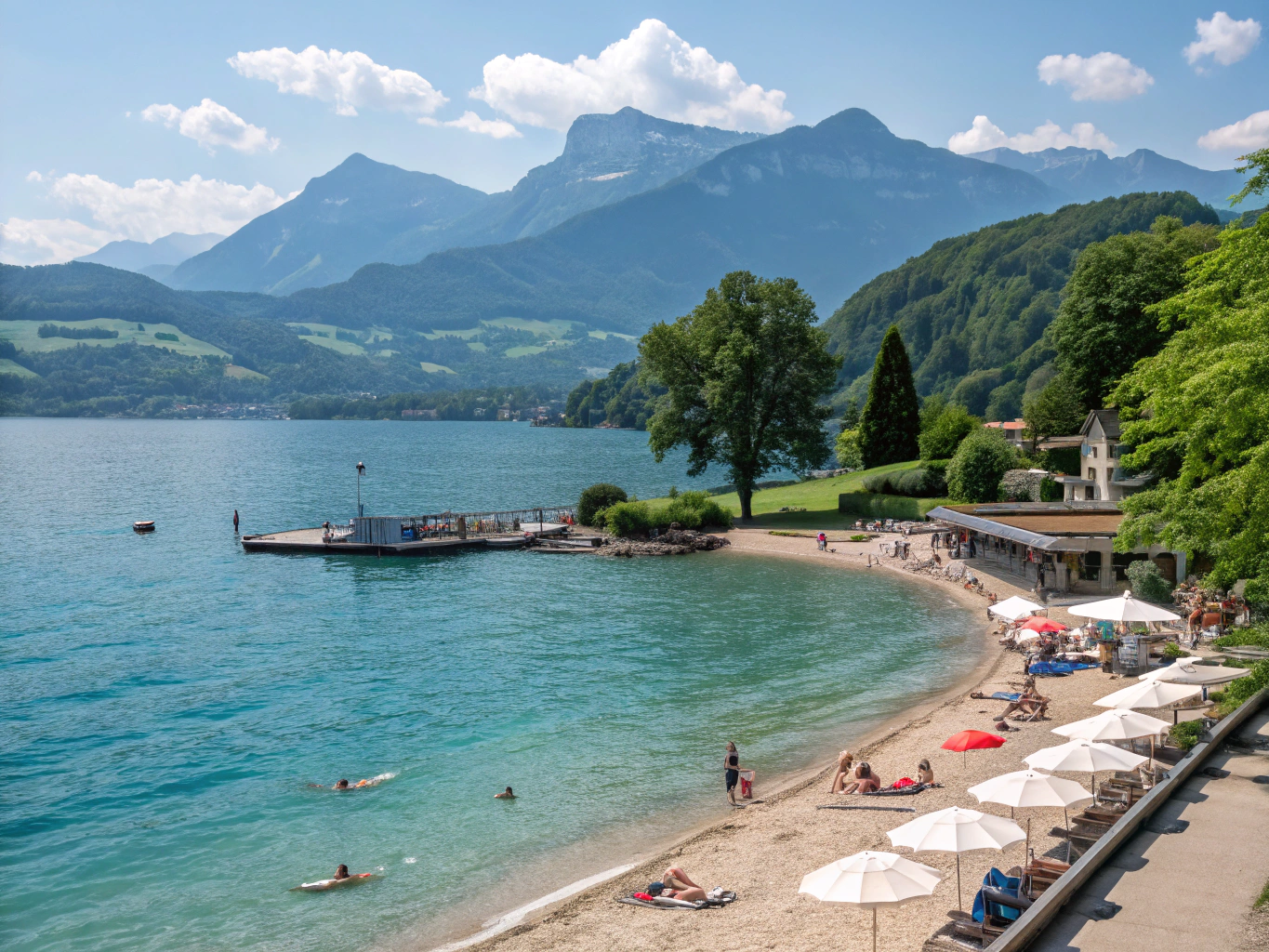
Swimming at Lido Lucerne
⏱️ Full dayEasy
Spend a relaxing day at Lido Lucerne, one of the most beautiful lakeside lidos in Switzerland. There is a sandy beach, sunbathing lawns, swimming pools, and numerous water sports opportunities. A paradise for families and water lovers. Located directly in Lucerne.
Facts & Figures
Camping Region Lake Lucerne
- 🌍 Country
- 🇨🇭 Schweiz
- 📍 Region
- Central Switzerland
- 🏛️ Province
- Lucerne, Uri, Schwyz, Obwalden, Nidwalden
- ☀️ Climate
- Alpine climate with moderate temperatures
- 📅 Best Season
- May/June for hikers, July/August for water sports enthusiasts
- 🌡️ Summer Avg
- 25°C
- 🌸 Spring Avg
- 15°C
- 🏕️ Campsites
- ~50
- ✈️ Airport
- Zurich Airport (ZRH)
- 🚌 Public Transport
- Very well-developed network
- 🌧️ Rainy Days
- 12 days per month (summer)
- 🚗 From Munich
- 5 hrs / 450 km
- 🚗 From Hamburg
- 9 hrs / 850 km
- 💰 Price Level
- €€
- 🐕 Dogs
- Good
- 🎯 Suitable For
- Active travelersFamiliesNature lovers
🚦 Occupancy by Month
Jan
Feb
Mar
Apr
May
Jun
Jul
Aug
Sep
Oct
Nov
Dec
Quiet Moderate Busy Crowded
 Rent Camper Lake Lucerne
 Campsites Lake Lucerne