


🌿 Natur & Wildnis👨👩👧👦 Familien
Camping Guide | Arica y Parinacota
Your Camping Holiday in Lauca National Park
Chile, 🇨🇱 Chile
Camping Guide | Arica y Parinacota
Imagine standing at 4,500 meters, the air is thin, crystal clear, and almost cuts your lungs, but the view takes your breath away anyway. Before you, the perfectly conical Parinacota volcano is reflected in the deep blue waters of Lago Chungará, while a herd of vicuñas moves silently through the yellow ichu grass. Lauca National Park in the far north of Chile is no place for a classic camping chair holiday. It is a world of extremes, where the silence of the Altiplano is only interrupted by the wind and the starry sky seems so close you can almost touch it. Up here, on the border with Bolivia, you experience the raw, untamed beauty of the Andes in its purest form.
💡The Campcruisers tip: Never underestimate altitude sickness (Soroche). Plan at least two nights for acclimatization in Putre (3,500m) before driving up to Lago Chungará (4,500m). Drink plenty of water, avoid alcohol, and take everything slower!
The Region in Detail
Your comprehensive travel guide for camping Arica y Parinacota.
Location & Arrival
Lauca National Park is located in the far north of Chile, in the Arica y Parinacota region, wedged between the Bolivian border to the east and the Pre-cordillera to the west. It is part of the UNESCO Lauca Biosphere Reserve and covers an area of around 1,380 square kilometers on the Chilean Altiplano. The average altitude ranges between an impressive 3,200 and 6,348 meters above sea level.
Getting there is an adventure in itself and requires logistical planning. From Europe, the route almost inevitably leads through the international airport in Santiago de Chile (SCL) with a connecting flight to Arica (ARI). The city of Arica, the 'city of eternal spring' on the Pacific, serves as the logistical starting point. This is where rental cars (4x4 or at least a vehicle with high ground clearance is strongly recommended) must be picked up and supplies stocked.
The main artery into the park is Ruta 11-CH, an international highway connecting Arica with La Paz in Bolivia. The route is paved throughout and generally in good condition, but it is also notorious. Firstly, because of the extreme heavy-duty traffic: convoys of Bolivian trucks struggle up and down the steep serpentines. Overtaking is often risky and requires patience. Secondly, because of the rapid altitude gain. You start at 0 meters and reach altitudes of over 4,500 meters within about 140 kilometers.
A direct push from Arica to Lago Chungará is not medically advisable. The recommended route includes a stopover in the village of Putre at approx. 3,500 meters. The turn-off to Putre is at about kilometer 100 of Ruta 11-CH. From Putre, it is another 50-60 kilometers to the heart of the national park. Plan for about 2.5 to 3 hours of pure driving time from Arica to Putre, plus breaks for photos and acclimatization. Those driving further to Lago Chungará should expect another hour. Note: Fog (the so-called 'Camanchaca') can extremely limit visibility in the lower elevations up to 1,000m.
Overview of the Sub-regions
Although Lauca National Park forms a geographical unit, it can be meaningfully divided into three zones for travelers, which differ in altitude, vegetation, and infrastructure.
1. The Pre-cordillera & Putre (3,000 - 3,600m):
This is the gateway to the park. The landscape is characterized by terraced fields created by the Incas and pre-Inca cultures, and deep gorges. The vegetation here is still lush, with giant candelabra cacti and queñua trees. Putre itself is the main town of the Parinacota province. Here you will find simple hostels, small restaurants, and mini-markets. It is the base camp for almost all tours. Culturally interesting is the Spanish colonial style mixed with Aymara traditions. The air here is thin, but still more breathable than higher up.
2. The Altiplano & Lago Chungará (4,200 - 4,600m):
Up here on the high plateau, the world changes dramatically. The vegetation gives way to tough ichu grass and 'bofedales' (wetlands) that glow like green carpets in the barren landscape and are the main food source for alpacas and vicuñas. The centerpiece is Lago Chungará, one of the highest lakes in the world. It is flanked by the twin volcanoes Parinacota and Pomerape. This zone is the most spectacular in terms of landscape, but also the harshest climatically. The nights are icy, the wind is biting. The Chungará-Tambo Quemado border crossing to Bolivia is also located here.
3. The Cotacotani Lagoons & Las Cuevas:
Between Putre and Lake Chungará lies a bizarre field of lava and water: the Cotacotani Lagoons. It is a labyrinth of hundreds of small ponds and islands, created by volcanic activity. This zone is ideal for hiking (if your lungs cooperate), as it is somewhat more sheltered than the open lake. Near the park entrance at Las Cuevas, there are also hot springs and a CONAF station with a small information center. Vizcachas (mountain viscachas) can often be observed in the rocks here.
Camping in Lauca: What to Expect?
Camping in Lauca National Park is 'adventure camping' in the truest sense of the word. Anyone expecting plots with electricity, bread roll service, or heated sanitary facilities is in the wrong place. The infrastructure is rudimentary to non-existent, which is what makes it attractive for self-sufficient campers and overlanders.
Official Pitches (CONAF):
There are very few official camping options within the park area. The best-known option is often the area near the ranger station in Las Cuevas or near the village of Parinacota. These sites usually offer nothing more than a flat surface and, if you're lucky, a simple latrine. Water must often be brought yourself or filtered from rivers (Note: observe mineral content/arsenic, better to bring water from Putre). A reservation is usually not necessary, but registration at the CONAF station at the park entrance is mandatory (for your own safety).
Wild Camping / Boondocking:
This is the most common form of overnight stay in the region. It is generally tolerated in Chile as long as you strictly follow 'Leave no Trace'. Popular spots for overlanders (e.g., check the iOverlander app) can be found sheltered from the wind in hollows or behind rock formations near Lago Chungará (Note: extremely cold at night!) or near the Termas de Jurasi.
Equipment is Everything:
Your camper or tent must be winter-proof. Even in summer, temperatures often drop below freezing at night. In winter, -15°C is not uncommon. An excellent sleeping bag, thermal underwear, and a parking heater in the vehicle are worth their weight in gold. Since the oxygen content is lower, some gas or diesel heaters do not work reliably (altitude kit required!). Cooking takes significantly longer due to the lower boiling point of water (approx. 85°C at this altitude) – pasta takes forever, a pressure cooker is recommended.
Practical Information for Campers
A trip to Lauca National Park forgives no logistical errors. Here are the vital facts for your planning:
Fuel & Range:
The last reliable gas station (Copec) is in Arica. In Putre, there is often gasoline/diesel available from barrels at local dealers or a small pump, but you shouldn't rely on it (often empty or poor quality). The rule is: fill up in Arica and, when driving deep into the park or further to Salar de Surire, definitely carry spare canisters (at least 20 liters extra). Consumption increases massively due to the steep climbs and low oxygen content.
Supplies & Groceries:
There are no supermarkets in the park. In Putre, there are small 'almacenes' (corner stores) with basic foodstuffs (pasta, rice, water, biscuits), sometimes fresh bread, fruit, and vegetables, but the selection is very limited and more expensive. Buy your entire week's shopping in Arica (e.g., Jumbo or Lider). Important: Take plenty of water! Calculate 3-4 liters per person per day, as the body dehydrates extremely at high altitudes.
Health & Altitude:
Altitude sickness is the greatest risk. Symptoms: headache, nausea, dizziness, shortness of breath. Prevention: slow ascent, drink plenty of fluids, light meals, no alcohol. Local remedy: Mate de Coca (coca tea) or chewing coca leaves (legal in Chile/Bolivia, but do not import to Europe!). A small oxygen bottle from the pharmacy in Arica can help in an emergency. The hospital in Arica is far away; in Putre, there is only a small Posta (health station).
Communication & Tolls:
Mobile reception (Entel is the best provider) is available in Putre and sporadically along Ruta 11-CH. In the hinterland and at the lake, there is often radio silence. Offline maps (Maps.me, Google Offline) are mandatory. There are no tolls on the Arica-Putre route, but border controls can lead to traffic jams.
Insider Knowledge & Secret Tips
Away from the postcard motifs of Lago Chungará, there are corners and experiences that many tourists passing through to Bolivia miss.
The Church of Parinacota:
The small village of Parinacota is almost a ghost town but is used for religious festivals. The whitewashed 17th-century church with its adobe walls and thatched roof is a gem. Look for the frescoes inside and the 'tables' with skulls on the outer wall – a syncretism of Catholicism and Aymara ancestor worship.
Termas de Jurasi:
Less known than the hot springs of Polloquere (which are much further away in the Salar de Surire), but easier to reach are the Termas de Jurasi near Putre. They are rustic – concrete pools under the open sky or small private cabins. The water is hot and mineral-rich. A bath here after a cold night in the camper works wonders. Tip: Go early in the morning when the steam rises in the cold air.
Culinary Arts in Putre:
Don't expect haute cuisine, but definitely try alpaca meat ('Carne de Alpaca'). It is low in fat, tender, and tastes like a cross between veal and lamb. The restaurant 'Kuchu Marka' or similar small places in Putre often serve it with quinoa or potatoes and a spicy sauce. Accompany it with a fresh mango juice (mangos come from the nearby Azapa Valley).
The Best Photo Spot:
For the perfect photo of the Parinacota volcano with its reflection in the lake, you have to get up early. As soon as the wind picks up from around 10:00 AM, the water ripples and the reflection is gone. Drive to the viewpoint at the western end of the lake shortly after sunrise.
Wildlife Watching:
Keep an eye out for vizcachas. They look like rabbits with squirrel tails and often sit motionless on the rocks at Las Cuevas. They are perfectly camouflaged, but once you've seen one, you suddenly see dozens.
Experiences & Activities: Arica y Parinacota
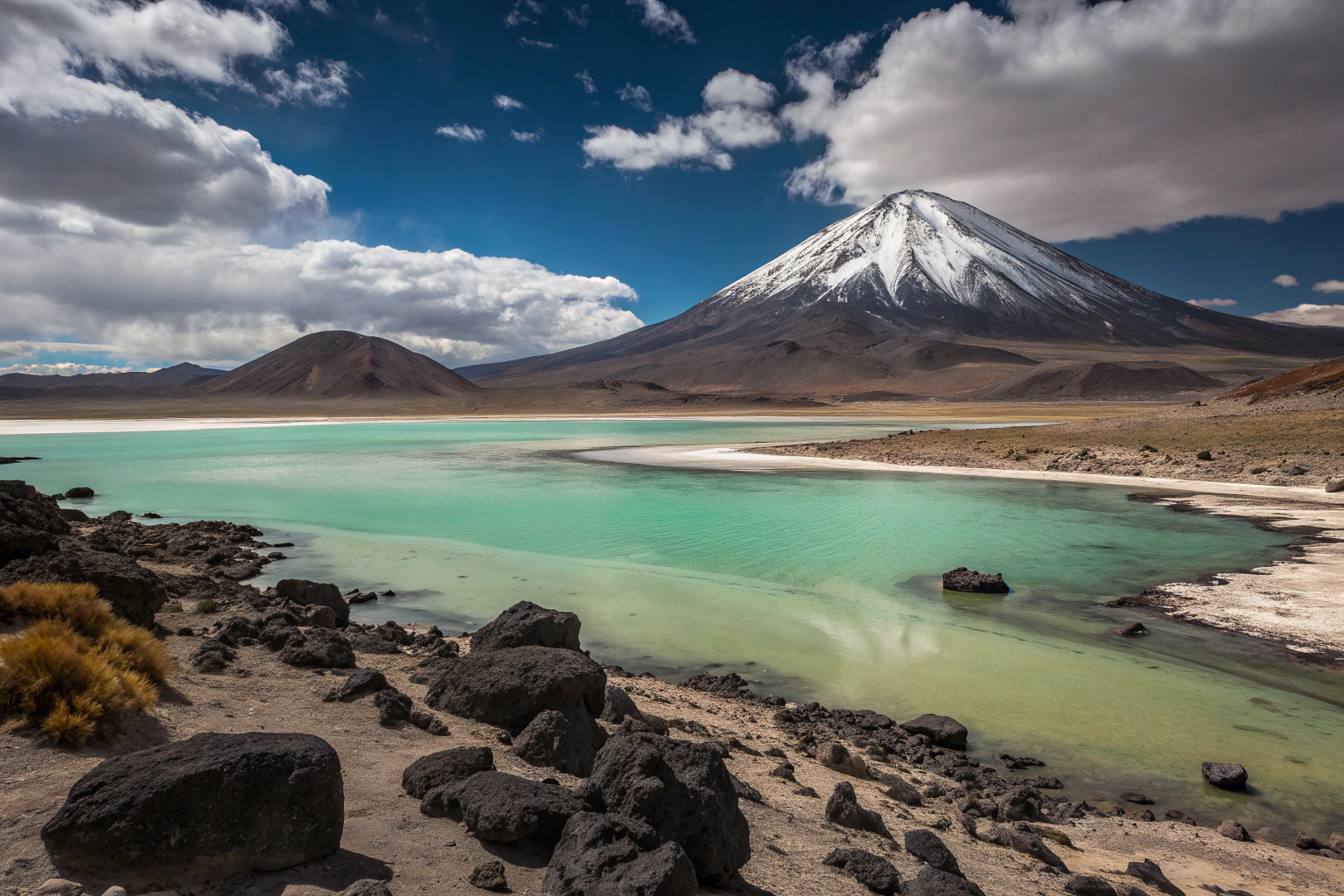
Hiking Cotacotani Lagoons
⏱️ 3-4 hrsModerate
A fascinating path through lava fields and emerald green lagoons, surrounded by volcanoes. The silence is absolute.
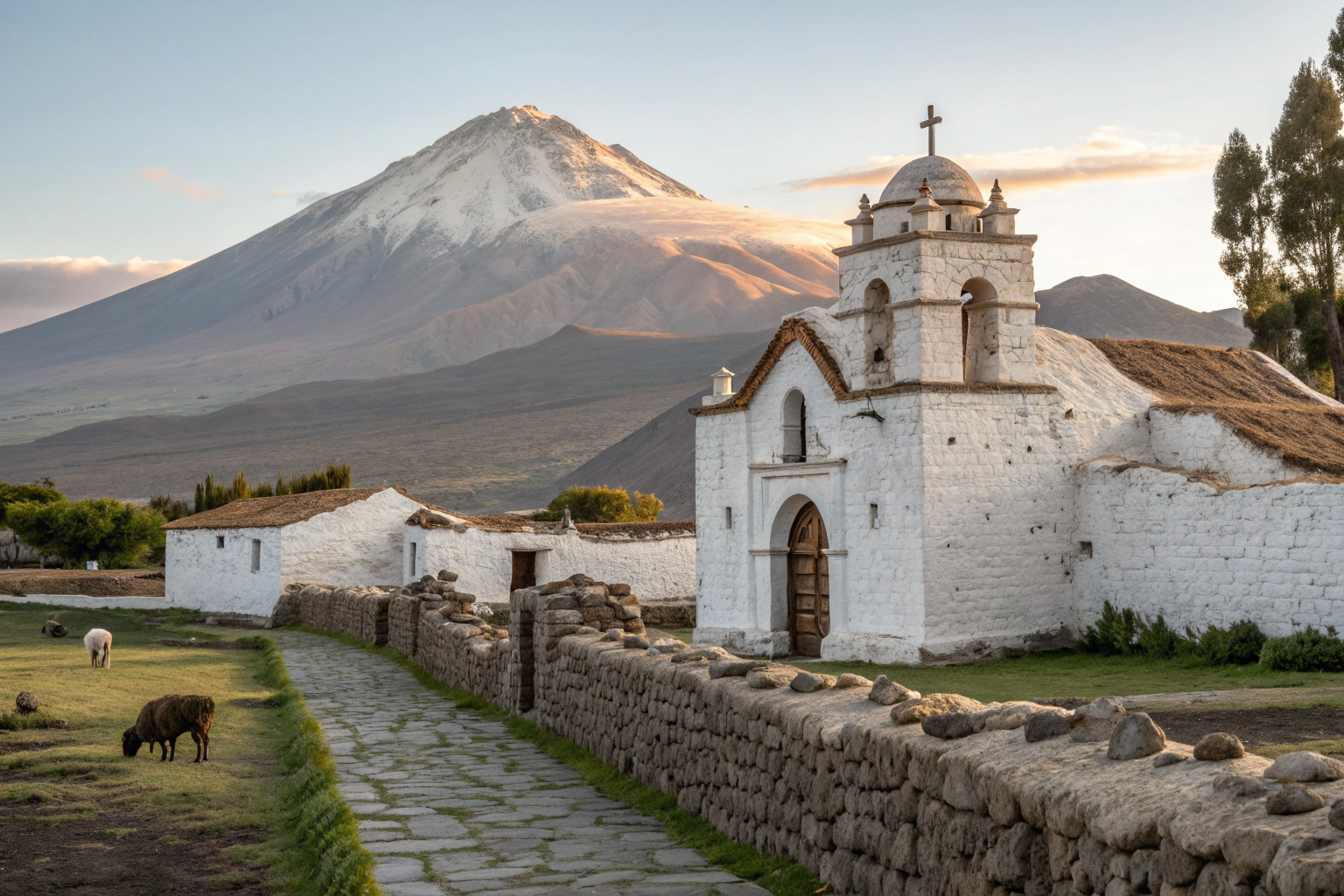
Visit to Parinacota Village
⏱️ 1 hrEasy
Visit the colonial Aymara village with its historic church and experience the lonely atmosphere of the Altiplano.
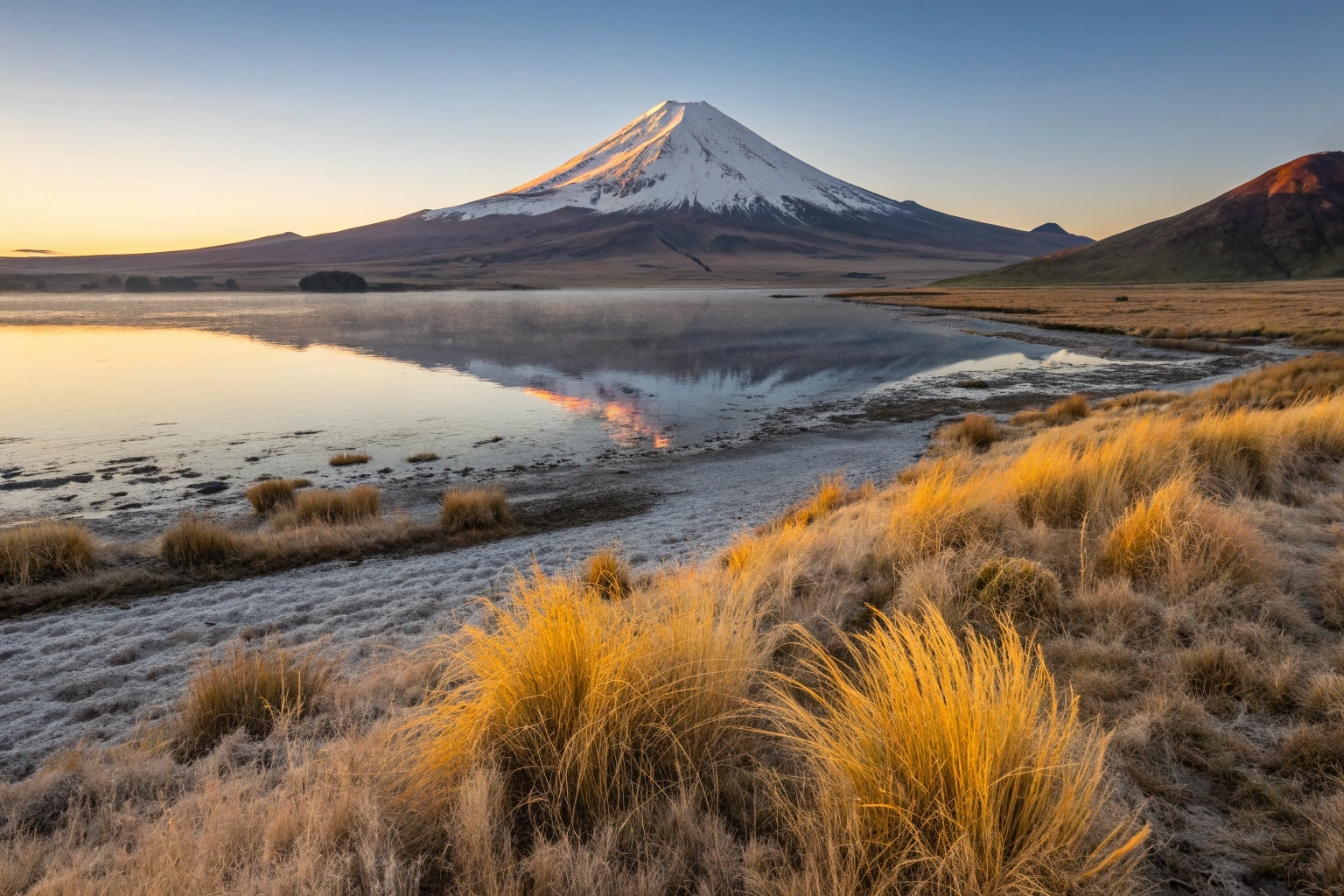
Sunrise at Lago Chungará
⏱️ 1-2 hrsEasy
The moment when the first light hits the Parinacota and reflects perfectly in the still lake. Ice cold but magical.
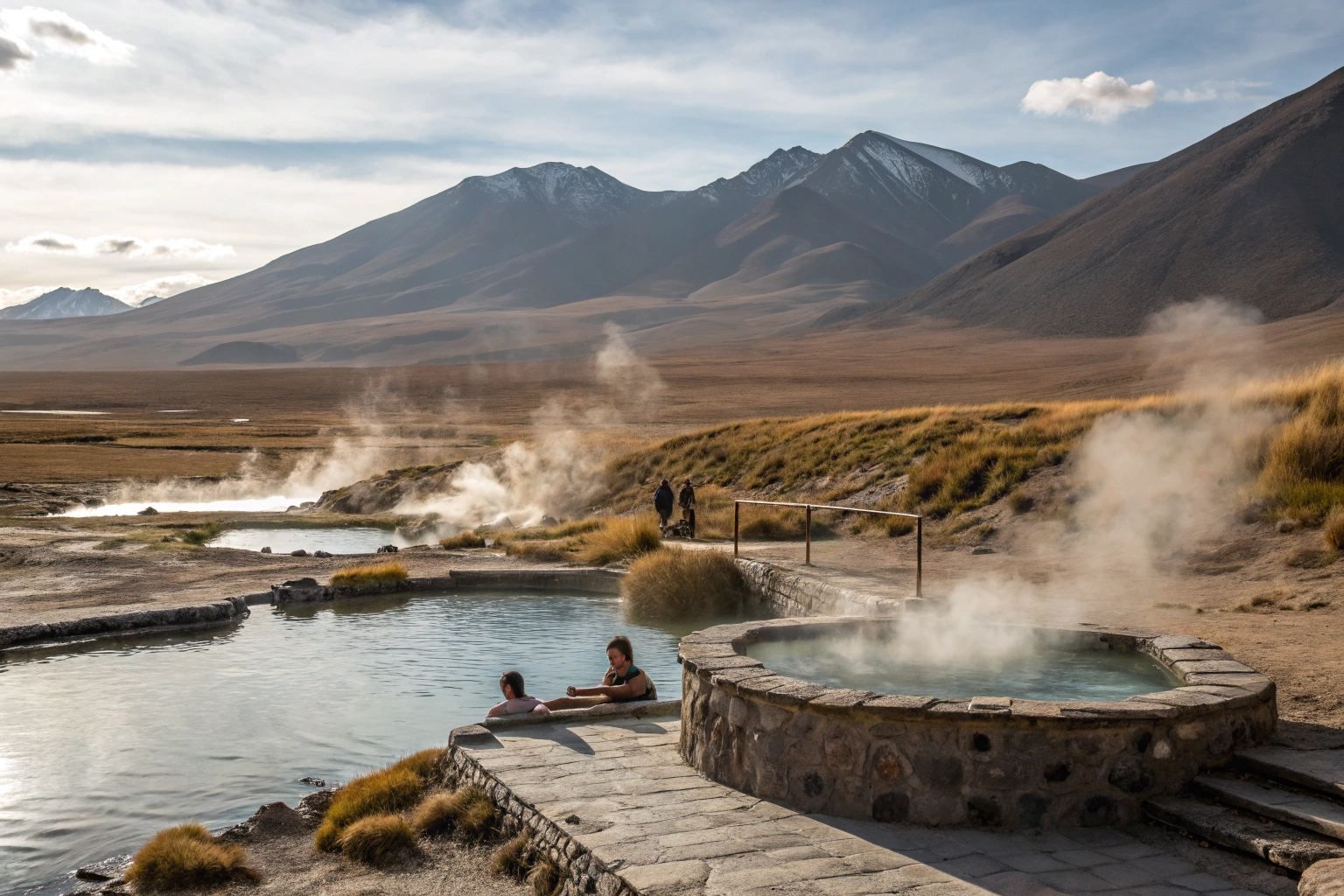
Bath in the Termas de Jurasi
⏱️ 2 hrsEasy
Relax in hot volcanic springs under the open sky, surrounded by the mountains of the Pre-cordillera.
Facts & Figures
Camping Region Arica y Parinacota
- 🌍 Country
- 🇨🇱 Chile
- 📍 Region
- Arica y Parinacota
- 🏛️ Province
- Parinacota
- ☀️ Climate
- High mountain desert / Tundra
- 📅 Best Season
- March to November (dry season)
- 🌡️ Summer Avg
- Day 15°C / Night 2°C
- 🌸 Spring Avg
- Day 12°C / Night -5°C
- 🏕️ Campsites
- ~2 official (CONAF), countless wild spots
- ✈️ Airport
- Aeropuerto Chacalluta, Arica (ARI)
- 🚌 Public Transport
- Buses to Putre/La Paz, almost non-existent in the park
- 🌧️ Rainy Days
- Jan/Feb (Bolivian Winter)
- 🚗 From Munich
- N/A (Flight + Rental car)
- 🚗 From Hamburg
- N/A (Flight + Rental car)
- 💰 Price Level
- € - €€ (Inexpensive, but logistics are costly)
- 🐕 Dogs
- Low (National park ban)
- 🎯 Suitable For
- AdventurersPhotographersHikers
🚦 Occupancy by Month
Jan
Feb
Mar
Apr
May
Jun
Jul
Aug
Sep
Oct
Nov
Dec
Quiet Moderate Busy Crowded
 Rent Camper Arica y Parinacota
 Campsites Arica y Parinacota