


🌿 Natur & Wildnis👨👩👧👦 Familien
Camping Guide | Sächsische Schweiz
Your Adventure in Rock and Forest
Deutschland, 🇩🇪 Deutschland
Camping Guide | Sächsische Schweiz
Imagine waking up to the scent of pine trees and the chirping of birds. Saxon Switzerland, an Elbe Sandstone mountain range of unique beauty, awaits you for an unforgettable camping holiday. Here, where bizarre rock formations merge into dense forests, you will find both tranquility and adventure. Whether you are looking for a climbing challenge or exploring the picturesque hiking trails, camping in Saxon Switzerland offers you the perfect base to experience the region intensely. Let yourself be enchanted by the diversity of this landscape and discover your personal natural paradise.
💡Real wilderness with surprisingly good infrastructure.
The Region in Detail
Your comprehensive travel guide for camping Sächsische Schweiz.
Location & Arrival in Saxon Switzerland
Saxon Switzerland is located in southeastern Germany, specifically in the Free State of Saxony. It extends along the Elbe, southeast of Dresden to the Czech border. The area is part of the Elbe Sandstone Mountains and is characterized by its striking rock formations. Arrival is straightforward, whether by car, train, or plane.
By car, the best way to reach the region is via the A4 and A17 motorways. From Dresden, the A17 leads directly into Saxon Switzerland. Coming from the direction of Berlin, you take the A13 and A4. Note that there are no tolls on German motorways. However, some cities have environmental zones that you may only enter with your vehicle if you have a corresponding sticker. The parking situation at the most popular hiking trails and viewpoints can be tight, especially in high season, so it is advisable to arrive early or switch to public transport.
For arrival by train, Dresden is the central hub. From here, S-Bahn trains run regularly to various towns in Saxon Switzerland, such as Pirna, Bad Schandau, or Königstein. The train journey from Dresden to Bad Schandau takes about 40 minutes. Long-distance trains also stop in Dresden, allowing you to travel comfortably from all over Germany. Within the region, buses operate to take you to most starting points for hikes and climbing tours.
The nearest airport is Dresden (DRS), located about 60 kilometers from Saxon Switzerland. From the airport, you can take the S-Bahn or a taxi to Dresden Main Station and from there continue by S-Bahn into the region. Alternatively, some campsites offer a shuttle service from the airport. From Munich, you can reach Saxon Switzerland by car in about 5 hours via the A9. Those starting from Hamburg will need about 4.5 hours via the A13 and A4.
Overview of the Sub-regions
Saxon Switzerland can be roughly divided into three sub-regions: the area on the left bank of the Elbe, the area on the right bank of the Elbe, and the hinterland. Each of these zones has its own character and offers different experiences for camping vacationers.
The left-bank area is characterized by table mountains and the striking rock formations of the Bastei. Here you will find numerous hiking trails with breathtaking views over the Elbe Valley. The most famous places include Lohmen, Rathen, and Wehlen. Families with children feel particularly at home here, as many of the hiking trails are also suitable for strollers. Active vacationers can let off steam climbing the steep rock faces. In Rathen, the Felsenbühne (rock stage) attracts visitors with open-air performances. If you prefer something quieter, you can take a boat trip on the Elbe and enjoy the landscape from the water.
The right-bank area is characterized by its dense forests and proximity to the Elbe. Here lie the towns of Bad Schandau, Königstein, and Hohnstein. Bad Schandau is a traditional spa town with numerous wellness offers. Königstein is dominated by the fortress of the same name, which offers an impressive insight into the history of the region. Hohnstein is known for its castle and the puppet theater festival. This zone is ideal for nature lovers and hikers seeking the peace and seclusion of the forests. There are also several idyllically located pitches for campers here.
The hinterland of Saxon Switzerland is less developed for tourism but no less charming. Here you will find small villages, rolling hills, and wide fields. Places worth seeing include Sebnitz, Neustadt in Sachsen, and Stolpen. In Sebnitz, there is a miniature exhibition showing Saxon Switzerland in small format. Neustadt in Sachsen is a good starting point for hikes in the surrounding area. Stolpen is dominated by Stolpen Castle, where Countess Cosel was once held prisoner. This zone is perfect for all those who want to escape the hustle and bustle and discover the original Saxony.
Camping in Saxon Switzerland: What to Expect?
The camping landscape in Saxon Switzerland is diverse and offers something for every taste. There are both large resort sites with extensive infrastructure and small, natural campsites that are ideal for those seeking peace and quiet. The number of campsites is around 30, with most located near the Elbe or in the forests.
The large resort sites often have amenities such as pools, restaurants, shopping facilities, and entertainment programs. They are particularly popular with families with children who value comfort and entertainment. The smaller campsites, on the other hand, are characterized by their quiet location and proximity to nature. Here you can relax away from mass tourism and enjoy the beauty of Saxon Switzerland. Some farms also offer pitches for motorhomes and tents, which is a great way to get to know country life. There are also special pitches for motorhomes that have the appropriate infrastructure.
Prices for a pitch vary depending on the season, location, and equipment. In the high season, from June to August, you can expect prices between 25 and 40 euros per night. In the low season, prices are often significantly lower, sometimes starting from 15 euros per night. The plots vary in size, usually between 80 and 120 square meters. Many pitches offer both shady and sunny spots, so you can choose according to your preference.
The infrastructure of the campsites is generally good. The sanitary facilities are usually clean and well-maintained. Many campsites also offer Wi-Fi, although the quality can vary depending on the location. Electricity connections are standard, with the amperage ranging between 6 and 16 amps. It is recommended to bring an adapter, as not all campsites have matching connections. Early reservation is recommended, especially in the high season, as the most popular campsites are often fully booked. While there are always last-minute chances, you should not rely on them.
Practical Information for Campers
For a relaxed camping holiday in Saxon Switzerland, it is helpful to know some practical information. Here you will find answers to the most important questions regarding tolls, gas stations, shopping, gas supply, disposal, mobile communications, medical care, and rules.
There are no tolls on motorways in Germany. However, you should note that some cities have environmental zones that you may only enter with a corresponding sticker. There are plenty of gas stations in Saxon Switzerland. Diesel prices are generally slightly higher than the German average, but the differences are not major. Gas station opening hours are standard, and many are also open on Sundays.
Shopping facilities are also well available. In the larger towns, there are supermarkets like Lidl, Netto, and Rewe, which offer a wide range. Opening hours are usually Monday to Saturday from 7 am to 8 pm. Supermarkets are generally closed on Sundays, but in some places, there are bakeries and gas stations that are also open on Sundays.
Gas supply can be a bit problematic, as German gas cylinders cannot be exchanged everywhere. It is recommended to bring an adapter or buy a local gas cylinder. Disposal stations for chemical toilets and gray water are available at most campsites. The fees for this are usually included in the pitch price.
Mobile network coverage is predominantly good in Saxon Switzerland. However, there may be restrictions in remote valleys and forests. Roaming charges do not apply within the EU, but you should inform yourself in advance if coming from outside the EU.
Medical care is good. There are hospitals and pharmacies in the larger towns. The emergency number is 112. Tap water in Saxon Switzerland is generally drinkable, but it is recommended to check with the respective campsite beforehand.
Wild camping is prohibited in Saxon Switzerland and is punished with high fines. However, there are numerous legal campsites where you can set up your tent or motorhome. Respect the environment and leave your pitch clean.
Insider Knowledge & Secret Tips
Saxon Switzerland holds many secrets that are not in every travel guide. Here are some insider tips to make your camping holiday a special experience.
The low season, especially the months of May, June, and September, are ideal for a visit. Then the campsites are less crowded and prices are cheaper. In addition, the weather is often pleasantly mild and ideal for hiking and climbing.
A less known place is the Kirnitzschtal, which you can reach with the Kirnitzschtalbahn, a historic tram. Here you will find numerous hiking trails along the river and through the forests. A secret tip is the Upper Schleierfall, which you reach via a steep staircase. On weekends, climbing often takes place here, and you can watch the climbers.
A worthwhile destination is the weekly market in Pirna, which takes place every Saturday. Here you can buy regional products such as fruit, vegetables, cheese, and sausages. Direct sales at wineries and farm shops are also a great way to get to know local specialties. A special highlight is the Stollen Market in Dresden, which takes place every year in December.
A culinary tip is the Saxon Potato Soup, which you can find in many restaurants in the region. You should also definitely try Quarkkäulchen, a sweet specialty made from quark and potatoes. Locals like to visit the Canaletto restaurant in Pirna, which is known for its upscale cuisine. For a hearty meal, the Gasthaus Zur Eiche in Hohnstein is recommended.
A worthwhile day trip is a visit to the Bastei Bridge, a landmark of Saxon Switzerland. From here, you have a breathtaking view over the Elbe Valley. The drive from Bad Schandau takes about 30 minutes. Another tip is the Königstein Fortress, which you can reach by bus or car. The fortress offers an impressive insight into the history of the region.
A real secret tip is the hike through the Schwedenlöcher, a narrow gorge with steep rock walls. The hike is demanding, but the unique landscape compensates for the effort. You can reach the Schwedenlöcher from Rathen.
Campsites
Pitch prices in Saxon Switzerland depend on the provider and the season. Generally, a price of 25 – 40 euros per night can be estimated. This includes fees for sanitary facilities and waste disposal. Those traveling with a motorhome can also head to one of the many, often privately run, pitches. These are usually somewhat cheaper than the official campsites.
Experiences & Activities: Sächsische Schweiz
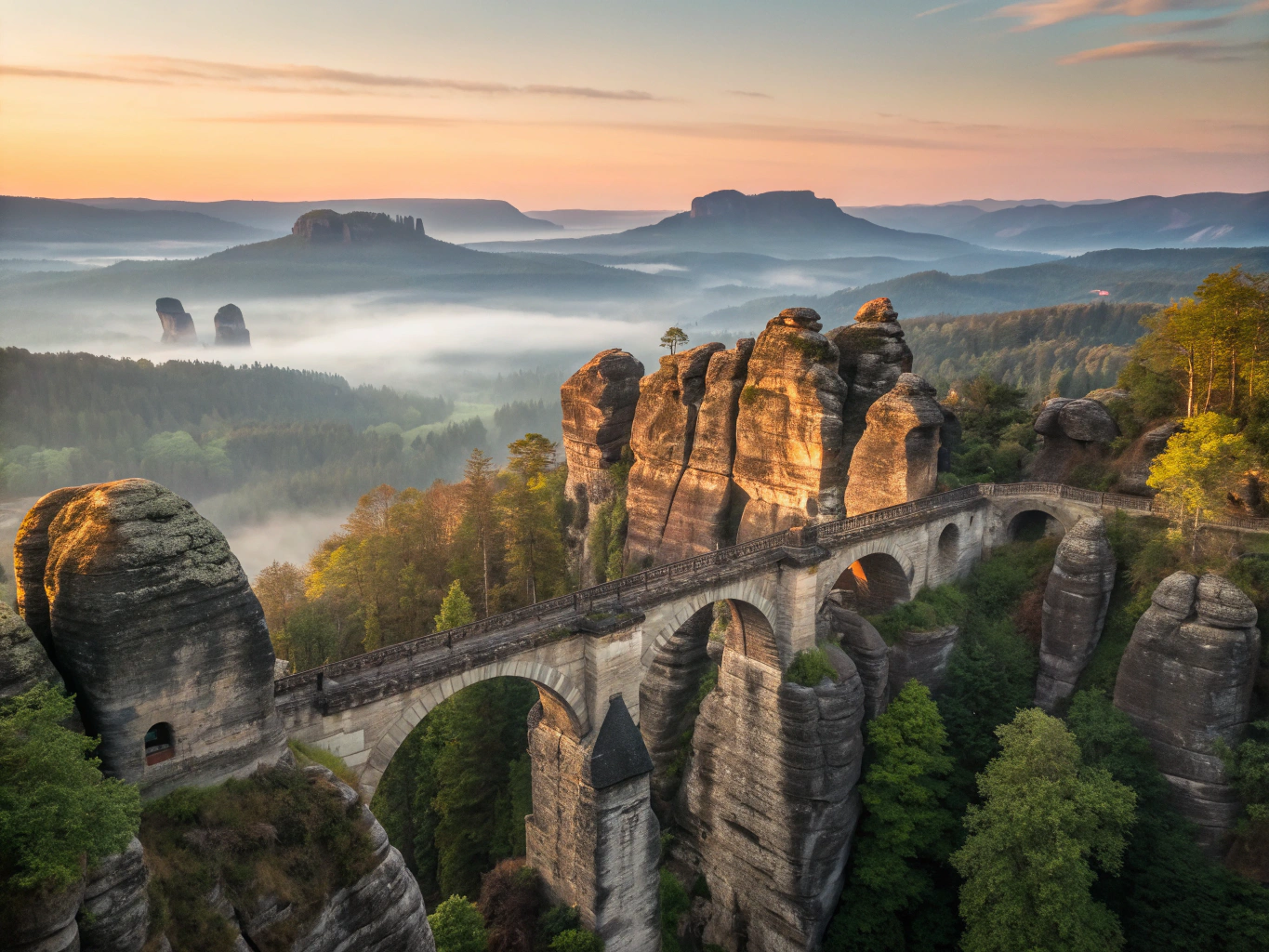
Bastei Bridge
⏱️ 1-2 hoursEasy
The Bastei Bridge is one of the most famous landmarks of Saxon Switzerland. It offers a breathtaking view over the Elbe Valley and the surrounding rock formations. A must for every visitor!
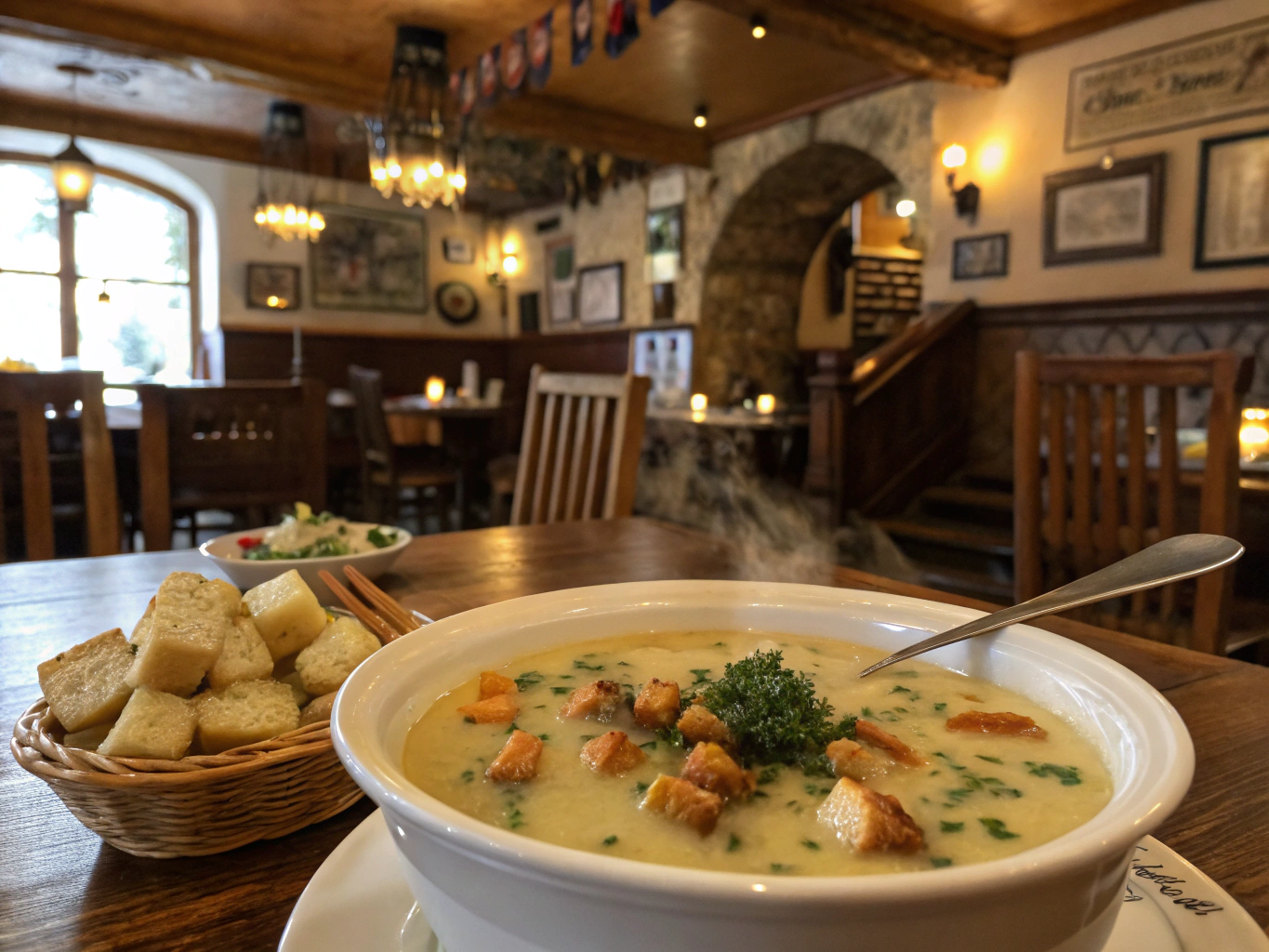
Saxon Potato Soup
⏱️ 30 minutesEasy
Saxon Potato Soup is a regional specialty that you should definitely try. It is served with sausages and bread and is a delight, especially on cold days.
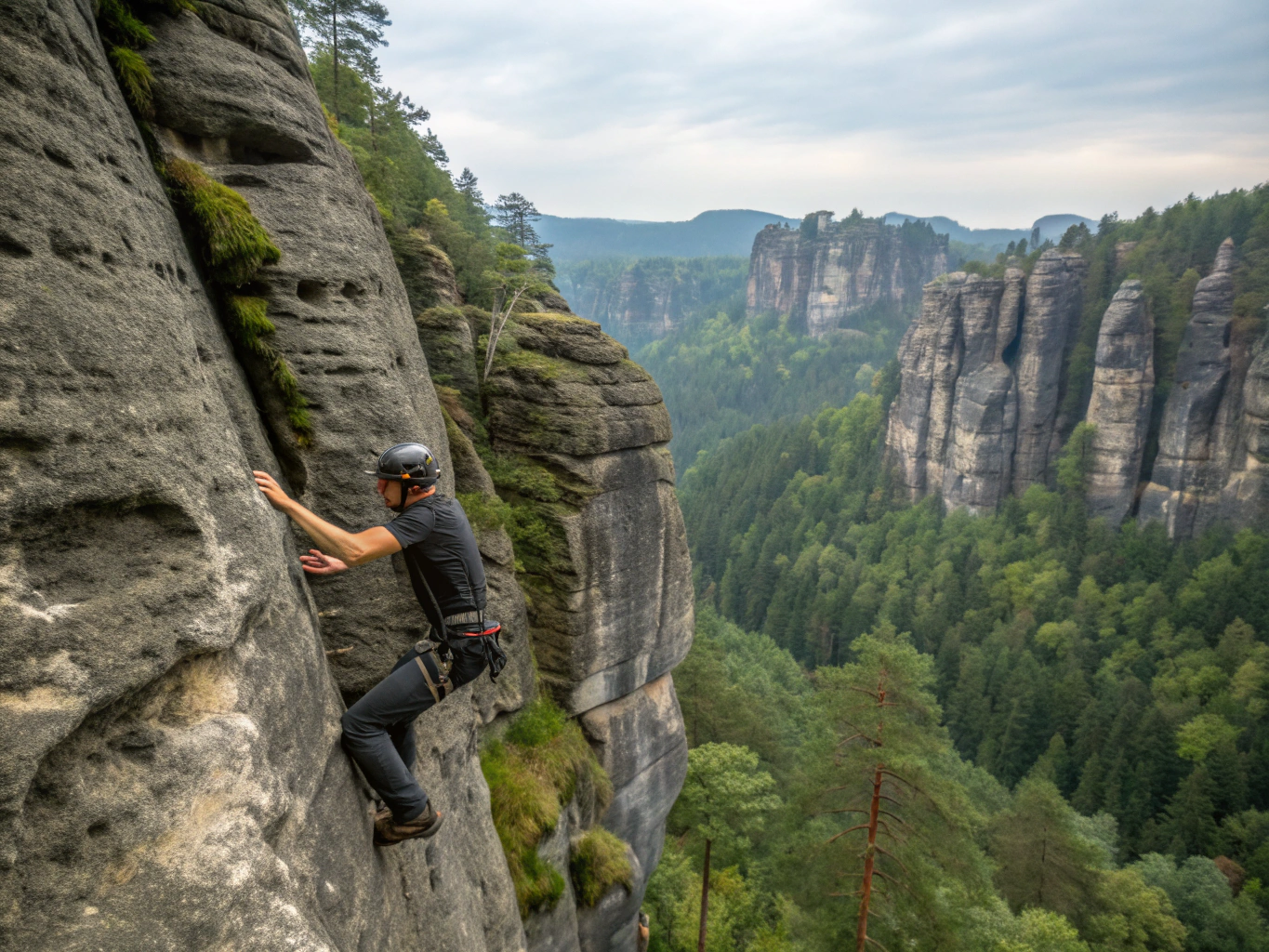
Climbing in Saxon Switzerland
⏱️ several hoursChallenging
Saxon Switzerland is a paradise for climbers. Here you will find numerous climbing routes in various degrees of difficulty. An unforgettable experience for all who seek adventure.
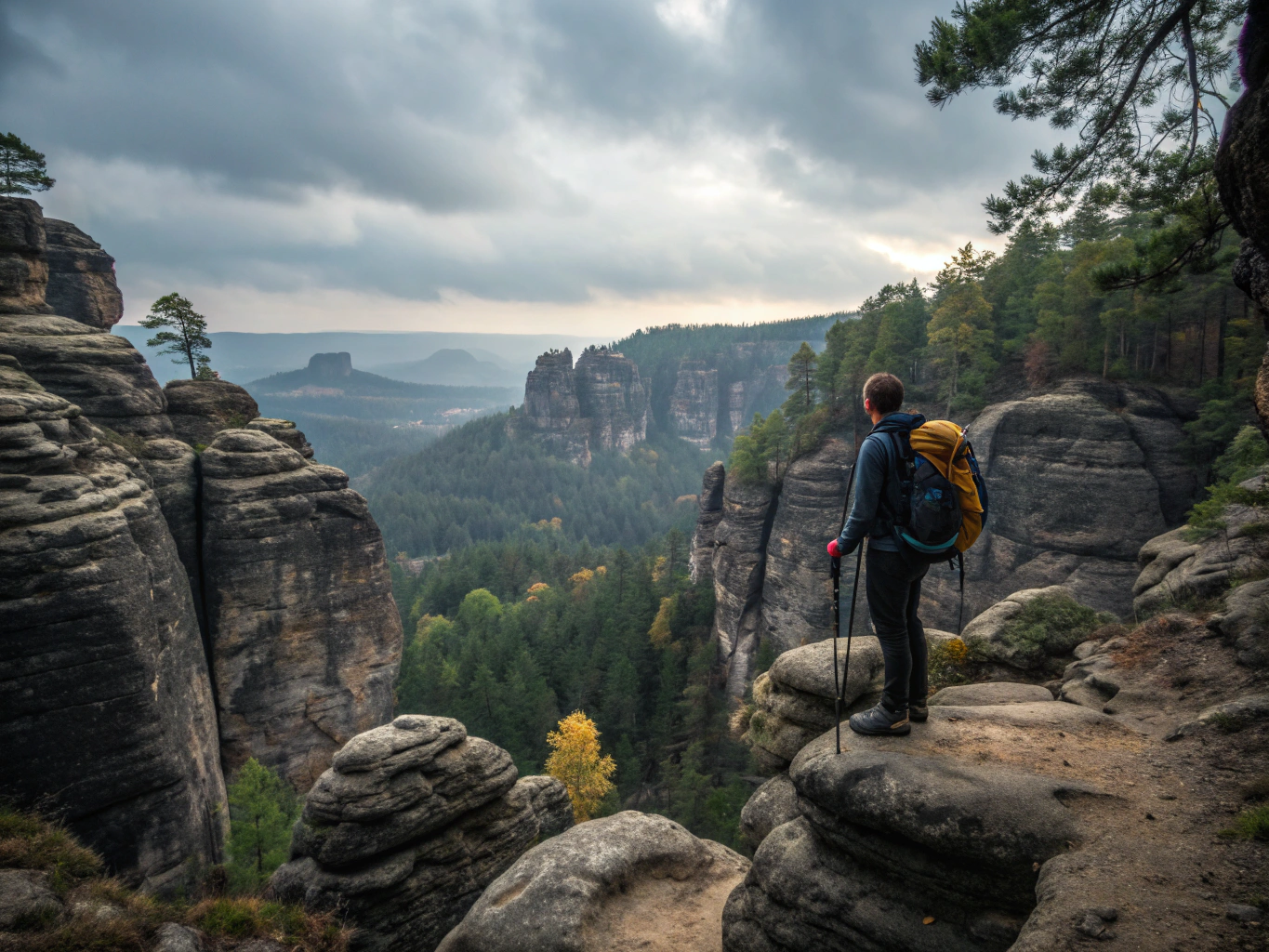
Schwedenlöcher
⏱️ 3-4 hoursModerate
The Schwedenlöcher is a narrow gorge with steep rock walls. The hike through the gorge is demanding, but the unique landscape compensates for the effort.
Facts & Figures
Camping Region Sächsische Schweiz
- 🌍 Country
- 🇩🇪 Deutschland
- 📍 Region
- Saxony
- 🏛️ Province
- District of Saxon Switzerland-Eastern Ore Mountains
- ☀️ Climate
- Temperate, with continental influences
- 📅 Best Season
- May/June for hiking, July/August for climbing
- 🌡️ Summer Avg
- 23°C
- 🌸 Spring Avg
- 15°C
- 🏕️ Campsites
- ~30
- ✈️ Airport
- Dresden (DRS), approx. 60 km
- 🚌 Public Transport
- Buses and S-Bahn trains
- 🌧️ Rainy Days
- 12 days/month in summer
- 🚗 From Munich
- 5 hrs / 500 km via A9
- 🚗 From Hamburg
- 4.5 hrs / 450 km via A13/A4
- 💰 Price Level
- €€, moderate, seasonal
- 🐕 Dogs
- Good, many hiking trails accessible
- 🎯 Suitable For
- Nature loversHikersClimbers
🚦 Occupancy by Month
Jan
Feb
Mar
Apr
May
Jun
Jul
Aug
Sep
Oct
Nov
Dec
Quiet Moderate Busy Crowded
 Rent Camper Sächsische Schweiz
 Campsites Sächsische Schweiz