


🌿 Natur & Wildnis👨👩👧👦 Familien
Camping Guide | Queensland
Your Camping Holiday on the Gold Coast & Sunshine Coast
Australien, 🇦🇺 Australien
Camping Guide | Queensland
Imagine waking up and the first thing you hear is the rhythmic sound of the Pacific, mixed with the characteristic laughter of kookaburras in the eucalyptus trees. The air tastes of salt and is already pleasantly warm on your skin in the early morning. Queensland, Australia's 'Sunshine State', doesn't greet you with quiet restraint, but with an explosion of colors: the deep turquoise of the sea, the endless white sand of Noosa, and the lush green thicket of the hinterland. A road trip here means freedom between surfboards and subtropical rainforest. It is the place where the Australian dream of an endless summer becomes reality – from the glittering skyline of the Gold Coast to the relaxed barefoot vibe of the Sunshine Coast.
💡The Campcruisers tip: Never underestimate the distances and traffic on the M1 Highway. Brisbane acts as a bottleneck between the coasts. Plan your trips to avoid rush hour (7-9 am and 3-6 pm) by a wide margin, otherwise you'll lose valuable holiday time in traffic jams.
The Region in Detail
Your comprehensive travel guide for camping Queensland.
Location & Arrival
The South East Queensland region is the pulsating heart of the Australian East Coast and is roughly divided into three zones: the Gold Coast in the south (bordering New South Wales), the metropolis of Brisbane in the center, and the Sunshine Coast in the north. Geographically, we are in the subtropical belt, which guarantees lush vegetation and warm water temperatures.
Arrival by plane:
For European campers, Brisbane Airport (BNE) is the primary gateway to the region. It is served by major airlines such as Emirates, Singapore Airlines, or Qantas (often with a stopover in Dubai or Singapore). Pure flight time is rarely under 22 hours. Alternatively, you can fly into Gold Coast Airport (OOL) in Coolangatta, often via Sydney, which is worthwhile if your road trip is starting in the far south.
Picking up the camper:
Most major rental companies (Apollo, Britz, Maui, Jucy) have their depots near Brisbane Airport in the suburbs of Eagle Farm or Northgate. A taxi or Uber from the terminal takes only about 10-15 minutes. Important: After a long-haul flight, many rental companies do not allow you to pick up the camper on the same day for safety reasons. Book a first night in a hotel in Brisbane to acclimate to the jet lag.
On the road:
Australia drives on the left. The main artery is the Pacific Motorway (M1), which snakes from the Gold Coast through Brisbane to the north, where it becomes the Bruce Highway. Note: There are toll roads around Brisbane and on the Gateway Bridge. There are no toll booths! Recording is done electronically. Clarify when picking up your vehicle if your camper has a 'Toll Tag'. If not, you must register online with 'Linkt' and buy a 'Brisbane Pass' to avoid high late fees. The roads are generally in very good condition but are often multi-lane and busy. A GPS or Google Maps is essential in Brisbane's complex highway interchanges.
Overview of the Sub-regions
To plan your trip, you need to understand the fundamental difference between the two coasts. They are like unequal siblings.
1. The Gold Coast (The South):
This is the 'Miami' of Australia. From Coolangatta to Southport, skyscrapers line up directly on the beach. The center is Surfers Paradise – loud, colorful, touristy, and full of life. Here you will find the big theme parks (Movie World, Dreamworld) and an intense nightlife. But the 'Goldie' also has a quiet side: the southern end at Burleigh Heads and Coolangatta offers more relaxed surf vibes and hip cafes. Those looking for glamour and action stay here.
2. The Hinterland (Scenic Rim & Lamington):
Just 45 minutes west of the Gold Coast, the world changes dramatically. The hinterland with Lamington National Park and Mount Tamborine is a UNESCO World Heritage site. Here you drive through dense Gondwana rainforest, past waterfalls and wineries. The roads are curvy and narrow – caution is advised with large motorhomes.
3. Brisbane (The Center):
Queensland's capital is the logistical hub. Campsites directly in the city are rare (there is the 'Brisbane Holiday Village' a bit further out). A day trip is worth it for 'South Bank', where an artificial beach was created in the middle of the city, and for trendy neighborhoods like Fortitude Valley.
4. The Sunshine Coast (The North):
North of Brisbane begins the Sunshine Coast, which extends to Noosa Heads. The vibe here is completely different from the Gold Coast: no high-rises on the beach, more nature reserves, and a more relaxed family atmosphere. Places like Mooloolaba, Caloundra, and Coolum are popular but less hectic. Noosa is the jewel – upscale, chic, with a stunning national park right on the edge of town. Further north, it gets wilder with access to Great Sandy National Park and the ferry to K'gari (Fraser Island).
5. The Sunshine Coast Hinterland:
The Glass House Mountains are volcanic monoliths that rise abruptly from the flat plain – a spectacular sight and a mecca for hikers. Places like Maleny and Montville offer arts and crafts and cool mountain air.
Camping in Queensland: What to Expect?
Camping is a national sport in Queensland. Accordingly, the quality is high, but so is the demand. The infrastructure is essentially divided into two categories:
1. Commercial Holiday Parks:
These sites (often chains like BIG4, NRMA, G'day Parks) are more like resorts than simple campsites. They almost always offer pool landscapes, huge playgrounds ('Jumping Pillows'), perfectly equipped 'Camp Kitchens' (communal kitchens with gas grills, refrigerators, toasters), and spotless sanitary facilities. The pitches are usually 'Powered Sites' with electricity and water connections. A 'Slab' means you are standing on a concrete pad (good for motorhomes), 'Grass' is a lawn. In terms of price, these parks are high: expect 50 to 90 AUD per night for two people, and over 100 AUD in high season.
2. National Park Camping (QPWS):
The state-run sites of the Queensland Parks and Wildlife Service (QPWS) are the contrast program: pure nature, often directly on the beach or deep in the forest. Facilities are rudimentary (pit toilets or simple showers, no electricity). In return, you often pay only about 7-10 AUD per person. The catch: You must book online in advance! There is no 'first come, first served' option on site. Popular spots like Noosa North Shore or in Lamington NP are often booked out weeks in advance.
Facilities & Special Features:
Almost every campsite in this region has free gas grills ('Barbies'). Life happens outside. Wi-Fi is usually available at commercial sites but is often slow. Washing machines ('Laundries') are standard and work with coins or card payment (approx. 4-6 AUD).
Booking Situation:
During the Australian summer holidays (mid-December to late January) and at Easter, the region is extremely full. Without a reservation 3-6 months in advance, you have little chance of a spot on the coast. In the low season (May-August), spontaneous travel is usually possible without problems.
Practical Information for Campers
To ensure your road trip runs smoothly, here are the most important logistical facts for the region:
Supermarkets & Supplies:
The major chains are called Woolworths ('Woolies') and Coles. Aldi is also widespread. Note when buying alcohol: There is no alcohol in normal supermarkets! You must go to separate 'Bottle Shops' (e.g., Dan Murphy's, BWS, Liquorland), which are often located right next to the supermarket. Cigarettes are extremely expensive (approx. 30-40 AUD per pack).
Refueling & Gas:
Gas stations are plentiful. Diesel and Unleaded 91/95 are standard. Many gas stations offer discounts if you present a receipt from Coles or Woolworths ('Fuel Docket'). Gas bottles for the camper are usually exchanged in Australia ('Swap n Go'), not refilled. The system differs from Europe, but rental campers have appropriate adapters or local bottles.
Wild Camping ('Free Camping'):
Be warned: Wild camping is extremely strictly regulated on the Gold and Sunshine Coasts and is effectively prohibited in coastal towns. Rangers patrol early in the morning and hand out hefty fines (200 AUD+). Use apps like 'WikiCamps Australia' or 'CamperMate' to find legal, free overnight spots (Rest Areas). These are usually located a bit inland, away from the coast.
Disposal (Dump Points):
The disposal of greywater and chemical toilets is excellently regulated. There are numerous public 'Dump Points', often near sewage treatment plants or showgrounds. They are almost always free. A 'Dump Point' sign (blue with a motorhome symbol) points the way.
Environment & Safety:
The sun in Queensland is aggressive. UV index 11+ is normal. Sunscreen (SPF 50+) is mandatory, even when cloudy. In the summer months (Nov-March), you must watch out for thunderstorms. Swimming in the sea: ALWAYS swim between the red and yellow flags. These areas are monitored by lifeguards. Outside the flags, there are dangerous currents ('Rips') and theoretically sharks (although attacks are extremely rare; monitoring is done via nets, drones, and helicopters).
Insider Knowledge & Secret Tips
Away from the tourist paths of Surfers Paradise, there are places you shouldn't miss to experience the true Queensland feeling.
The Best Markets:
Forget the souvenir shops. Go to the Eumundi Markets in the Sunshine Coast hinterland on Wednesdays or Saturdays. It is one of Australia's largest and best artisan markets. There is local design, fantastic street food, and live music under old fig trees. Park early, it gets crowded!
Culinary – What You Must Eat:
You are on the coast, so eat seafood. Order a kilo of 'Mooloolaba Prawns' directly from the trawler at the harbor in Mooloolaba. Another local favorite is 'Moreton Bay Bugs' – a type of slipper lobster that tastes sweeter than lobster. For the perfect Australian morning: a 'Smashed Avo' (avocado toast) in a cafe in Burleigh Heads.
Hidden Swimming Spots:
If the sea is too wild for you, drive to the Currumbin Rock Pools or Gardners Falls near Maleny. Here you can swim in cool freshwater pools in the rainforest, surrounded by rocks. A dream on hot days.
Secret Tip for Wildlife Viewing:
Want to see kangaroos? Drive to the sports field of the University of the Sunshine Coast in Sippy Downs or to the Coombabah Lakelands Conservation Area on the Gold Coast in the late afternoon. They often graze there by the hundreds in the wild – completely free of charge.
Restaurant Tip:
For the most authentic experience, visit a Surf Life Saving Club ('Surf Club'). These clubs are located in the best spots directly on the beach. The food is solid, the prices are fair, and the view is unbeatable. Recommendation: The Noosa Heads Surf Life Saving Club for sunset or the Rainbow Bay Surf Club in Coolangatta for the view of the legendary Superbank wave.
Best Time to Travel for Peace:
May and late October are the 'sweet spots'. The water is still warm enough for swimming, humidity is low, and the big crowds are gone. In winter (July/August), the 'Grey Nomads' (retirees) come, then the sites are also full, but it is quieter than in summer.
Experiences & Activities: Queensland
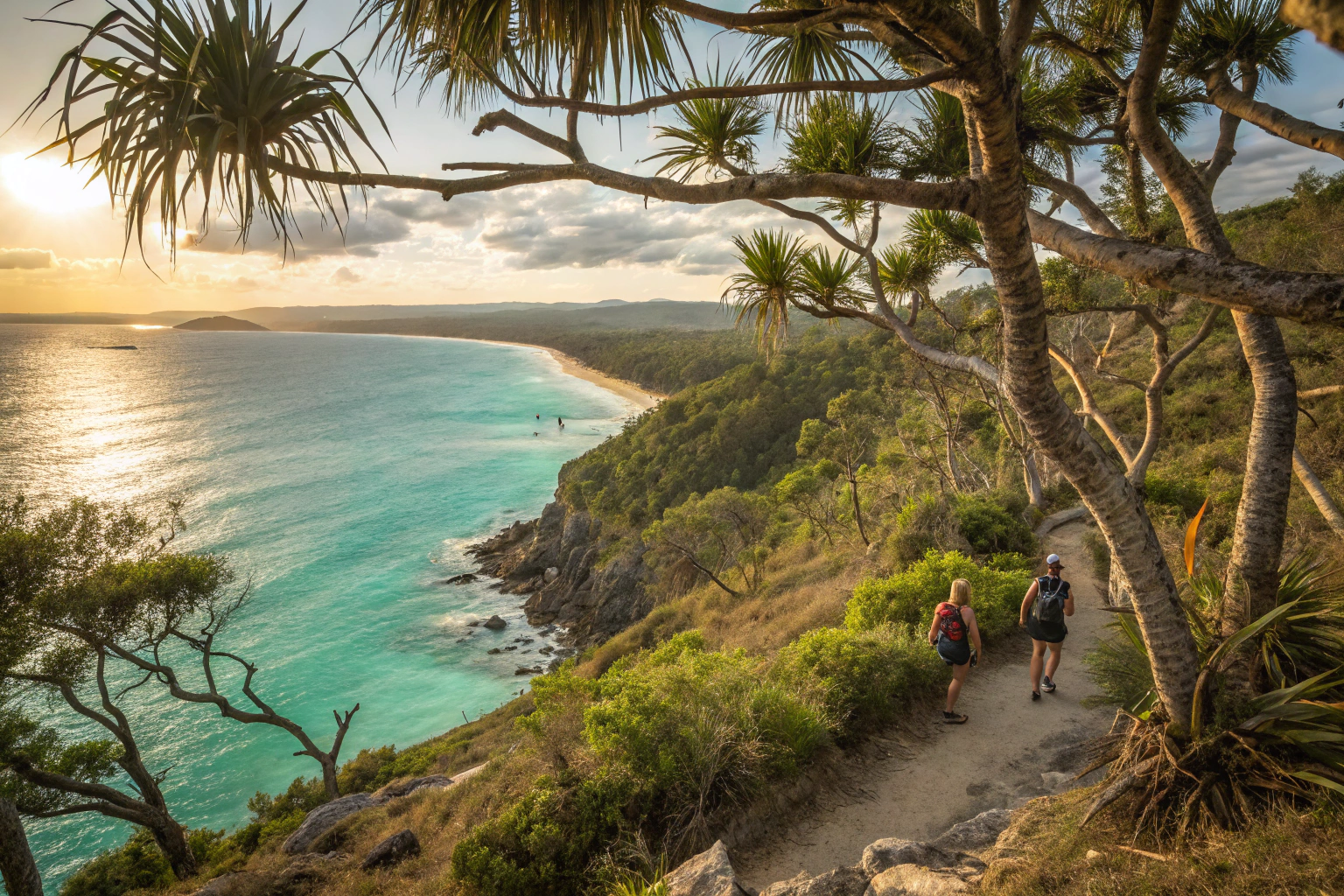
Noosa National Park Coastal Walk
⏱️ 2-4 hrsEasy
Hike along the spectacular Noosa coastline. Keep an eye out for koalas in the eucalyptus trees and dolphins in the bays.
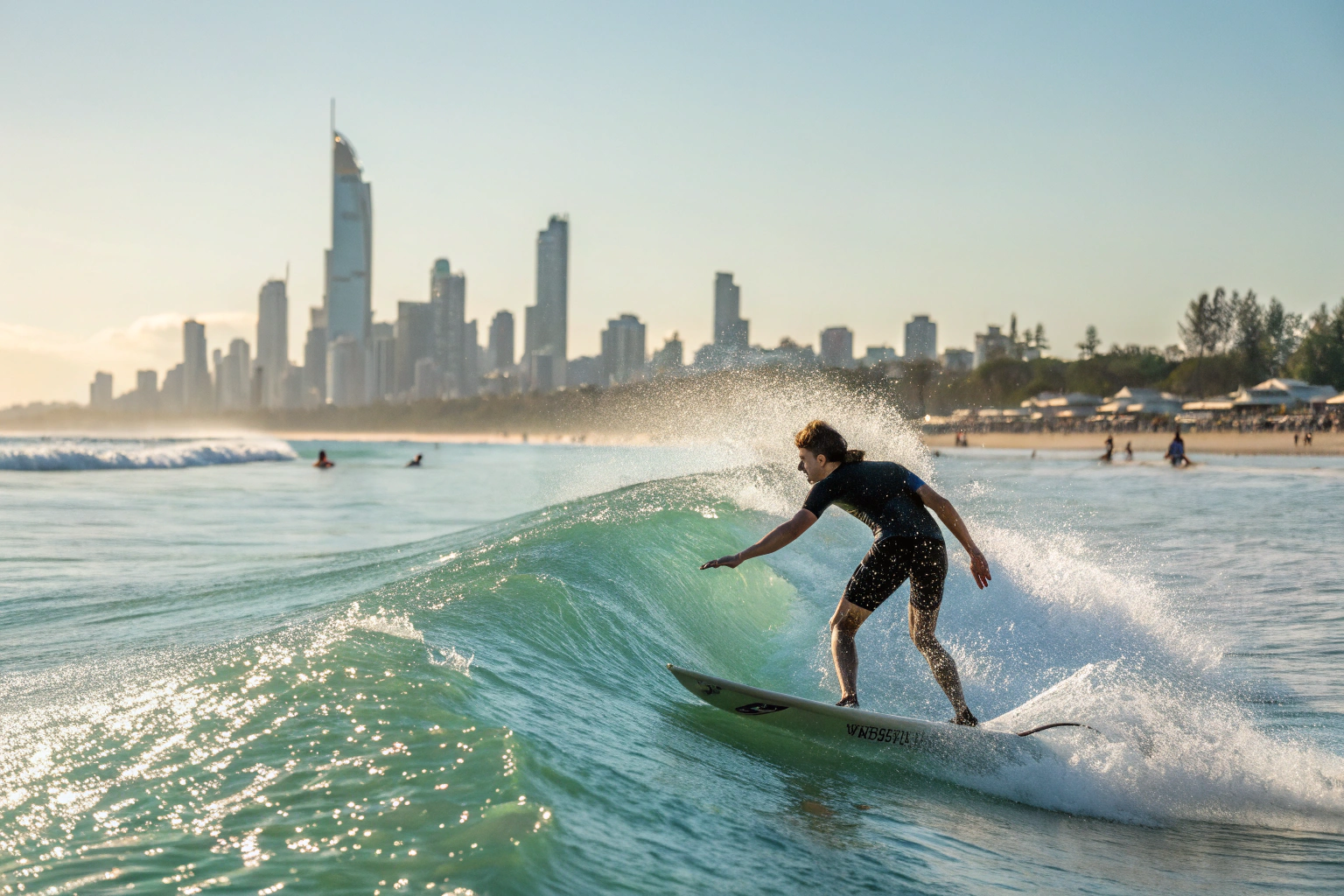
Surfing Lesson in Coolangatta
⏱️ 2 hrsModerate
Learn to surf at one of the most famous surf spots in the world. The water is warm, and the waves at Greenmount Beach are beginner-friendly.
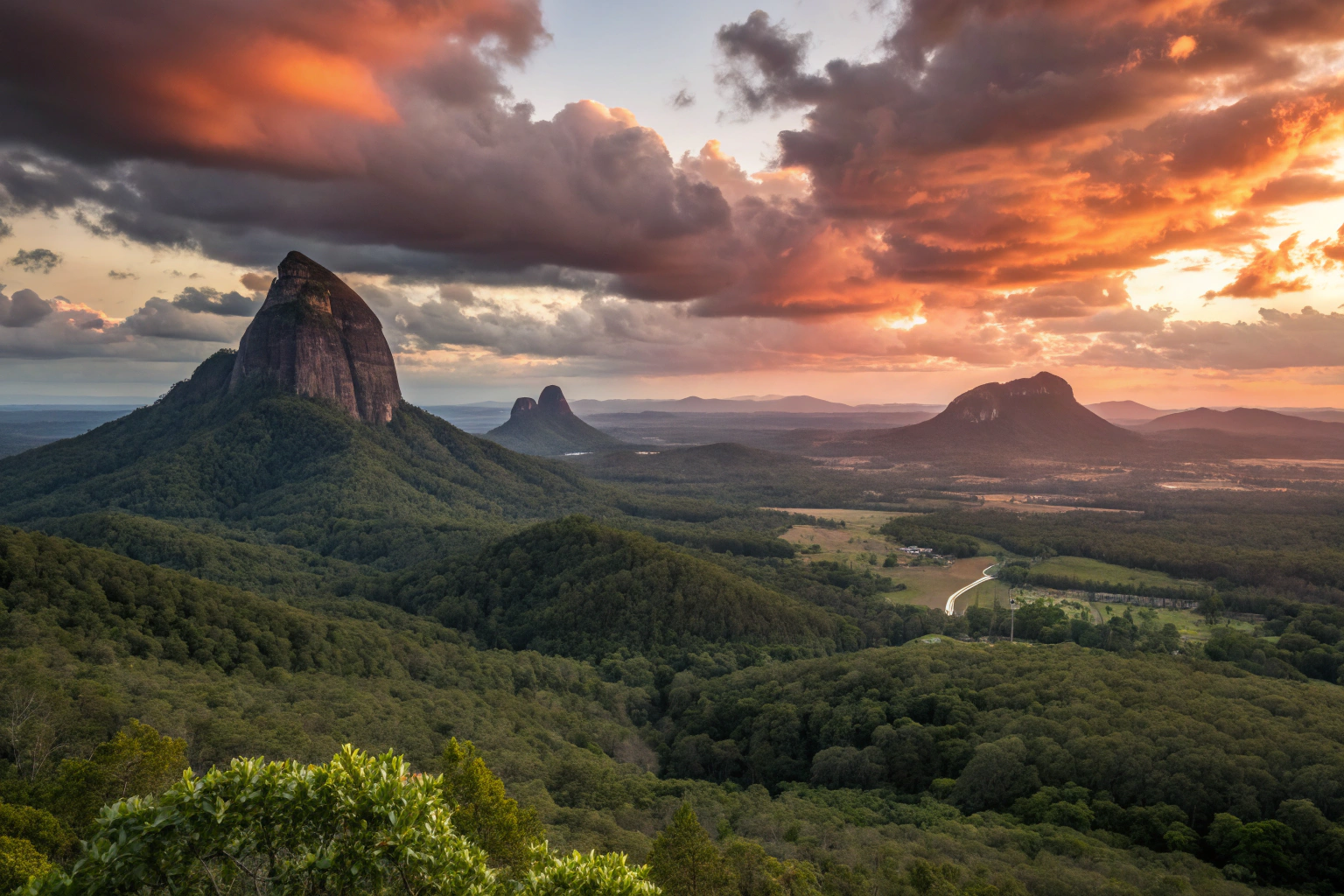
Glass House Mountains Hike
⏱️ 1-2 hrsModerate
Climb Mount Ngungun for a 360-degree view over the hinterland to the coast. Especially magical at sunset.
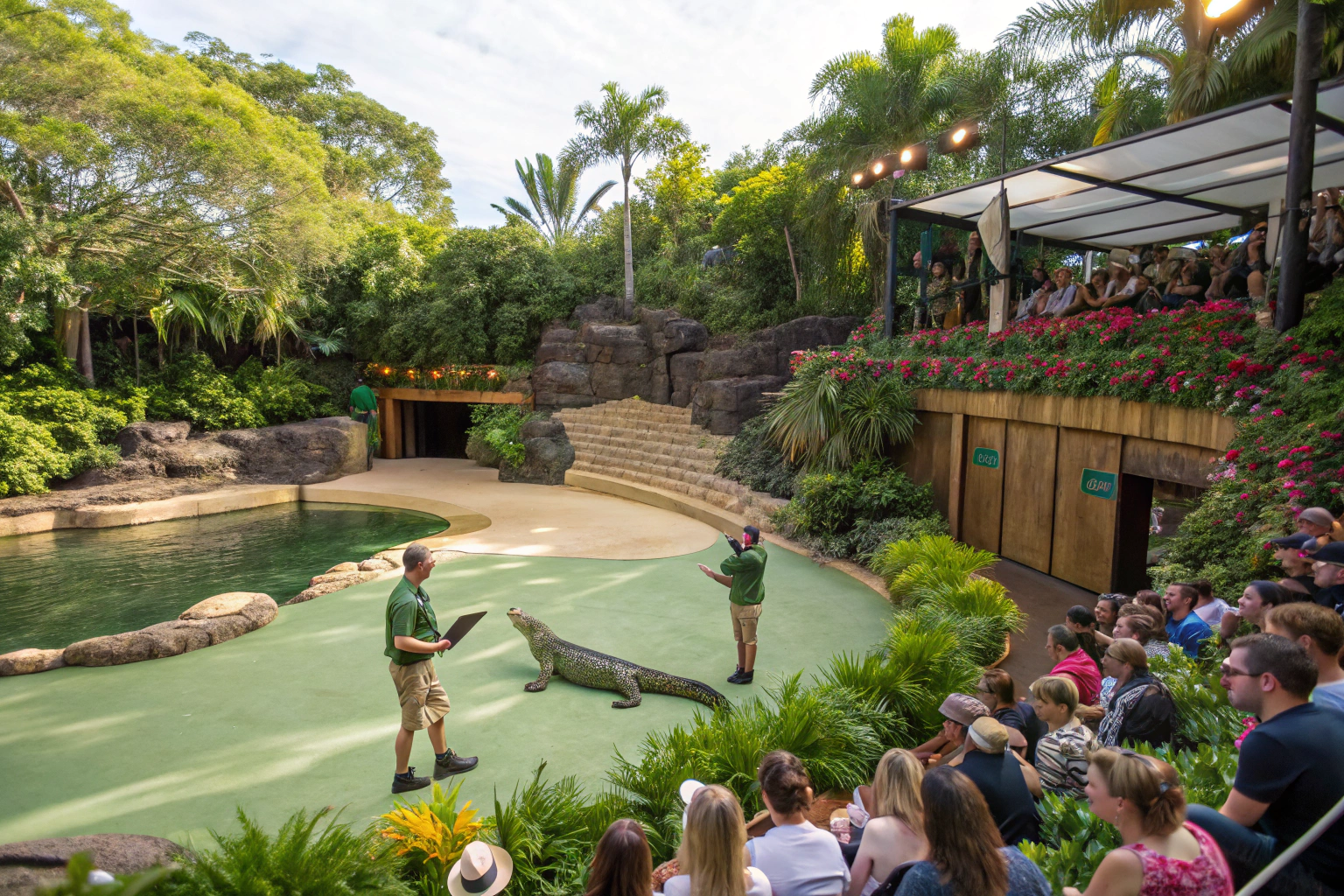
Australia Zoo Experience
⏱️ 1 dayEasy
Visit the legacy of 'Crocodile Hunter' Steve Irwin. An absolute must for animal fans, very interactive and expansive.
Facts & Figures
Camping Region Queensland
- 🌍 Country
- 🇦🇺 Australien
- 📍 Region
- Queensland
- 🏛️ Province
- South East Queensland
- ☀️ Climate
- Subtropical
- 📅 Best Season
- April - May & September - October
- 🌡️ Summer Avg
- 29 °C
- 🌸 Spring Avg
- 25 °C
- 🏕️ Campsites
- ~approx. 180
- ✈️ Airport
- Brisbane (BNE) or Gold Coast (OOL)
- 🚌 Public Transport
- TransLink (Trains/Buses/Ferries)
- 🌧️ Rainy Days
- approx. 100 per year (mostly summer thunderstorms)
- 🚗 From Munich
- n.a. (Flight time approx. 22-24 hrs)
- 🚗 From Hamburg
- n.a. (Flight time approx. 22-24 hrs)
- 💰 Price Level
- €€ - €€€
- 🐕 Dogs
- Medium (Prohibited in national parks)
- 🎯 Suitable For
- SurfersFamiliesNature lovers
🚦 Occupancy by Month
Jan
Feb
Mar
Apr
May
Jun
Jul
Aug
Sep
Oct
Nov
Dec
Quiet Moderate Busy Crowded
 Rent Camper Queensland
 Campsites Queensland